Oprah’s studio became McDonald’s global HQ 28 years later

In 1990, Oprah Winfrey opened Harpo Studios in Chicago.
Twenty-eight years later, McDonald’s opened its global headquarters on the same site.
The 480,000-square-foot building now sits at 110 N. Carpenter Street in the West Loop’s Fulton Market district.
Before the Golden Arches moved in, the property was home to one of the most famous television studios in America.
Winfrey bought the former armory property in 1988.
She paid cash for the site and spent two years turning it into Harpo Studios.
The studio opened in January 1990 and became the production home of “The Oprah Winfrey Show.”
That show ran for 25 seasons, from 1986 to 2011.
Harpo Studios helped put the West Loop neighborhood on the map.
At the time, the area was mostly industrial warehouses and parking lots.
Winfrey’s presence drew other businesses, restaurants and developments to the once-forgotten corner of Chicago.
After Winfrey filmed the final episodes of her show in 2011, she left Chicago.
Her former studio then briefly became home to “The Rosie Show,” hosted by Rosie O’Donnell.
That program ran for less than a year before it was canceled.
In 2014, Chicago-based real estate developer Sterling Bay bought the Harpo Studios campus from Winfrey’s company, Harpo Inc.
Shortly after the sale, the studio officially closed its doors.
The iconic Harpo Studios signs were removed from the building.
Sterling Bay then began redeveloping the site for new tenants.
McDonald’s, which had been headquartered in the Chicago suburb of Oak Brook since 1971, was looking for a new home.
The company signed a lease to build and move its corporate headquarters to the former Harpo Studios site.
In 2018, McDonald’s opened its global headquarters on the property.
The building features open workspaces, a test kitchen, and a visitor center that includes a replica of the original McDonald’s restaurant from 1955.
The move brought more than 2,000 employees to the West Loop.
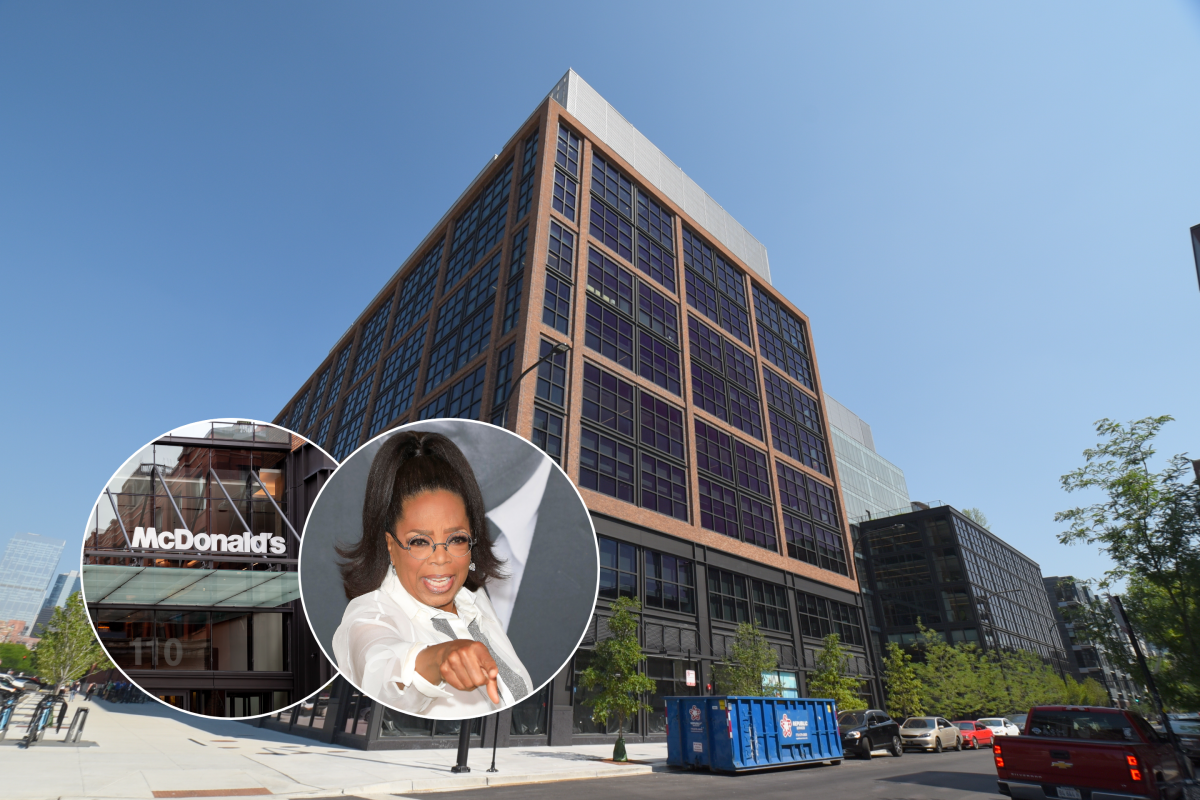
McDonald’s CEO at the time, Steve Easterbrook, called the new location “a symbol of our commitment to Chicago.”
The company received tax incentives from the city and state to relocate its headquarters.
Illinois offered McDonald’s a $15 million tax credit over ten years to keep the company in the state.
The city of Chicago also provided $8.3 million in tax increment financing for infrastructure improvements around the site.
Winfrey’s decision to sell the property came after she had already shifted her focus to other ventures.
She launched the Oprah Winfrey Network (OWN) in 2011, the same year her talk show ended.
She also moved to California and began producing content from there.
The sale of Harpo Studios marked the end of an era for Chicago television production.
At its peak, “The Oprah Winfrey Show” was watched by an estimated 22 million viewers daily in the United States.
The show was syndicated to 145 countries worldwide.
Winfrey herself became one of the most influential media figures in American history.
She was the first African American woman to own her own production company.
Harpo Studios was the physical symbol of that ownership and independence.
The name “Harpo” is “Oprah” spelled backward.
Winfrey often said she named the company that way as a reminder to stay grounded.
The studio’s transformation into McDonald’s headquarters is not the only major change in the Fulton Market area.
The neighborhood has seen billions of dollars in new construction over the past decade.
Google, Uber, and other tech companies have opened offices in the district.
Restaurants, hotels, and luxury apartments have replaced old meatpacking plants and warehouses.
McDonald’s global headquarters now anchors the western edge of that development boom.
The building’s address, 110 N. Carpenter Street, is about two miles west of the Chicago River.
It sits near the intersection of Randolph Street and Halsted Street.
The site is also close to the United Center, where the Chicago Bulls and Blackhawks play.
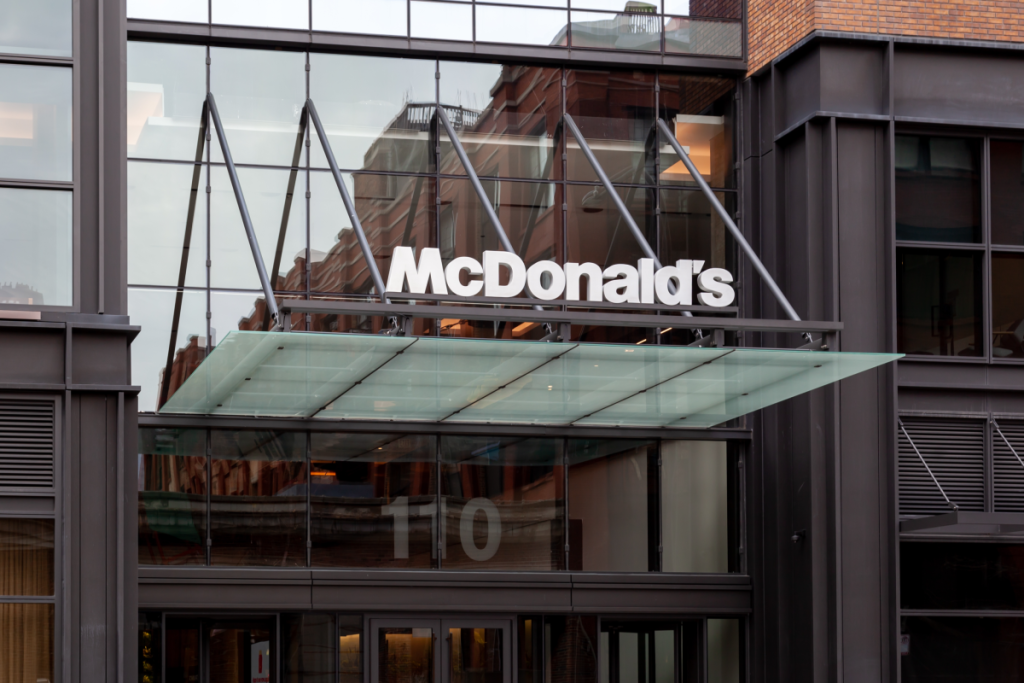
Winfrey’s studio once occupied nearly two full city blocks.
When she first bought the property, neighbors included a lumber yard and a metal foundry.
Today, the same blocks are filled with high-end condos and boutique shops.
The story of Harpo Studios becoming McDonald’s headquarters is a unique piece of Chicago real estate history.
It connects two iconic American brands: Oprah Winfrey’s media empire and McDonald’s fast-food empire.
Both companies started small and grew into global institutions.
Both have deep roots in the Midwest.
And both, in different ways, helped shape the city of Chicago.
Winfrey has not publicly commented on the transformation of her former studio into a McDonald’s headquarters.
McDonald’s has not made any special mention of the site’s history in its corporate materials.
But the building itself carries a quiet legacy: the same ground that once held television cameras and audience seats now holds corporate offices and a test kitchen.
The timeline is precise: Harpo Studios opened in January 1990.
McDonald’s global headquarters opened in 2018.
That is exactly 28 years apart.
For Chicagoans who remember watching “The Oprah Winfrey Show” live from the West Loop, the change is striking.
Some former employees of the studio have shared memories online of the old building.
They recall the long hallways, the green room, and the famous “Oprah” sign that lit up the street.
That sign was removed in 2014.
Today, the McDonald’s logo sits above the entrance.
But the story of how one icon replaced another is a reminder of how quickly cities evolve.
Chicago’s West Loop was once a forgotten industrial zone.
Oprah Winfrey helped turn it into a destination.
McDonald’s helped turn it into a corporate hub.
The two chapters, separated by 28 years, tell the same story: the rise of a neighborhood through the power of big names and big investments.
Advertisement
You may also like
Man arrested after 54-year-old hit by pickup, alcohol suspected: RCMP
A 48-year-old man has been arrested after a pickup truck struck a 54-year-old pedestrian in Prince George Thursday morning. Police say they believe alcohol…

Mormon Wives' Zac Affleck Breaks Silence on Jen Affleck Divorce Amid Her Pregnancy
Zac Affleck is speaking out for the first time after his wife, Jen Affleck, filed for divorce — while she is eight months pregnant…
Angel Reese Trolled Mid-Parade After Brutal WNBA Finals Loss
The Reebok Angel Reese 1 “Draft Night” looks back at the moment her professional journey began. Reebok confirmed the release for November 12, 2026,…

Liberty Media Slashes John Malone’s Voting Power to 3%
Liberty Media Acquires John Malone's Super Voting Stock After Founder Received Outside Offers Liberty Media has acquired all shares of super voting Series B…
Fergie and Andrew split homes after 20 years but stay united
Sarah Ferguson and Prince Andrew no longer share a home. After roughly 20 years living together at Royal Lodge in Windsor, the former couple…
Red Wings Holdout Could Cost Them Two Stars to Montreal
Dylan Larkin is reportedly not the only Detroit Red Wings asset drawing interest from the Montreal Canadiens. According to NHL Network insider David Pagnotta…