Mashpee Wampanoag Tribe Opposes Massachusetts Horse Racing Machines Over Sovereignty Concerns

Mashpee Wampanoag Tribal Chairman Brian Weeden voiced formal opposition to the proposal, raising alarm over its potential damage to tribal sovereignty and the First Light Casino project in Taunton.
The pushback centers on a high-stakes legislative battle over the future of gambling expansion across Massachusetts.
Lawmakers on Beacon Hill have been considering a measure to authorize historical horse racing machines at two former racetracks.
The plan would bring gaming terminals to both Suffolk Downs and Raynham Park.
Opposition to the initiative is mounting from tribal leaders as well as the state's commercial casino operators.
Those critics warn that the measure threatens tribal interests, endangers local jobs, and could destabilize public tax revenues.
TRIBAL SOVEREIGNTY AT RISK
The Mashpee Wampanoag Tribe operates the First Light Casino development located in Taunton.
Chairman Weeden has formally challenged the racetrack proposal on behalf of the tribe.
Weeden warned that the introduction of racing machines could negatively affect the tribe’s economic interests.
He also stressed that the legislation poses a direct threat to tribal sovereignty.
Tribal gaming rights are anchored in federal recognition and self-determination.
These rights are intended to provide native nations with stable economic foundations.
Expanding off-reservation commercial gaming outside established frameworks can directly disrupt those economic lifelines.
The tribe's resistance adds a critical layer to an already fierce political struggle in Massachusetts.
A DIVIDED LEGISLATURE
The controversial gambling provision was originally included in an economic development bill passed by the Massachusetts House of Representatives in July.
The House measure would allow Suffolk Downs and Raynham Park to operate historical horse racing machines.
These machines would run under the authority of licenses previously issued to the historic tracks.
However, the Massachusetts Senate took a completely different approach to the economic development package.
The Senate version of the legislation entirely omitted the horse racing machine provision.
Because the two chambers passed conflicting bills, the issue now sits before a legislative conference committee.
The Boston Globe reported that negotiators must decide whether the gambling expansion survives final talks.
Conference committees are tasked with reconciling competing legislative priorities before sending a final compromise bill to the governor.
THE PUSH FOR HEALTHCARE FUNDING
House Speaker Ron Mariano has stood as the chief defender of the racing machine amendment.
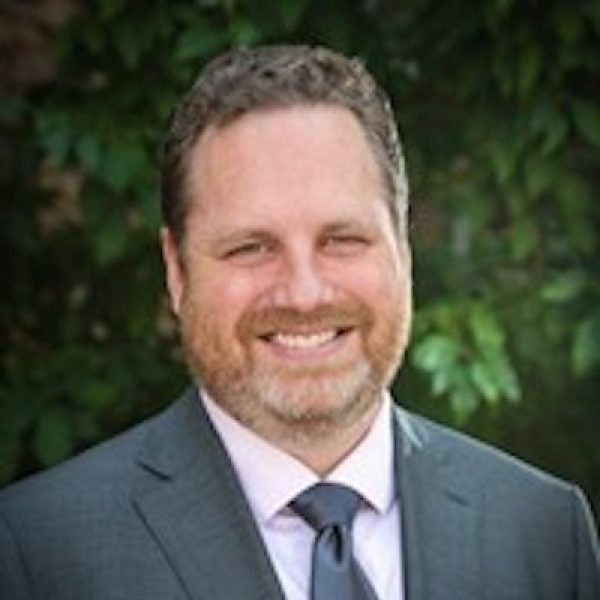
Mariano argued that the gaming expansion is designed to generate vital new revenue for healthcare programs.
Under the House proposal, 2.5 percent of the total money wagered on the machines would be earmarked for healthcare.
That revenue would flow directly into the state’s Health Safety Net trust fund.
The trust fund provides financial support to hospitals and health centers treating uninsured and underinsured patients.
Supporters of the expansion claim the terminals could deliver massive financial returns.
Backers project that the new gaming operations could generate up to $120 million annually in tax revenue by their third year.
Mariano maintained that this influx of cash is essential for the Commonwealth’s public safety net.
CASINOS SOUND THE ALARM
Despite those revenue promises, the state's commercial casino operators strongly dispute the House projections.
All three licensed casino operators in Massachusetts have joined forces to fight the measure.
Encore Boston Harbor, MGM Springfield, and Plainridge Park have collectively urged state lawmakers to reject the proposal.
The casinos backed their stance with an independent economic impact study.
The research was conducted by gaming advisory firms Morowitz Gaming Advisors and Global Gaming and Hospitality.
The findings from the report outlined severe potential fallout for existing venues.
According to the consultants, historical horse racing machines could siphon away between $131 million and $216 million in gross gambling revenue.
That loss would be drained directly from the current licensed casinos.
BLOW TO PUBLIC COFFERS
The consultants warned that cannibalizing casino revenues would backfire on public budgets.
The study calculated potential revenue losses for state and local governments ranging between $45 million and $73 million every year.
The advisory report also pointed to wider economic consequences beyond immediate gaming tax receipts.
Researchers cautioned that the expansion could spark layoffs at existing gaming facilities.
Local vendors and auxiliary businesses tied to the casino sector could also see a decline in commerce.
Existing operators contend that diluting the market will ultimately weaken the state’s fiscal health.
REGULATORY INCONSISTENCIES
A central argument raised against the bill is the absence of parity in regulatory oversight.
The study highlighted significant structural differences between the proposed racing framework and current casino statutes.

Massachusetts established a strictly controlled gaming landscape under its original casino legislation.
That framework intentionally limited full-scale casino development to three distinct geographical regions.
Under current law, commercial operators must complete rigorous regulatory vetting to obtain a license.
They must also negotiate detailed, legally binding mitigation agreements with host communities.
In stark contrast, the House amendment creates far fewer guardrails for the proposed racing venues.
The measure does not set any statutory cap on the total number of historical horse racing machines.
It also fails to limit the specific geographic locations where such facilities could ultimately be operated.
Furthermore, the legislation contains language that could open the door for online historical horse racing wagering.
Such a development would create immediate competition for the Massachusetts Lottery's newly launched digital platform.
TRACK INVESTMENTS AND TIES
The push to revive gaming at Suffolk Downs and Raynham Park has drawn intense interest from private developers.
Suffolk Downs investor Richard Fields has emerged as a key figure in the expansion plans.
Fields has actively explored developing a major gambling and entertainment venue in the state.
He has also expressed clear interest in buying Raynham Park from the Carney family.
The involvement of Raynham Park owner George Carney has drawn scrutiny on Beacon Hill.
Speaker Mariano acknowledged maintaining a personal relationship with Carney.
However, Mariano firmly denied that personal connections influenced the drafting of the economic package.
The Speaker insisted that the proposal is designed strictly to assist the Commonwealth rather than benefit individual business owners.
THE ROAD AHEAD
The debate over horse racing terminals has ignited a broad coalition of opposition across Massachusetts.
The Mashpee Wampanoag Tribe's stand adds vital moral and sovereign weight against the amendment.
Commercial casinos and tribal leaders are effectively aligned in defending their existing market positions.
Both groups argue that unconstrained gambling expansion threatens established investments and public commitments.
The final fate of the historical horse racing machines now rests with the legislative conference committee.
Lawmakers must determine whether the House’s healthcare funding pitch outweighs the fiscal and sovereignty concerns.
Should lawmakers consider tribal gaming sovereignty before approving new commercial gambling machines?
Advertisement
You may also like
Sean Payton confirms J.K. Dobbins is still key to Broncos' plans
Sean Payton says J.K. Dobbins remains "a huge part of what we're doing" in Denver. That statement came Wednesday when reporters asked the Broncos…

Kris Jenner Breaks Silence on Kim's Scary Health Diagnosis
Kim Kardashian's ultra-plunging latex dress is so rare it will send fans wild. But behind the glamorous photo shoots and vintage Paco Rabanne looks,…

UNC Athletics Unveils Golfing Rameses Logo, Finley Collection Of Merch
The University of North Carolina Department of Athletics has introduced a new golfing Rameses logo, Carolina and deputy athletic director/chief revenue officer Rick Barakat…

Jessica Pegula Slammed as "Outrageous" After Shading Coco Gauff and Mirra Andreeva
“Jessica Pegula Should Be Banned.” “Outrageous.” That is the reaction flooding social media after a courtside microphone picked up the World No. 5 criticizing…
Perkins: Draymond Green is now more liability than asset
Kendrick Perkins has delivered a blunt verdict on Draymond Green. "Draymond Green has been more of a liability than an asset," Perkins said. The…
Adrian Meronk reveals 4 reasons LIV Golf players are leaving
LIV Golf star Adrian Meronk has revealed the four major reasons why players are leaving the embattled league. Meronk, a one-time winner on the…