Massachusetts Casinos Battle Horse Racing Machine Plan, Warning of $73 Million Loss
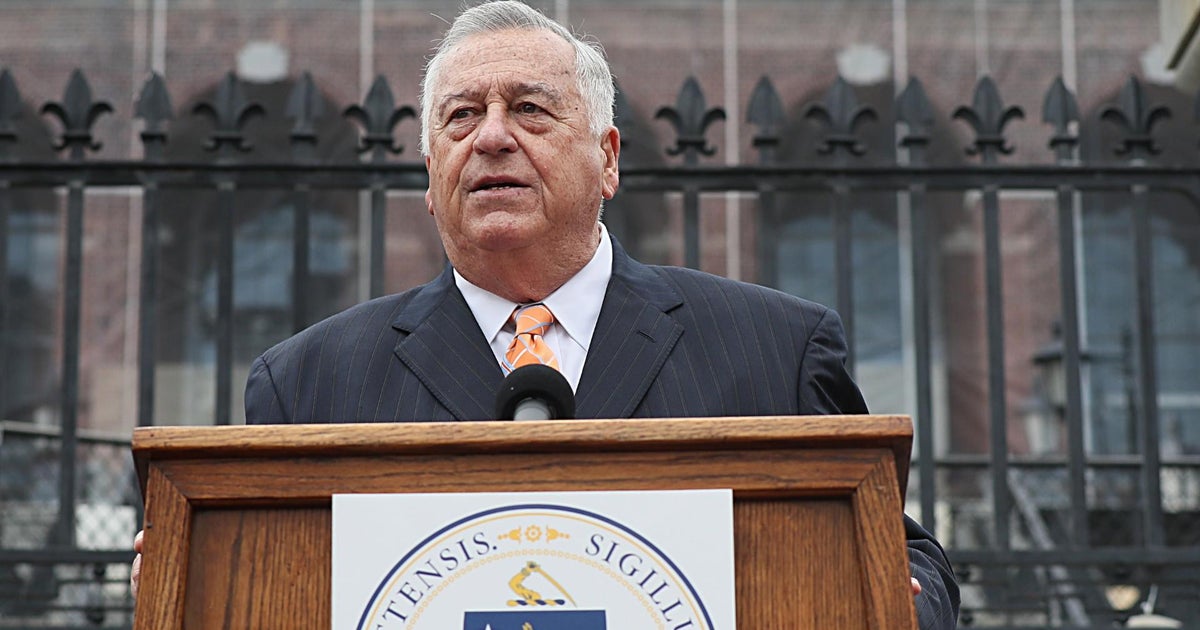
Encore Boston Harbor, MGM Springfield, and Plainridge Park have urged lawmakers to reject historical horse racing machines, citing a study showing state and local governments could lose up to $73 million annually.
The state's three licensed commercial gaming operators have mounted a forceful pushback against the proposed gambling expansion.
At the center of the dispute is an effort to install historical horse racing machines at two former racetracks.
Those venues are Suffolk Downs in East Boston and Raynham Park in southern Massachusetts.
The operators argue that introducing electronic racing terminals would destabilize the existing commercial casino market.
They also warn that the expansion threatens public revenues and stable regional employment.
A HEATED LEGISLATIVE SHOWDOWN
The dispute stems from language inserted into an economic development package on Beacon Hill.
The Massachusetts House of Representatives approved its version of the economic development bill in July.
That legislation included an amendment granting former racetracks the ability to operate historical horse racing machines.
Under the House proposal, Suffolk Downs and Raynham Park could activate the devices under licenses previously tied to live racing.
However, the Massachusetts Senate took a completely different approach to the economic package.
The Senate version omitted any provision permitting historical horse racing machines.
Because the two legislative chambers passed conflicting drafts, the language was sent to a conference committee.
According to The Boston Globe, appointed lawmakers must now negotiate whether the racing measure survives in the final bill.
FINANCIAL WARNINGS FROM CASINO OPERATORS
Faced with the prospect of new competition, the three commercial casinos commissioned an independent economic impact study.
The analysis was conducted by Morowitz Gaming Advisors alongside Global Gaming and Hospitality.
The resulting findings offered a stark assessment of the proposed expansion.

Consultants projected that historical horse racing machines would siphon significant revenue directly from existing casino floors.
The report calculated that commercial casinos could lose between $131 million and $216 million in gross gambling revenue.
That diversion would cause a steep drop in gaming taxes collected by the Commonwealth.
According to the consultants, state and local governments could see tax receipts fall by $45 million to $73 million each year.
The report emphasized that this cannibalization could force existing casinos to scale back operations.
Such contractions could lead to direct job losses across the gaming sector.
Furthermore, the consultants warned of reduced spending with local vendors and small businesses that support casino operations.
THE PUSH FOR HEALTHCARE FUNDING
Supporters of the House amendment maintain that the new machines would provide a crucial economic boost.
Massachusetts House Speaker Ron Mariano has emerged as a central defender of the proposal.
Mariano argued that authorizing the machines provides an effective mechanism to fund vital state healthcare programs.
The House bill mandates that 2.5% of the total amount wagered on the racing terminals flow to the Health Safety Net trust fund.
The Health Safety Net trust fund provides critical financial support to Massachusetts hospitals and community health centers.
Those facilities depend on the fund to care for uninsured and underinsured residents across the Commonwealth.
Backers of the legislation projected that the new gambling facilities could generate $120 million in annual tax revenue by their third year.
Mariano contended that these receipts would deliver meaningful public benefits without placing additional burdens on general taxpayers.
Yet the existing casinos insist that those projections fail to account for the heavy losses inflicted on established venues.
REGULATORY INEQUITY AT ISSUE
The casino operators also raised alarm over what they describe as an uneven regulatory playing field.

Massachusetts established its commercial gaming framework under strict statutory constraints designed to limit casino proliferation.
The state's landmark gaming law capped full-scale casino resorts at three distinct geographical regions.
Under that law, Encore Boston Harbor secured the Region A license serving the greater Boston metropolitan area.
MGM Springfield captured the Region B license designated for western Massachusetts.
Plainridge Park operates as the sole licensed slots parlor in the state.
To earn those licenses, operators underwent exhaustive background investigations and invested hundreds of millions of dollars.
They were required to negotiate detailed host community agreements with municipal leaders.
Those agreements guarantee substantial ongoing payments, infrastructure funding, and mitigation mitigation resources to local towns.
Licensed casinos must also adhere to rigorous ongoing compliance standards overseen by state gaming regulators.
In contrast, the House amendment contains no statutory cap on the total number of historical horse racing machines.
It likewise omits strict limits on where future operating facilities could ultimately be placed.
The casinos argue that allowing racing venues to expand without equivalent mandates creates an unfair commercial advantage.
ONLINE EXPANSION AND TRIBAL CONCERNS
The controversy extends beyond physical gaming floors.
The House amendment includes language that could allow historical horse racing wagering to take place online.
Critics point out that online racing bets would create fresh digital competition across the state.
Specifically, it could compete directly with the Massachusetts Lottery, which recently launched its own online platform.
State lottery proceeds fund essential local aid distributed to cities and towns across Massachusetts.
At the same time, the proposal has encountered stiff pushback from sovereign tribal gaming leaders.
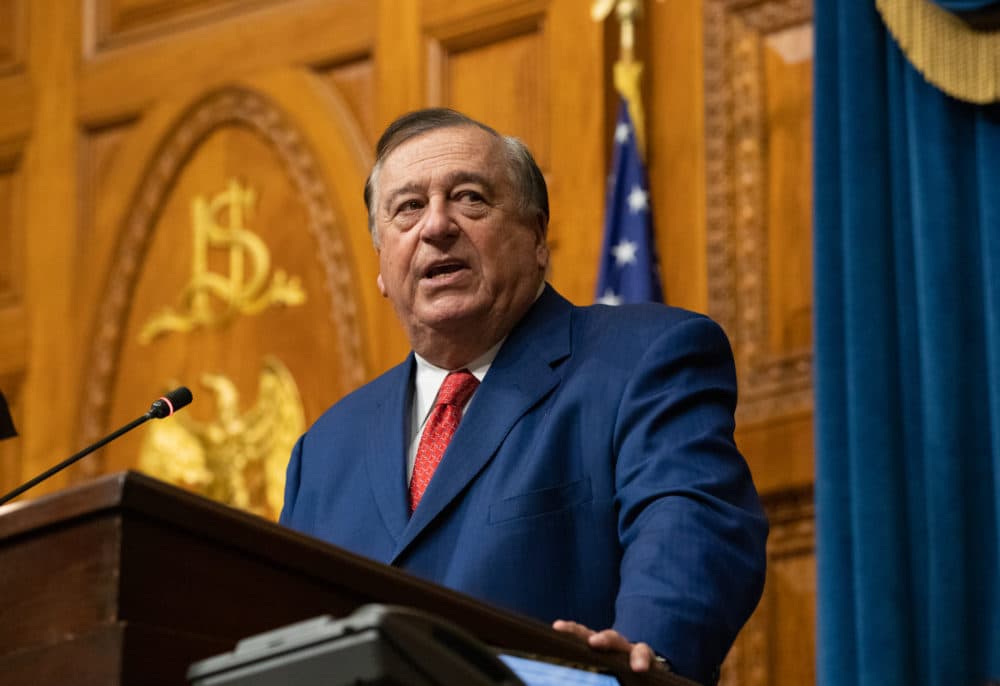
The Mashpee Wampanoag Tribe operates First Light Casino in Taunton, Massachusetts.
Mashpee Wampanoag Tribal Chairman Brian Weeden formally registered the tribe's opposition to the racing amendment.
Weeden voiced serious concern regarding the plan's potential effect on tribal economic interests.
He also stressed that the unregulated expansion could undermine the tribe's sovereignty and established gaming rights.
INVESTOR PLANS AND POLITICAL CONNECTIONS
Despite fierce opposition, private investors have signaled strong interest in reviving the historic racing properties.
Suffolk Downs investor Richard Fields has actively pursued plans to build a major gambling and entertainment venue.
Fields has also expressed a direct desire to purchase Raynham Park from its current owners, the Carney family.
Raynham Park formerly operated as a high-volume greyhound racing facility before live dog racing was banned.
The political connections surrounding the legislative push have drawn scrutiny from observers.
House Speaker Mariano acknowledged having a longstanding personal relationship with George Carney.
George Carney is a prominent member of the family that owns and operates Raynham Park.
Mariano pushed back against suggestions of favoritism regarding the legislation.
The House Speaker stated that the measure was crafted to benefit the state rather than individual business interests.
WHAT COMES NEXT FOR BEACON HILL
The fate of historical horse racing now rests entirely in the hands of the legislative conference committee.
Six lawmakers on the panel must decide whether to retain the House gaming language or adopt the Senate's clean draft.
If the provision is stripped, Suffolk Downs and Raynham Park will remain barred from deploying historical racing terminals.
If the measure survives, commercial casino operators warn that the Commonwealth will suffer long-term economic damage.
The conference committee's final report cannot be amended on the floor and must be voted up or down as written.
Both sides continue to lobby lawmakers as the deadline for a compromise approaches.
Do you agree with the casinos that horse racing machines will cannibalize existing gaming revenues and jobs?
Advertisement
You may also like

NBA champion Steve Kerr trolls Donald Trump with a savage jab
Golden State Warriors head coach Steve Kerr took a sharp, humorous jab at President Donald Trump during his Wednesday media availability, referencing a campaign…

John Cena’s subtle salute to Gunther after his return
John Cena made a surprise appearance on the Oct. 30, 2026 edition of WWE NXT. As he walked to the ring, he stopped in…

Braden Smith Makes NBA Debut With the Pacers
Purdue basketball alum Braden Smith makes NBA debut with the Pacers. Braden Smith, the former Purdue Boilermakers guard, stepped onto an NBA floor for…

Red Wings vs. Golden Knights Live Score and Game Updates
NHL.LIVE: Detroit Red Wings vs Vegas Golden Knights LIVE STREA.MS NHL Game On TV Coverage 6 Nov 2026. Puck drop is set for 7…

Business leaders face a tough choice with workplace monitoring.
Big Brother 2026 has officially crowned a winner. Rochelle took the title on the live final, hosted by AJ Odudu and Will Best on…

WWE Plans Huge 30th Anniversary Celebration for The Rock
WWE is planning to celebrate 30 years of The Rock this month. Plans include a commemorative championship belt. Special merchandise releases are also in…