Matt Wright Airboat Crash: Judge Michael Lee Rebukes Separate Lawsuits Across Three Courts
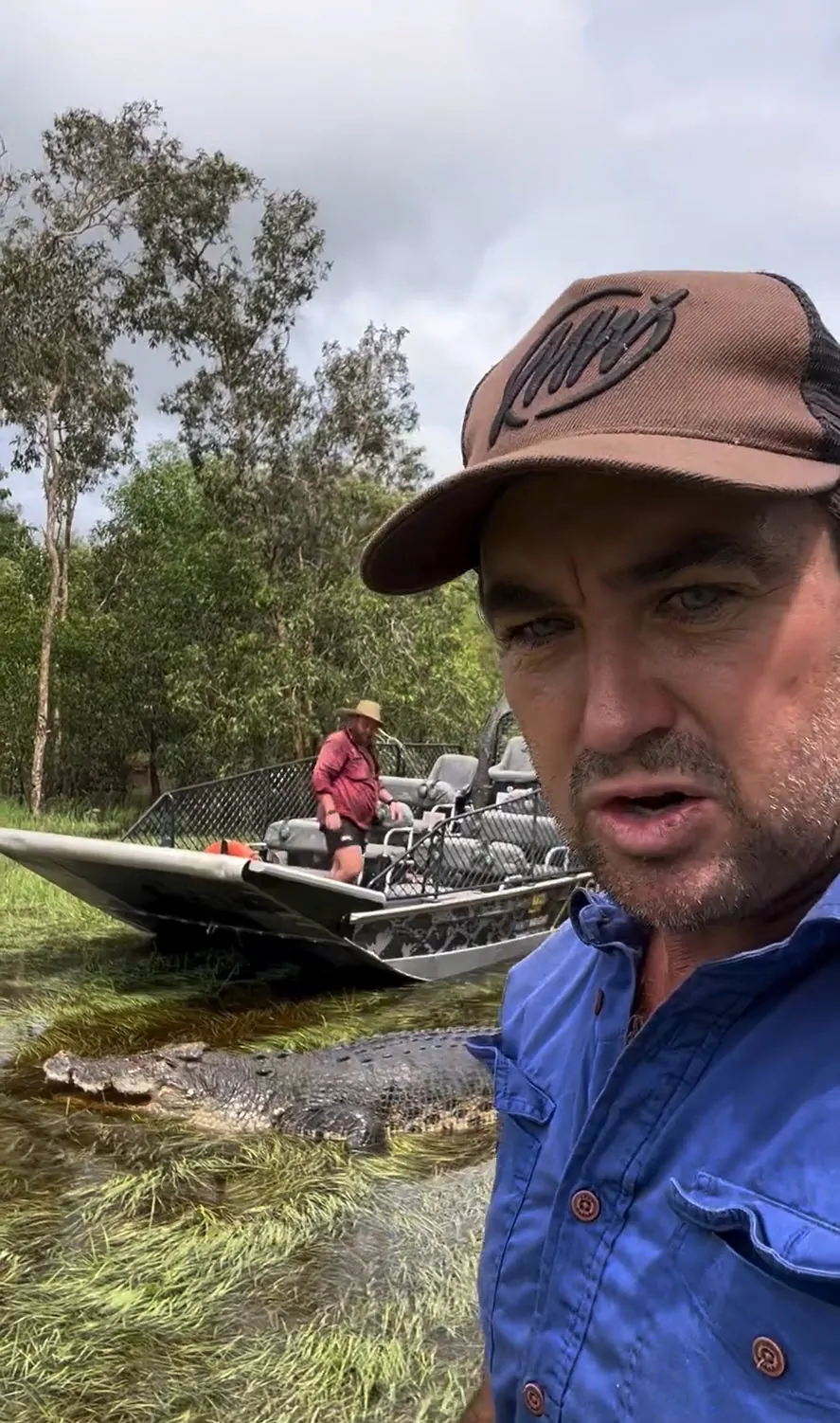
Matt Wright airboat crash: Judge’s rebuke sparks push to combine lawsuits against Top End Safari Camp.
A scathing judicial intervention has dramatically reshaped the legal battlefield surrounding the disastrous Outback Wrangler tourism excursion.
Federal Court Justice Michael Lee has taken aim at the fragmented nature of the litigation emerging from the remote Australian accident.
He openly questioned why multiple families caught in the very same disaster were fighting across three separate superior courts.
His sharp remarks have now triggered an urgent push by legal teams to consolidate the sprawling lawsuits into a single courtroom.
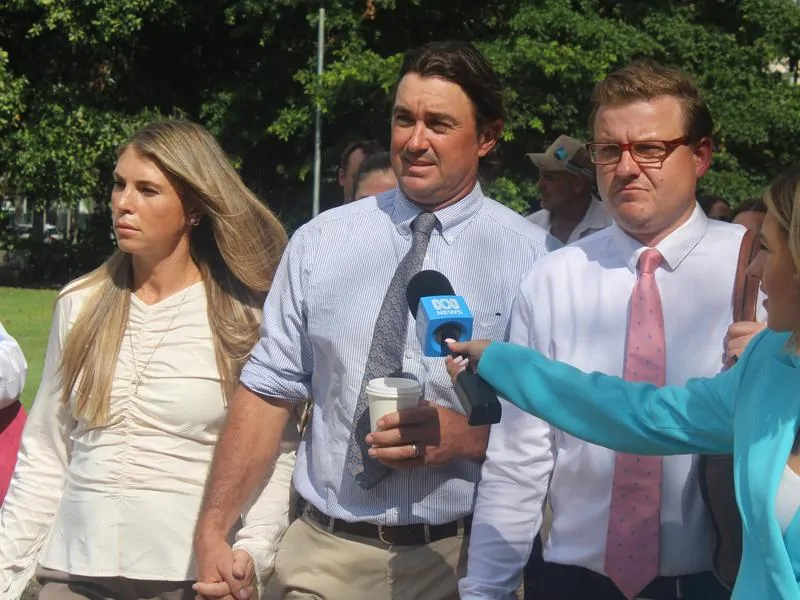
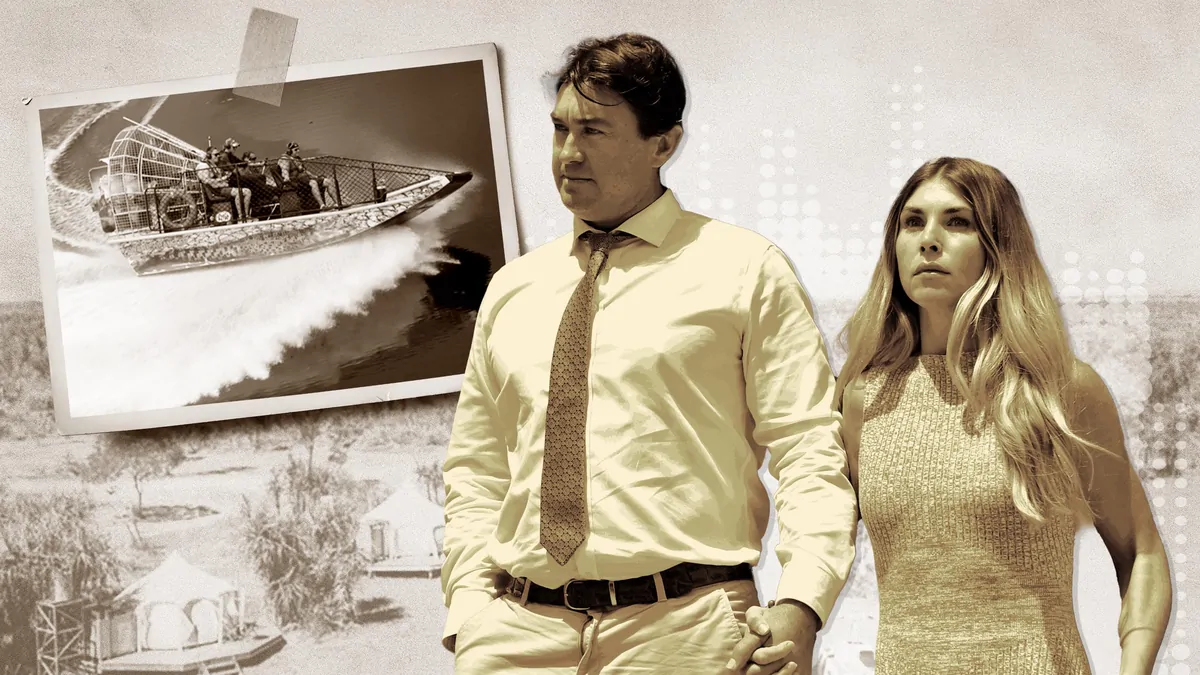
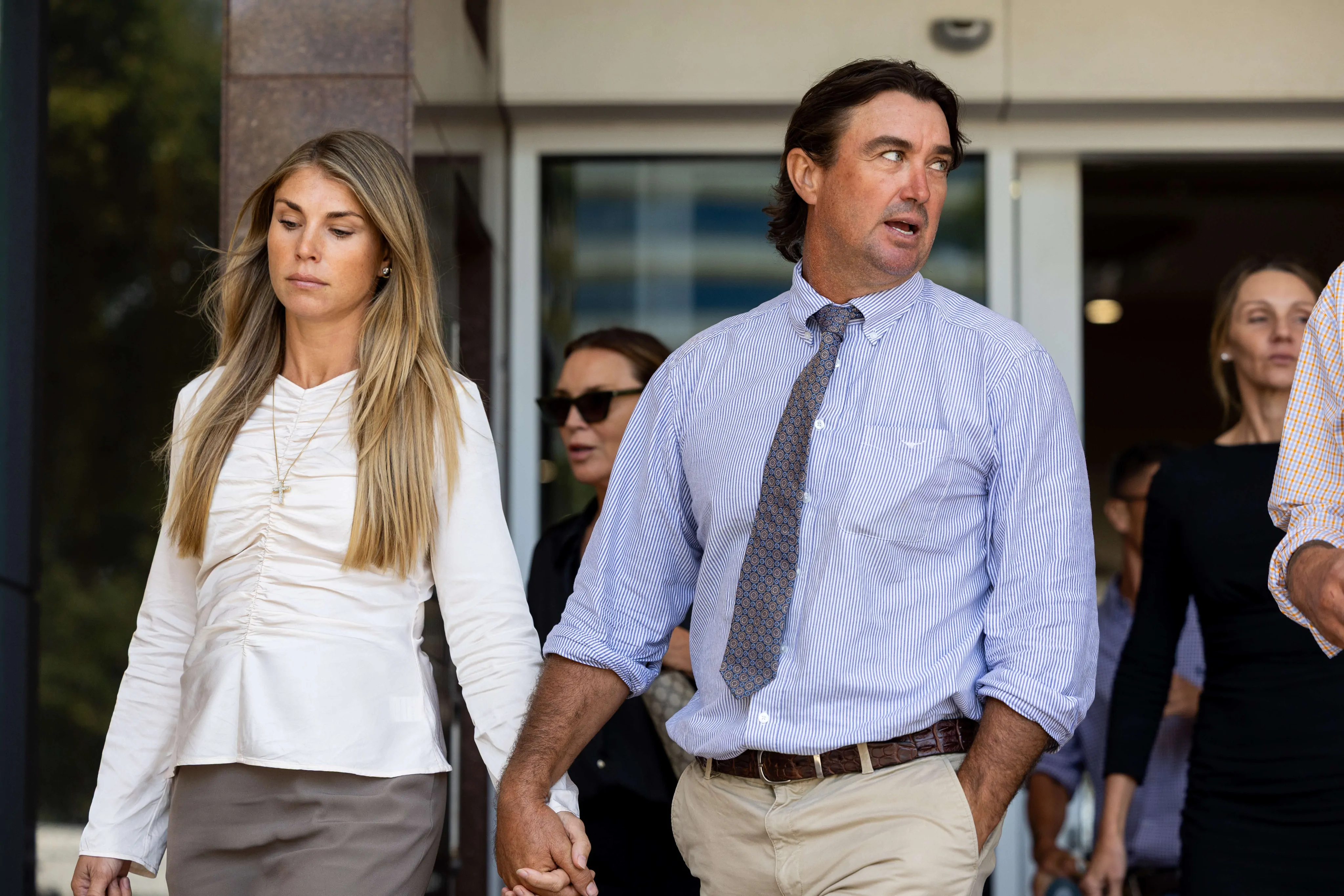
The high-stakes litigation centers on television personality Matt Wright, his wife Kaia Wright, and their company, Top End Safari Camp.
All three face intense civil claims arising from an airboat voyage that ended in catastrophe in May 2023.
A CRITICAL INTERVENTION
The judicial critique first erupted during a Federal Court hearing held in Sydney.
Justice Lee expressed total disbelief that victims of the exact same event were pursuing isolated claims across different Australian jurisdictions.
He made his frustration clear on the public record with an unvarnished assessment of the situation.
“There’s a whole series of people affected by this accident,” Justice Lee declared.
“Why it’s not in a class action is beyond me,” he stated directly to the legal representatives.
He further pressed the advocates on the basic efficiency of the justice system.
“Why should three superior courts be dealing with similar matters?” Justice Lee asked.
When the parties returned to his courtroom on Thursday, the judge immediately picked up where he had left off.

He demanded to know what tangible steps had been taken to rationalise the proceedings.
The litigation had become scattered between the Federal Court of Australia, the Supreme Court of Victoria, and the Supreme Court of the Northern Territory.
THE SWEETS LAGOON DISASTER
The lawsuits originate from a terrifying tourism incident in the far north of Australia.
In May 2023, a custom airboat tour was navigating Sweets Lagoon, roughly 120 kilometers southwest of Darwin.
The vessel was operating in waters well known for housing dangerous crocodile populations.
A total of 13 tourists were on board the vessel when disaster struck.
The airboat reportedly slammed at speed directly into a riverside tree.
The violent collision threw more than a dozen passengers forward without warning.
The force of the impact left passengers severely injured and deeply traumatized.
One female passenger suffered severe head injuries in the impact.
Another woman sustained a serious leg injury during the collision.
The incident added to a turbulent period for Wright, whose airboat crash followed a fatal helicopter disaster in February 2022.
THE PLAINTIFFS STEP FORWARD
Multiple families who survived the crash quickly sought legal representation to pursue damages.
In the Federal Court, proceedings were initiated by Ryan and Philippa Payne alongside their two children.

The Payne family, hailing from New South Wales, joined forces with Scott and Bianca McFarlane and their children from Queensland.
Together, the eight applicants in that action brought serious allegations against the safari operator.
They have accused the Wrights of actionable negligence regarding the operation of the vessel.
Their pleadings also allege unconscionable conduct in direct breach of Australian consumer laws.
The families are pursuing substantial financial compensation for their physical and psychological harm.
Their claims seek common compensatory damages alongside aggravated and exemplary damages.
Exemplary damages serve as a punitive legal remedy designed to mark court disapproval of egregious conduct.
Meanwhile, a separate legal battle was launched inside the Northern Territory Supreme Court.
That claim was filed by Amelia-Kate and Gregory Potts, who were also among the victims of the crash.
A third independent action was initiated in the Supreme Court of Victoria.
THE CROSS-VESTING PUSH
Justice Lee’s initial rebuke forced lawyers on all sides to rethink their fragmented legal strategy.
During Thursday’s Federal Court hearing, barrister Timothy Smartt updated the bench on the consolidation efforts.
Smartt represents the eight applicants currently fighting their case within the Federal Court.
He informed Justice Lee that formal steps were already underway to transfer the Victorian matter.
“One of the applicants in the other superior court has filed a cross-vesting application,” Smartt told the court.
Cross-vesting laws allow Australian superior courts to transfer civil proceedings between jurisdictions in the interests of justice.
Smartt explained that the defense teams were aligned on bringing that action across state lines.
“I understand that the respondents in this application will consent to it,” Smartt told the judge.
“So that will come to here,” he confirmed.
Smartt also delivered an update regarding the Potts family’s claim in Darwin.
He noted that discussions had taken place with the plaintiffs currently before the Northern Territory Supreme Court.
“They’re seriously considering it,” Smartt reported regarding a transfer.
“I can’t predict what they’ll do, but I think they’ll come,” he added.
DEFENSE RESPONDS IN COURT
Amanda Bond appeared before the court representing Matt Wright, Kaia Wright, and Top End Safari Camp.
She confirmed that procedural machinery was moving quickly in the southern state.
Bond told Justice Lee that a summons had officially been filed in the Victorian Supreme Court proceedings.
She anticipated that the cross-vesting application would be formally heard by a judge in Victoria within three weeks.
The Wrights have maintained a firm stance against the allegations raised by their former guests.
They reject any negligence on the part of themselves personally.
They similarly deny that their businesses or any of their employed staff acted negligently during the tour.
The courtroom maneuvering follows a failed mediation session held just last Friday.
That court-ordered alternative dispute resolution process concluded without any financial settlement between the parties.
THE INSURANCE IMPASSE
Complicating the push toward a resolution is a tense dispute involving the safari camp's insurer.
Allianz Australia Insurance Ltd appeared in the Federal Court represented by Matthew Harvey KC.
Harvey outlined profound legal complexities surrounding the insurance policy held by the tourism venture.
He indicated that Matt Wright might face significant difficulty tapping into his insurance coverage for the accident.
The court heard that the insurer cannot simply agree to pre-trial liability settlements.
Harvey explained that the nature of the policy ties the insurer’s hands in settlement negotiations.
“The insured can’t accept liability, if it does then we can elect not to follow through on the policy,” Harvey warned the court.
This strict clause creates a major obstacle for Wright and his operating company.
If the Wrights were to admit fault to reach a deal with the families, the insurer could void coverage entirely.
Consequently, the underlying issue of legal liability must be determined by a judge at trial.
“One of the issues that will need to be determined by the court is the question of liability,” Harvey stated.
MARITIME LAW AND EXCLUSION CLAUSES
The court must also unpack technical questions regarding maritime statutes.
Harvey told Justice Lee that the court needs to establish whether the incident occurred in waters governed by marine insurance law.
Airboats occupy a unique space in transport law, often operating across shallow marshlands and inland waterways.
Another critical hurdle involves the illegality exclusions written into the insurance contract.
Policies routinely exclude indemnity if an incident arises from the commission of an offense or unlawful conduct.
Justice Lee acknowledged that the responsibility for assessing those exclusions falls squarely upon him.
He noted that he would have to make definitive findings on the facts.
The judge must decide whether an insurance exclusion applies due to the commission of an offense during the airboat operation.
If such exclusions apply, Wright and his safari camp could be left without indemnity against any damages award.
ROADMAP TO TRIAL
Justice Lee made it clear that he will not allow the litigation to drift indefinitely.
He expressed an ambition to gather every thread of the Sweets Lagoon disaster under one roof.
Once the lawsuits are unified, the judge envisions an expedited trial process.
Justice Lee indicated that the unified matter could proceed to a trial lasting no more than two days.
He penciled in that short, focused trial for early 2027.
To keep the litigation moving forward, the court established immediate procedural deadlines.
Justice Lee scheduled a formal pre-trial hearing for December 2.
That hearing will evaluate whether the Victorian and Northern Territory lawsuits have successfully arrived in the Federal Court.
Until then, the injured tourists and the Outback Wrangler star remain locked in a complex jurisdictional holding pattern.
Advertisement
You may also like
Inside Draymond Green’s Ejection After Tangling With Khaman Maluach And Dillon Brooks
Draymond Green was ejected early in the third quarter after wrapping his arms around Phoenix Suns center Khaman Maluach to pull him down and…
Collin Gosselin Exposes Reality TV Filming and Details Disturbing Abuse Allegations Against Mom Kate
In his memoir In the Shadow of Eight, Collin Gosselin alleged that his reality TV upbringing on Jon & Kate Plus 8 involved forced…
Insiders Reveal Bill Belichick's Family Relieved By Hudson Breakup, But Business Worries Remain Deep
Bill Belichick's family is reportedly relieved that his romantic relationship with Jordon Hudson has ended, but their worries are far from over regarding her…

Jon Rahm Fires Opening 65 In Abu Dhabi As Collapsing LIV Golf Faces Liquidation
Just as LIV Golf's proposed LIV 2.0 relaunch collapsed following the withdrawal of BC Partners, Jon Rahm returned to action by firing a seven-under-par…

Kalle Sauerland Restructures Dana White Vs. Eddie Hearn Purse To Straight $10 Million Deal
Misfits Boxing co-founder Kalle Sauerland revealed he replaced his original $20 million winner-takes-all proposal with a straight $10 million offer to make the clash…

Sandy Brondello Thrives In Toronto While Liberty Fire Chris DeMarco After Just One Season
Sandy Brondello led the New York Liberty to their first-ever championship in 2024 before leaving for the Toronto Tempo, where her team is currently…