Matt Wright Faces Legal Hurdle As Insurer Warns Policy Exclusions Could Block Airboat Crash Coverage
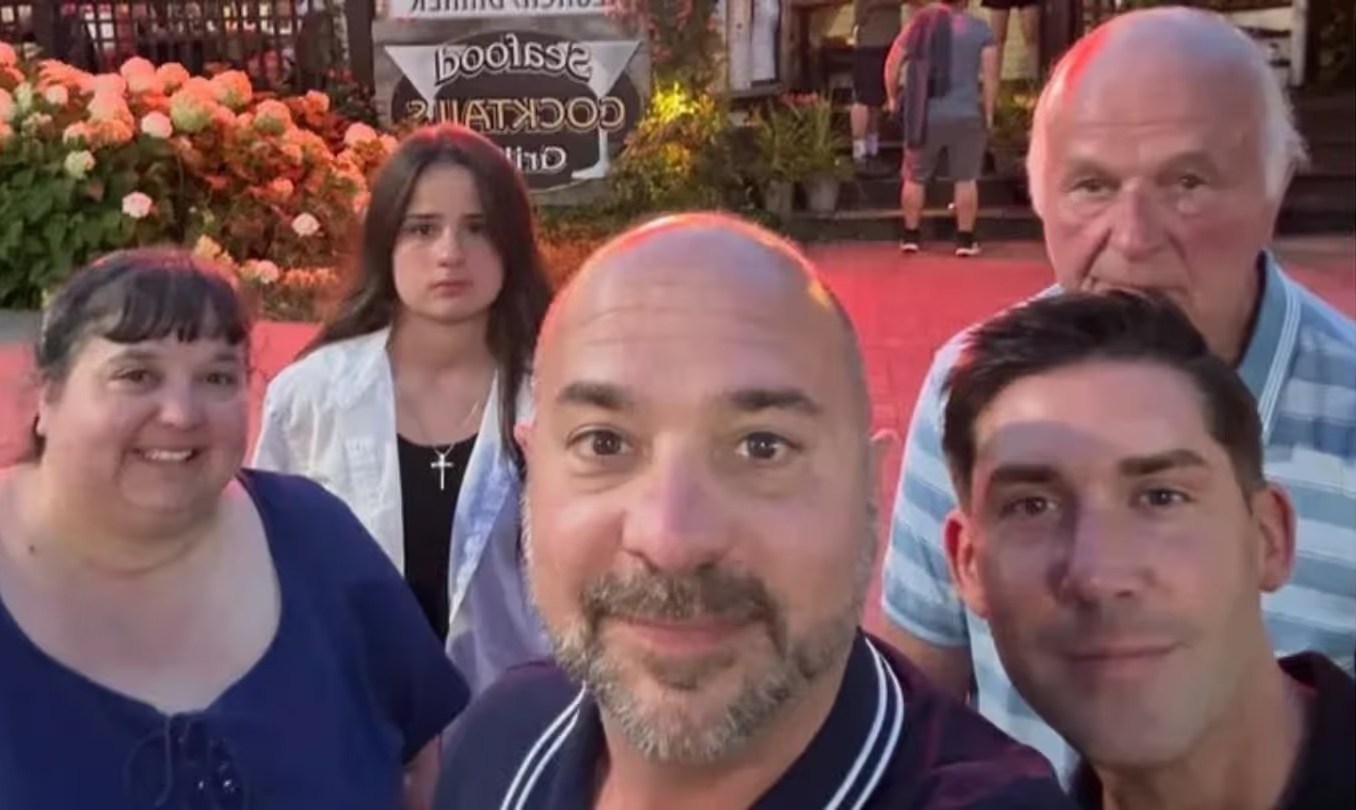
Insurer Allianz Australia warned in Federal Court that policy exclusions regarding illegality and liability could prevent reality TV star Matt Wright and his camp from tapping insurance coverage following a 2023 airboat crash.
The warning introduces a complex legal obstacle for the Outback Wrangler celebrity and his tourism business.
Wright and his wife, Kaia Wright, are facing civil lawsuits after a commercial airboat tour ended in a violent collision in the Northern Territory.
The crash left multiple passengers injured and prompted families to file actions across multiple Australian court jurisdictions.
Now, the dispute over who ultimately covers the financial fallout has shifted directly toward the fine print of the commercial insurance policy.
THE SWEETS LAGOON INCIDENT
The civil litigation stems from an excursion that took place in May 2023.
The incident unfolded at Sweets Lagoon, an aquatic destination located roughly 120 kilometers southwest of Darwin.
That remote waterway sits near the safari camp owned and operated by Wright and his wife.
According to court filings, the vessel was navigating waters known to be inhabited by crocodiles.
The airboat was carrying 13 tourists through the area at the time of the excursion.
Lawsuits allege that the vessel was traveling at speed when it slammed directly into a riverside tree.
The force of the impact violently propelled more than a dozen passengers forward inside the craft.
The collision resulted in serious physical injuries to multiple passengers on board.
One woman suffered severe head injuries during the impact.
Another passenger sustained a serious leg injury when the boat struck the tree.
Victims also allege that they endured lasting psychological trauma from the crash in the isolated lagoon.
MULTIPLE LAWSUITS AND SERIOUS ALLEGATIONS
At least three couples and their children have initiated legal proceedings against the high-profile television host and his business.
The applicants include Ryan and Philippa Payne and their two children, who traveled to the Northern Territory from New South Wales.
Another family pursuing legal action consists of Scott and Bianca McFarlane and their children, who are based in Queensland.
Both families filed lawsuits in the Federal Court of Australia against the Wrights and their commercial entity, Top End Safari Camp.
The claims formally accuse the operators of negligence regarding the operation of the vessel.
The court filings also allege that the operators engaged in unconscionable conduct in breach of consumer laws.
In their claims, the families are pursuing substantial financial compensation.
The damages sought include aggravated and exemplary damages, which are typically claimed to penalize conduct deemed particularly egregious.
In addition to the Federal Court proceedings, another couple, Amelia-Kate and Gregory Potts, filed a lawsuit in the Northern Territory Supreme Court.
For their part, the Wrights firmly reject any wrongdoing.
The couple rejects any negligence on the part of themselves, their commercial businesses, or their employees.
INSURANCE EXCLUSIONS EMERGE IN COURT
While the injured tourists are seeking compensation, the question of who pays any potential damages has become a central battleground.
Allianz Australia Insurance Ltd appeared before the Federal Court in Sydney to address the scope of its policy obligations.
Senior counsel Matthew Harvey KC, representing Allianz, outlined major legal hurdles regarding coverage for the incident.
Harvey told the court that the legal framework governing the incident must first be clarified.
One fundamental issue the court must determine is whether the accident occurred in a jurisdiction where marine insurance legislation applies.
Marine insurance law typically imposes specific statutory regimes regarding maritime operations and commercial vessels.
Beyond statutory jurisdiction, the insurer raised policy exclusions concerning potential illegality.
Harvey alerted the court that exclusions within the policy could apply if an offense had been committed during the operation.
Justice Michael Lee observed that he, as the presiding judge, would have to determine the facts regarding whether policy exclusions apply due to the commission of an offense.

THE QUESTION OF LIABILITY
The insurer made it clear that coverage cannot simply be presumed before trial.
“One of the issues that will need to be determined by the court is the question of liability,” Harvey told the court.
Harvey explained that agreement on liability could not simply be reached before trial due to strict policy consequences for the insured party.
“The insured can’t accept liability, if it does then we can elect not to follow through on the policy,” Harvey told the court.
Under standard insurance law principles, commercial liability contracts typically contain strict clauses prohibiting an insured party from admitting fault without insurer consent.
If an insured party breaches that condition by conceding liability, the insurance company may legally repudiate the claim.
Consequently, the operators cannot negotiate a settlement that admits liability without risking the total loss of indemnity.
That limitation complicates potential resolution talks between the operators and the injured passengers.
A recent attempt at formal mediation failed to produce a settlement between the parties.
That mediation session took place on a Friday shortly before the parties returned to court.
JUDICIAL PUSH TO COMBINE FRAGMENTED ACTIONS
Beyond the insurance coverage fight, the litigation has drawn sharp scrutiny from the bench over procedural inefficiency.
Victims of the same May 2023 airboat crash had previously launched separate lawsuits across three different superior courts.
Proceedings had been filed in the Federal Court, the Supreme Court of Victoria, and the Supreme Court of the Northern Territory.
During a hearing in September, Justice Lee issued a scathing rebuke regarding the fragmented approach to the litigation.
“There’s a whole series of people affected by this accident. Why it’s not in a class action is beyond me,” Justice Lee declared.
“Why should three superior courts be dealing with similar matters?” the judge asked.
When the parties returned to the Federal Court on Thursday, Justice Lee immediately pressed the attorneys on what steps had been taken to resolve the overlap.
The judge reiterated his objective to consolidate the disparate claims into a single legal action.
Barrister Timothy Smartt, who represents eight applicants in the Federal Court, provided an update on efforts to streamline the litigation.
Smartt revealed that a formal cross-vesting application had already been lodged to transfer the Victorian Supreme Court case.
“One of the applicants in the other superior court has filed a cross-vesting application, and I understand that the respondents in this application will consent to it,” Smartt told the court.
“So that will come to here,” Smartt said of the Victorian action.
Cross-vesting laws in Australia permit superior courts to transfer proceedings to another court if it is deemed in the interests of justice.
Smartt also informed the bench that discussions were underway with the plaintiffs who filed their action in Darwin.
“They’re seriously considering it. I can’t predict what they’ll do, but I think they’ll come,” Smartt said regarding the Northern Territory litigants.
Attorney Amanda Bond, representing Matt Wright, Kaia Wright, and Top End Safari Camp, confirmed the movement in Victoria.
Bond confirmed that a summons had been filed in the Victorian Supreme Court proceedings.
She told the court she anticipated that the Victorian transfer summons would be heard within three weeks.
THE ROAD TO TRIAL
Justice Lee is now moving to establish a clear procedural path for the dispute.
The court has scheduled a pre-trial hearing for December 2 to assess the progress of consolidating the claims.
Justice Lee indicated that once the matters are unified, the dispute could proceed to a trial lasting no more than two days.
That trial is anticipated to take place early in 2027.
The upcoming trial will require the court to assess both the circumstances of the river collision and the application of insurance exclusions.
The airboat incident followed an earlier fatal helicopter crash that had already brought intense legal scrutiny to Wright's circle.
Now, Wright and his tourism venture face years of litigation before any final determination is made.
Until the court resolves whether Allianz must indemnify the venture, the financial risk hangs over the safari operation.
Should insurance companies be allowed to deny coverage to commercial tour operators when paying passengers are injured on excursions?
Advertisement
You may also like

NBA champion Steve Kerr trolls Donald Trump with a savage jab
Golden State Warriors head coach Steve Kerr took a sharp, humorous jab at President Donald Trump during his Wednesday media availability, referencing a campaign…

John Cena’s subtle salute to Gunther after his return
John Cena made a surprise appearance on the Oct. 30, 2026 edition of WWE NXT. As he walked to the ring, he stopped in…

Braden Smith Makes NBA Debut With the Pacers
Purdue basketball alum Braden Smith makes NBA debut with the Pacers. Braden Smith, the former Purdue Boilermakers guard, stepped onto an NBA floor for…

Red Wings vs. Golden Knights Live Score and Game Updates
NHL.LIVE: Detroit Red Wings vs Vegas Golden Knights LIVE STREA.MS NHL Game On TV Coverage 6 Nov 2026. Puck drop is set for 7…

Business leaders face a tough choice with workplace monitoring.
Big Brother 2026 has officially crowned a winner. Rochelle took the title on the live final, hosted by AJ Odudu and Will Best on…

WWE Plans Huge 30th Anniversary Celebration for The Rock
WWE is planning to celebrate 30 years of The Rock this month. Plans include a commemorative championship belt. Special merchandise releases are also in…