McIlroy admits he almost quit the DP World Tour over one rule.
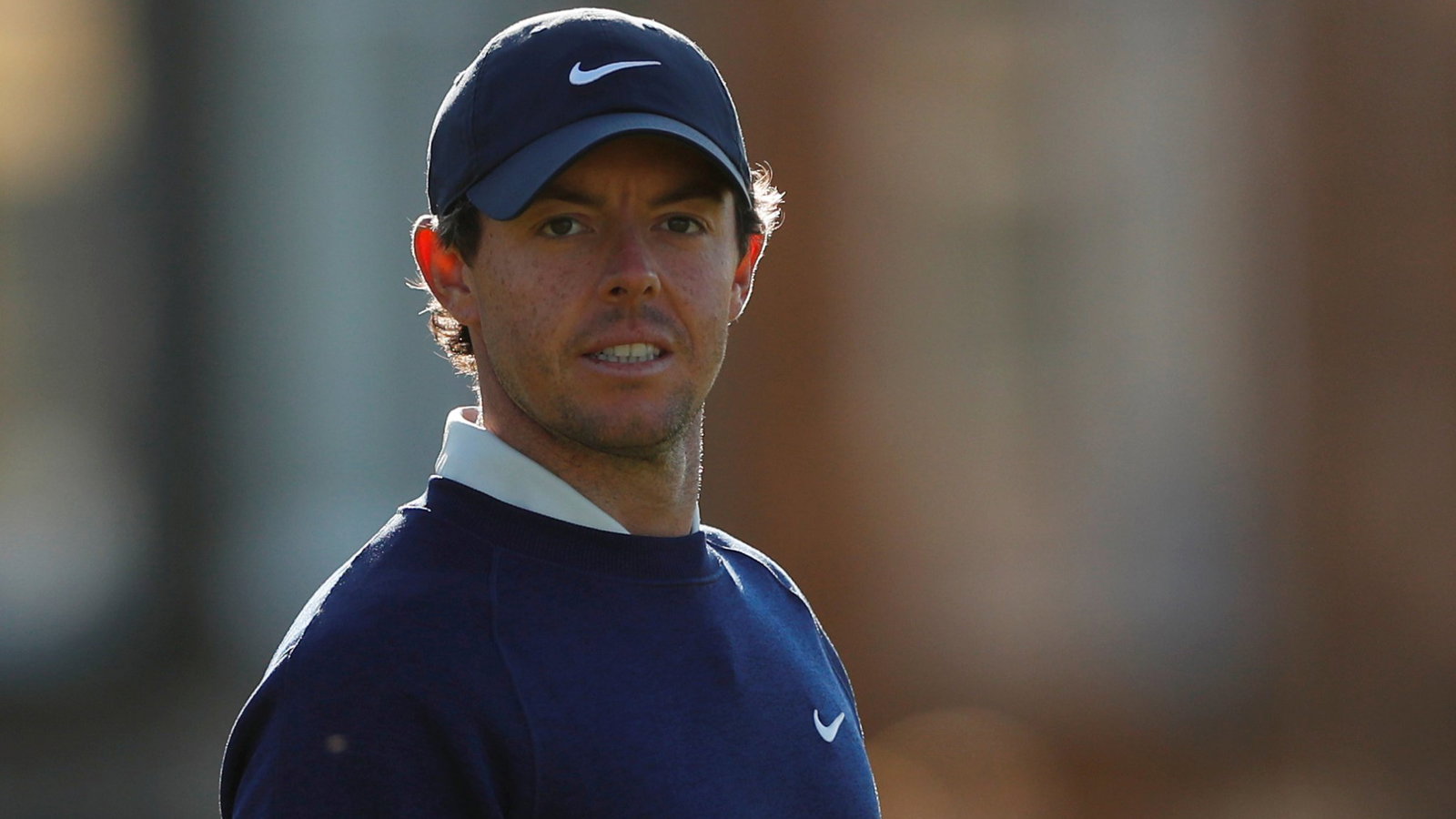
Rory McIlroy has revealed he came within a single conversation of giving up his European Tour membership in 2019 — a move that would have permanently barred him from ever captaining or vice-captaining a European Ryder Cup team.
The six-time major champion admitted the near-mistake while speaking to reporters ahead of this week's Abu Dhabi Championship at Yas Links.
McIlroy said he was seriously considering resigning his membership with what was then called the European Tour, now the DP World Tour, to focus entirely on the PGA Tour.
He felt he was spreading himself too thin by maintaining commitments on both sides of the Atlantic.
But one phone call with Keith Pelley, the former chief executive of the European Tour, changed everything.
"Yeah, I nearly fell foul of that rule," McIlroy said.
"I was going to give my DP World Tour membership up in 2019, and I had a chat with Keith Pelley at the time, and said, 'Look, you know, based in America. I want to focus over there for a bit.'"
Pelley's response stopped McIlroy cold.
"Keith said to me, 'Totally fine but you do know if you give up your membership or you resign your membership, you can't be a captain or vice-captain of the Ryder Cup in the future.'"
McIlroy's answer was immediate.
"I was like, 'Well, I'm not going to do that then.'"
The rule in question is a standing DP World Tour regulation.
Any player who resigns their membership forfeits the right to serve as a Ryder Cup captain or vice-captain for Europe in the future.
It is a restriction that applies regardless of the reason for leaving — whether for LIV Golf, the PGA Tour, or any other circuit.
McIlroy emphasized that his own thought process in 2019 had nothing to do with LIV Golf, which did not launch until 2022.
"I've had that, I guess, thought in my mind at one point as well, and it wasn't even about LIV," he said.
"It was just about feeling like maybe I was spread too thin and trying to play here, there and everywhere."
He added that the rule is well known across the tour.
"But everyone knows that rule, and everyone knows that if you abdicate your membership, that's the consequence."
The revelation carries heavy implications for a group of LIV Golf defectors who did resign their DP World Tour memberships.
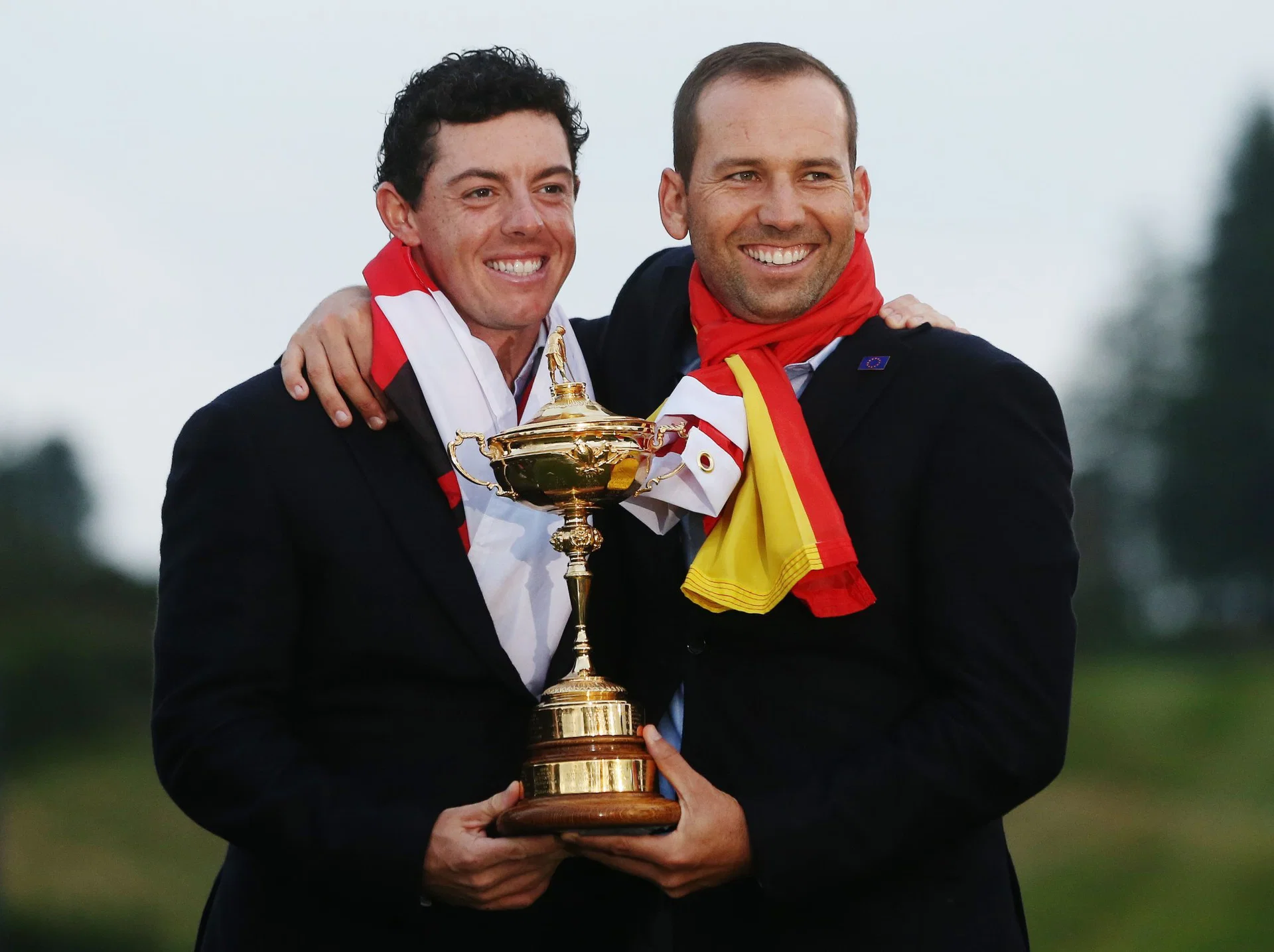
Sergio Garcia, Lee Westwood, Ian Poulter and Graeme McDowell all terminated their memberships after joining the Saudi-backed breakaway league.
Garcia has since left LIV Golf and is preparing to return to the DP World Tour in 2027.
He confirmed last week that he would do everything possible to play well enough to earn selection for Luke Donald's next European Ryder Cup team at Adare Manor next September.
The Spaniard also expressed his willingness to help the team in any capacity.
Garcia remains the all-time record points scorer in Ryder Cup history.
He has made no secret of his desire to return to the team for the first time since 2021.
But becoming a future captain or vice-captain is an entirely different question.

Under the current DP World Tour regulations, players who have resigned their membership face restrictions on future Ryder Cup leadership positions.
That means Garcia, despite his legendary record, could find himself unable to follow in the footsteps of former European captains such as Bernhard Langer, Colin Montgomerie and Thomas Bjorn.
The same restriction applies to Westwood, Poulter and McDowell.
None of those players have yet commented publicly on whether the rule would affect any future captaincy ambitions they might hold.
The situation creates a stark contrast with McIlroy, who narrowly avoided the same fate through that single conversation with Pelley.
McIlroy's near-miss is a reminder of how easily the careers of even the biggest stars can be reshaped by a procedural rule.
If McIlroy had resigned in 2019, Europe would have lost one of its most prominent potential future captains.
Instead, McIlroy remains an active DP World Tour member and a likely candidate for Ryder Cup captaincy later in his career.
The DP World Tour changed its name from the European Tour in 2022, but the membership rule has remained consistent throughout.
McIlroy's story also highlights the personal calculation that every top player must make when deciding where to compete.
The demands of playing on both the PGA Tour and the DP World Tour are significant.
Travel between continents, different time zones, and overlapping schedules create a constant pressure on players to choose.
McIlroy based in the United States, felt that pressure acutely in 2019.
He was not the first player to consider giving up his European membership, and he will not be the last.
But the Ryder Cup captaincy restriction is a powerful disincentive for any player with aspirations of leading Europe's team.
For the LIV Golf defectors, the decision to resign their DP World Tour memberships was made with full knowledge of the consequences.
Whether any of them expected those consequences to matter is a separate question.
Garcia's return to the DP World Tour in 2027 will test how the rule is applied in practice.

He will be eligible to play for Europe again at Adare Manor if he earns selection.
But the captaincy door appears closed unless the DP World Tour amends its regulations.
No indication has been given that the tour plans to change the rule.
The Abu Dhabi Championship this week at Yas Links is McIlroy's first opportunity to compete since making his admission.
He is expected to be a central figure in the tournament, which draws a strong field each year.
The broader context of professional golf remains fractured, with LIV Golf and the established tours still negotiating their relationship.
McIlroy has been one of the most vocal critics of LIV Golf since its inception.
His near-departure from the DP World Tour in 2019, before LIV even existed, adds an ironic layer to his current position.
He almost left the tour for reasons that had nothing to do with the breakaway league that has since consumed so much of the sport's attention.
Now he is one of the strongest defenders of the DP World Tour and its traditions.
The Ryder Cup captaincy rule remains one of the few concrete consequences for players who walk away from the tour.
Whether it will continue to be enforced strictly, or whether exceptions will be made for returning players like Garcia, remains an open question.
For now, the rule stands.
And McIlroy's story is a vivid illustration of how close the sport came to losing a future captain before he ever had the chance to lead.
Advertisement
You may also like

NBA champion Steve Kerr trolls Donald Trump with a savage jab
Golden State Warriors head coach Steve Kerr took a sharp, humorous jab at President Donald Trump during his Wednesday media availability, referencing a campaign…

John Cena’s subtle salute to Gunther after his return
John Cena made a surprise appearance on the Oct. 30, 2026 edition of WWE NXT. As he walked to the ring, he stopped in…

Braden Smith Makes NBA Debut With the Pacers
Purdue basketball alum Braden Smith makes NBA debut with the Pacers. Braden Smith, the former Purdue Boilermakers guard, stepped onto an NBA floor for…

Red Wings vs. Golden Knights Live Score and Game Updates
NHL.LIVE: Detroit Red Wings vs Vegas Golden Knights LIVE STREA.MS NHL Game On TV Coverage 6 Nov 2026. Puck drop is set for 7…

Business leaders face a tough choice with workplace monitoring.
Big Brother 2026 has officially crowned a winner. Rochelle took the title on the live final, hosted by AJ Odudu and Will Best on…

WWE Plans Huge 30th Anniversary Celebration for The Rock
WWE is planning to celebrate 30 years of The Rock this month. Plans include a commemorative championship belt. Special merchandise releases are also in…