Monica McNutt Highlights Caitlin Clark's Responsibility to Teammates Enduring Online Hostility and Abuse
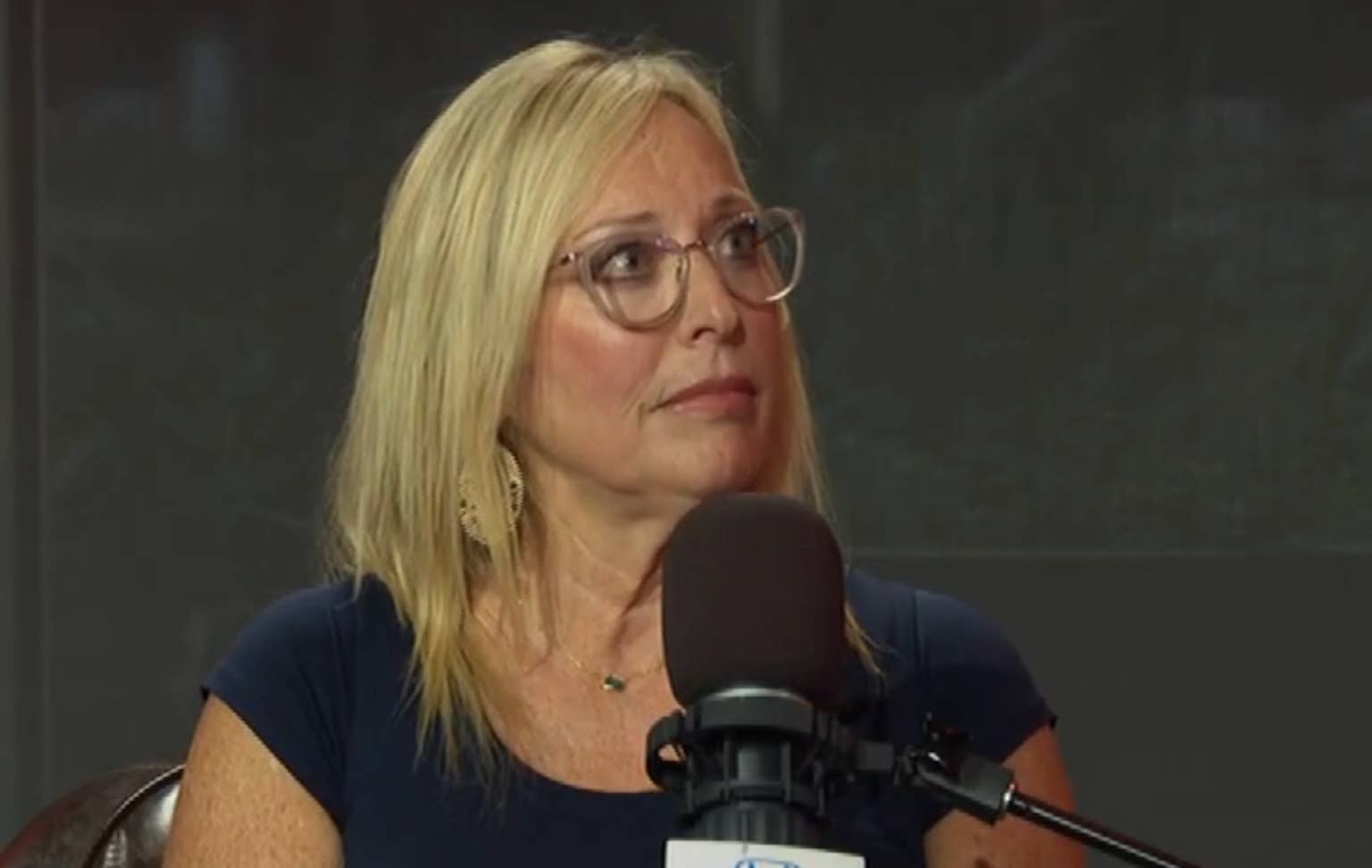
During an appearance on The Pivot Podcast with Ryan Clark, ESPN analyst Monica McNutt addressed the racial tensions around Caitlin Clark's popularity and questioned whether the Indiana Fever star shows enough understanding for teammates facing online backlash.
McNutt focused on the complex environment that has followed the record-setting guard since her arrival in professional basketball.
While Clark has undeniably brought unprecedented viewership and commercial interest to the WNBA, the discourse surrounding her has frequently turned toxic.
McNutt argued that this surge in popularity has created an uncomfortable dynamic inside the locker room.
In her conversation on the podcast, the analyst acknowledged the positive attention Clark has generated for the sport.
However, she emphasized that the darker side of that spotlight cannot be dismissed.
McNutt pointed out that other players have been subjected to severe digital harassment from vocal segments of the fan base.
She specifically raised the issue of Clark's responsibility in setting boundaries for those who claim to support her.
THE COMMENTS ON THE PIVOT
McNutt explained her personal discomfort with how certain elements of the public use an athlete's platform.
"When you talk about the positivity… (it's) fantastic," McNutt said during the episode.
"But I think, for me, there is no way someone could use my likeness to support causes I oppose," she added.
"And I think that is where I have found the challenge in this conversation."
McNutt maintained that remaining silent or offering occasional statements might not be enough given the intensity of the abuse.
She highlighted how teammates often absorb venomous critiques simply for sharing the court with the rookie sensation.
"As exhausting as it may be for you to have to repeat these things, how exhausting, then, is the experience of your teammates who are catching the brunt of it?" McNutt asked.
McNutt suggested that Clark, who was raised in Iowa, may need more time to grasp the cultural realities of the league.
She stated that coming from the Midwest might affect the pace at which Clark understands these complex dynamics.
FEVER TEAMMATES IN THE CROSSHAIRS
The environment surrounding the Indiana Fever became a major talking point throughout Clark's rookie campaign.
Indiana fans and social media users placed several roster members under intense public scrutiny.
Veteran guard Kelsey Mitchell openly acknowledged facing severe criticism during the year as Clark's backcourt partner.
Other teammates, including forward Sophie Cunningham, have also found themselves pulled into heated culture-war discussions.
Hostile comments directed at Fever players raised concerns among league observers throughout the summer.
McNutt argued that such hostility requires continuous and assertive condemnation from the person at the center of the movement.
In her view, Clark must realize that her influence carries a duty to defend the players around her.

CLARK'S RECORD ON DISCRIMINATION
Supporters of Clark have pushed back strongly against McNutt's assessment of the situation.
Clark, who entered the league as a 24-year-old superstar, has repeatedly stated her opposition to hateful speech.
During her rookie year, Clark addressed questions about racism and toxic fandom on several occasions.
She addressed the issue directly at her end-of-season press conference in early October.
Clark firmly distanced herself from individuals attempting to weaponize her celebrity.
"I think as far as people that have used me to demonstrate racist rhetoric or hate or discrimination, that’s not something I stand for," Clark said at the time.
"That’s never been something I’ve stood for," the Fever guard stated.
Those defending Clark argue that these public statements are clear and leave no ambiguity about her morals.
They believe no single young player should be forced to police millions of internet commentators.
LINDA COHN SLAMS FALSE NARRATIVE
McNutt's remarks quickly triggered a forceful defense of Clark from prominent sports broadcasting veterans.
Former longtime ESPN anchor Linda Cohn publicly criticized McNutt for misrepresenting Clark's past comments.
Cohn, who spent 34 years hosting SportsCenter before retiring in June, took to social media to voice her frustration.
She shared a clip of McNutt's appearance on X to contest the narrative.
“Why is Monica McNutt continuing to perpetuate this false narrative about Caitlin Clark and how many times she has spoken out against racism?” Cohn wrote.
Cohn emphasized that Clark has repeatedly addressed bigotry and discrimination since arriving in the WNBA.
She pointed out that Clark denounced such behavior in her comments as a rookie and continued to do so afterward.
Cohn noted that Clark has endured a level of scrutiny no incoming player in women's basketball history has ever faced.
Given Clark's short tenure in the pros, Cohn argued that the guard was still learning while already speaking out sufficiently.
Cohn also warned against the blanket politicization of sports fandom during an appearance on The Sage Steele Show.
She expressed irritation that supporting Clark often leads to people assuming a fan's political affiliation.
“You can’t like and support Caitlin Clark without being called MAGA, by the way,” Cohn told Steele.
“Which makes no sense! At all! I can’t root for a kid from Iowa who has set the world on fire?” Cohn added.
DAN DAKICH AND MEDIA CRITICS WEIGH IN
Cohn was not the only commentator who objected strongly to McNutt's characterization of the Indiana star.

Media veteran Dan Dakich delivered an explosive reaction on his sports commentary program.
Dakich directly challenged McNutt's authority to evaluate Clark's personal development and social awareness.
"There has absolutely not been one single, not one single verified issue of racism," Dakich asserted on his show.
"And Monica McNutt, you can kiss my a–, finding your voice? Who the hell are you to say that she's from the Midwest, she has a problem finding her voice?" Dakich said.
"Who the hell are you, Monica McNutt? To tell anybody that they're from the South, East?" he added.
"Need to learn how to accept that a white girl from the Midwest is dominating the action both on and off the court," Dakich continued.
OutKick reporter Jon Root also took aim at McNutt's podcast remarks on social media.
Root mocked the idea that Clark lacked awareness simply because of where she was raised.
He sarcastically wrote that critics argue Clark is ignorant to racism because she grew up in the Midwest.
Root also referenced Ryan Clark's claims that Caitlin Clark had brought negativity into the league ecosystem.
“These people are insufferable,” Root concluded in his online response.
ONGOING SCRUTINY OF MCNUTT
This latest clash adds another chapter to the ongoing debate over McNutt's coverage of the Indiana guard.
McNutt had previously drawn pushback during the 2024 regular season for backing Angel Reese in the Rookie of the Year race.
Critics have accused the ESPN analyst of overlooking Clark's historic on-court production in favor of cultural debates.
Her supporters counter that an analyst's duty is to explore both the triumphs and the cultural friction within women's sports.
Ryan Clark and McNutt used their platform to examine how racial dynamics intersect with rapid commercial expansion.
Yet the pushback shows that any critique of Clark's public posture invites immediate, passionate condemnation.
The conversation reflects how polarized the coverage of women's basketball has become over the past year.
A DIVIDED SPORT CONFRONTS ITS FUTURE
The Indiana Fever organization faces a pivotal offseason both on the hardwood and in public relations.
The franchise must find ways to shelter its roster from the relentless wave of social media harassment.
Veteran players like Mitchell have clearly felt the strain of the expanded media circus.
At the same time, Clark remains under a microscope that few athletes in American team sports ever experience.
Every silence, statement, and postgame answer is scrutinized by opposing sides of a heated media landscape.
Some analysts will continue to demand that the face of the league take a stronger leadership mantle against abuse.
Others maintain that holding a single young athlete responsible for the internet is unfair and unfounded.
Does Caitlin Clark bear a responsibility to continuously speak out on behalf of teammates facing online harassment, or has she already made her stance clear?
Advertisement
You may also like

NBA champion Steve Kerr trolls Donald Trump with a savage jab
Golden State Warriors head coach Steve Kerr took a sharp, humorous jab at President Donald Trump during his Wednesday media availability, referencing a campaign…

John Cena’s subtle salute to Gunther after his return
John Cena made a surprise appearance on the Oct. 30, 2026 edition of WWE NXT. As he walked to the ring, he stopped in…

Braden Smith Makes NBA Debut With the Pacers
Purdue basketball alum Braden Smith makes NBA debut with the Pacers. Braden Smith, the former Purdue Boilermakers guard, stepped onto an NBA floor for…

Red Wings vs. Golden Knights Live Score and Game Updates
NHL.LIVE: Detroit Red Wings vs Vegas Golden Knights LIVE STREA.MS NHL Game On TV Coverage 6 Nov 2026. Puck drop is set for 7…

Business leaders face a tough choice with workplace monitoring.
Big Brother 2026 has officially crowned a winner. Rochelle took the title on the live final, hosted by AJ Odudu and Will Best on…

WWE Plans Huge 30th Anniversary Celebration for The Rock
WWE is planning to celebrate 30 years of The Rock this month. Plans include a commemorative championship belt. Special merchandise releases are also in…