NBA Owners Resist Shortening 82-Game Slate Over Gate Revenue Despite Looming Expansion Windfall
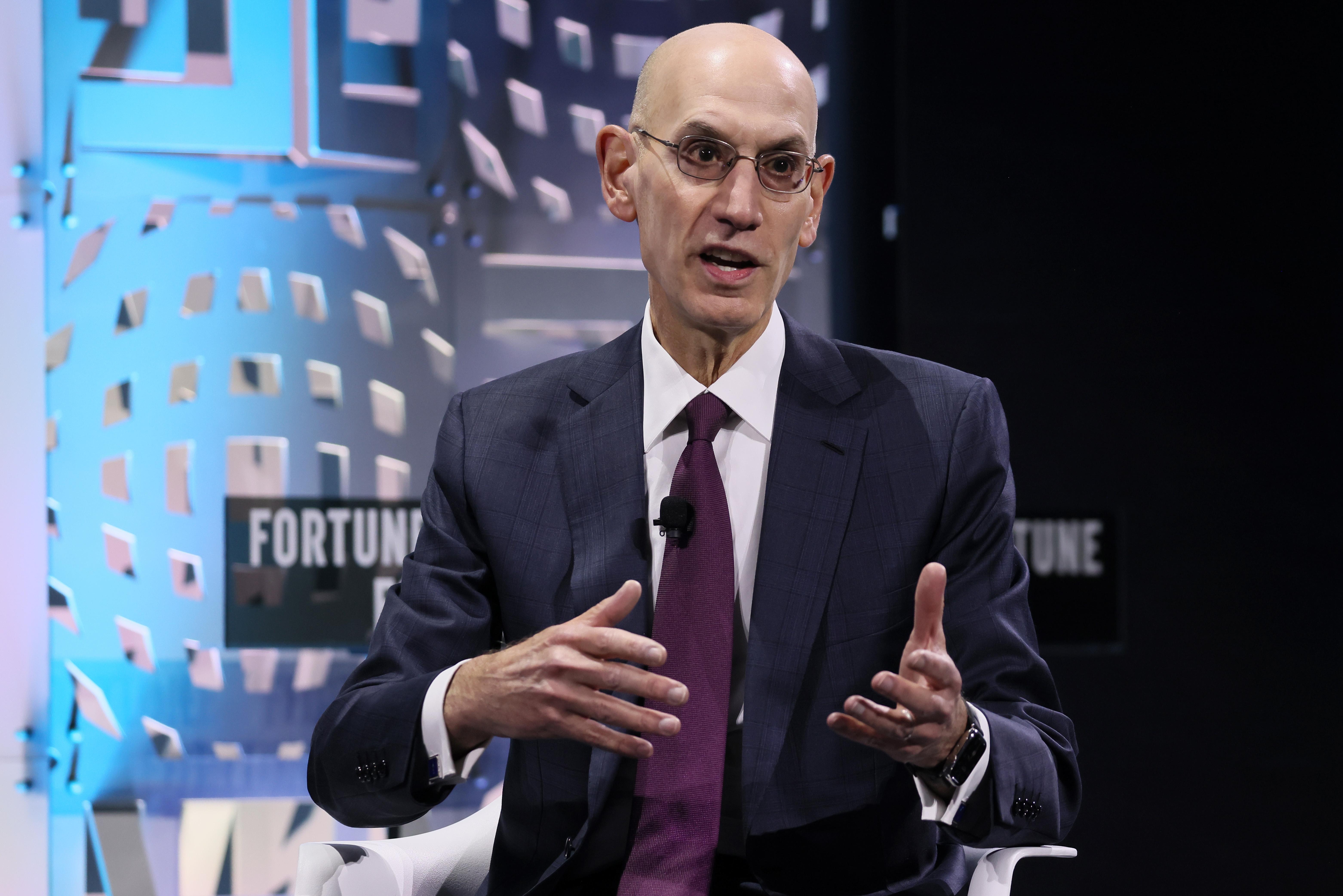
NBA owners are pushing back against cutting regular season games over lost ticket and concession revenues, even as potential expansion franchises in Las Vegas and Seattle could generate between $7 billion and $10 billion each solely for current owners.
The debate over player health and the grueling 82-game calendar has flared up across the basketball world once again.
Prominent voices are questioning why the league prioritizes local gate receipts when a historic financial windfall looms on the horizon.
The tension sits at the intersection of athlete durability and billionaire team balance sheets.
For decades, team owners have treated the traditional 82-game slate as an untouchable financial baseline.
Every lost home date represents millions of dollars vanished from arena box offices, suites, and concession stands.
Yet critics argue that keeping this crowded calendar is actively harming the product on the court.
A MASSIVE FINANCIAL WINDFALL
Expansion rumors have swirled around the NBA for several years, with Las Vegas and Seattle viewed as prime targets.
The league currently features 30 franchises, having last expanded in 2004 when the Charlotte Bobcats arrived.
Adding two new markets would immediately inject billions of dollars directly into the pockets of the existing team owners.
In March, the New York Post reported that expansion fees could range from $7 billion to $10 billion per new team.
Unlike traditional basketball-related income generated by TV deals and merchandise, expansion fees are not shared with the players.
The existing 30 owners would divide that enormous sum entirely amongst themselves.
Even as enthusiasm builds for new markets, league officials continue to preach patience regarding the official timeline.
League messaging has maintained that "it’s not a foregone conclusion that we will expand either in one city or both cities."
Nevertheless, media analysts and industry insiders treat the eventual payday as a near certainty.
SIMMONS RIPS LEAGUE OVER GREED
Media personality Bill Simmons took aim directly at the league office and ownership on a recent episode of "The Bill Simmons Podcast."
The Ringer founder did not hold back in his assessment of the calendar and star availability.
Simmons pointed to the upcoming expansion billions as proof that owners can afford to ease the regular-season burden.
"Listen, I don’t know how many times I’ve talked about this on the pod about the schedule and about how this, to me, is just inexcusable and semi-reprehensible that whoever is in charge of the league, which I think is Adam Silver these days, that he doesn’t care," Simmons said.

He argued that the status quo is actively diminishing the careers of elite athletes across the league.
"You’re ruining your players … and you’re hurting careers, and you’re shortening careers," Simmons stated on the broadcast.
His solution is a dramatic reduction in regular-season contests to allow players adequate rest between games.
"This should be a 70-game season," Simmons argued passionately.
"And if you talk to literally everybody who plays basketball, all of them would say the season needs to be shorter," he continued.
Simmons placed the blame squarely on a refusal to sacrifice short-term arena profits.
"And if you don’t do it at this point, I just think it’s negligent," Simmons said.
"I really do," he emphasized.
"I think it’s actual negligence and greed," Simmons concluded.
THE MATH BEHIND THE CONFLICT
Simmons broke down the numbers he expects ownership to collect when new franchises eventually join the league.
"The question for me is, you’re gonna make all this money … that’s gonna be $9.5 billion for the [Las Vegas] expansion team," Simmons noted.
He added his projections for a revived Pacific Northwest market as well.
"They’re gonna get a second thing from Seattle, which is gonna be $7.5 (billion), something like that," Simmons estimated.
"So all these owners are getting, I don’t know, $16 billion in expansion fees," he argued.
Those figures represent his personal estimates, but they align closely with reporting from financial outlets.
A $16 billion payout divided among 30 franchises would deliver more than $530 million to each existing ownership group.
Despite that impending check, owners remain protective of their gate revenue.
Trimming the regular season from 82 games down to 70 would eliminate 12 games per team.
That cut represents six lost home dates for each franchise every single winter.
For team governors, losing six nights of ticket sales, parking fees, and concessions feels like a permanent operational cut.
THE 82-GAME TRADITION

The 82-game regular-season schedule is deeply entrenched in basketball history.
The NBA adopted the 82-game standard during the 1967-68 campaign.
For nearly six decades, the league has preserved that number outside of labor lockouts or external disruptions.
Historical records, individual scoring marks, and traditional milestones are all built upon the foundation of an 82-game year.
Shortening the season would rewrite how historians compare modern statistical achievements to past generations.
Beyond history, local broadcast contracts are negotiated around delivering a set inventory of home and away contests.
Regional sports networks depend on dozens of live broadcasts to sustain their subscriber fees.
Cutting dates risks triggering contract renegotiations with regional media partners and corporate arena sponsors.
THE 40-MINUTE EXPERIMENT
Confronted by persistent injury woes, Commissioner Adam Silver has explored alternative ideas to alleviate physical strain.
One concept the commissioner has reportedly kicked around involves trimming games from 48 minutes down to 40 minutes.
International basketball under FIBA rules utilizes 10-minute quarters rather than the 12-minute periods seen in the NBA.
Proponents of the 40-minute concept argue that shaving eight minutes of game action reduces nightly wear and tear.
Shorter contests could keep stars on the floor without requiring owners to forfeit any scheduled home dates.
However, the idea of shortening game length rather than schedule volume sparked massive backlash from analysts and fans.
Critics contend that cutting game time cheapens the sport and disrupts the flow of professional basketball.
Many fans voiced frustration online, accusing the league office of proposing gimmick solutions to avoid touching owner profits.
STEPHEN A. SMITH COUNTERS
Commentator Stephen A. Smith quickly joined the chorus pushing back forcefully against the 40-minute proposal.
Smith addressed the issue on his popular YouTube channel, rejecting the premise that cutting playing time solves the health crisis.
"I think the priority should be eliminating as many back-to-back games as possible," Smith declared.
He argued that travel fatigue and dense scheduling do far more damage than eight extra minutes of on-court action.

Flying across time zones late at night leaves players exhausted before tip-off the following evening.
The numbers show that the league still struggles with back-to-back density across the winter calendar.
NBA teams still face an average of 14.2 back-to-backs during the 2026–27 season, with some squads playing as many as 16.
The league has succeeded in eliminating four-games-in-five-nights stretches from the modern schedule.
Yet eliminating all back-to-backs remains mathematically impossible without either extending the calendar into the summer or cutting total games.
STAR INJURIES MOUNT EARLY
The schedule debate has gained urgency as marquee superstars continue to pile up time on the injury report.
Minnesota Timberwolves standout Anthony Edwards and Indiana Pacers guard Tyrese Haliburton have already missed chunks of action.
Fans who pay premium ticket prices often find themselves staring at empty benches when visiting teams come to town.
Television networks paying billions for national broadcast packages also express frustration when headline stars sit out.
The league enacted the Player Participation Policy in an effort to curb deliberate load management.
Under that policy, teams generally cannot sit two designated star players in the same contest without an approved exception.
Nationally televised matchups receive special protection under the rules, with stars generally expected to suit up.
Approved exceptions exist for legitimate injuries, personal circumstances, and pre-cleared workload restrictions for veteran players.
Still, rules cannot prevent genuine soft-tissue injuries or exhaustion caused by relentless travel schedules.
THE BALANCE OF POWER
The ongoing debate highlights the competing priorities between the league office, the players, and the team owners.
Players want longevity, career health, and fewer high-risk scheduling spots like grueling back-to-backs.
Fans want to see the best athletes compete at full strength whenever they purchase an expensive ticket.
Television partners want high-stakes games featuring healthy, recognizable stars in every marquee window.
Yet team governors remain focused on preserving their local gate revenue stream year in and year out.
A multi-billion-dollar expansion payment offers a massive, one-time cash distribution to every current owner.
Local gate revenue, however, provides the dependable operational cash flow that sustains franchises season after season.
Unless owners accept that a 70-game season creates a better, more durable product, the 82-game slate will likely endure.
Should NBA owners be willing to cut regular-season home games if they stand to pocket billions in upcoming expansion fees?
Advertisement
You may also like
Brewers’ Jake Bauers on the verge of historic Silver Slugger nomination
The Milwaukee Brewers are under two weeks away from finding out whether first baseman/outfielder Jake Bauers will accept or decline the 2027 qualifying offer.…
Sarah Ferguson Still Talks to Andrew Regularly, Rep Confirms
Sarah Ferguson and Andrew Mountbatten-Windsor still speak regularly, the former Duchess of York’s spokesperson has confirmed. That confirmation comes amid the ongoing investigation into…
Draymond Green Fires Back After Ejection in Heated Suns Loss
Draymond Green was ejected from Monday night’s game against the Phoenix Suns two minutes into the third quarter. It was his first ejection of…

Hwang Yoo-min fires 4-under to start Toto Japan Classic strong.
Hwang Yoo-min started the Toto Japan Classic on the LPGA Tour in a good mood. Hwang Yu-min shot a 4-under 68 in the first…
Kevin Durant donated $10M to fight poverty in his hometown
Kevin Durant grew up in Seat Pleasant, Maryland, a small city just outside Washington, D.C. Eighty percent of his Black neighbors there lived in…
Cristiano Ronaldo vs Messi by the numbers: The ultimate stat breakdown
Cristiano Ronaldo officially stepped away from international soccer on Thursday, November 5, 2026. He became the latest superstar to move to the next phase…