Nick Wright brutally shuts down Stephen A. Smith's political takes
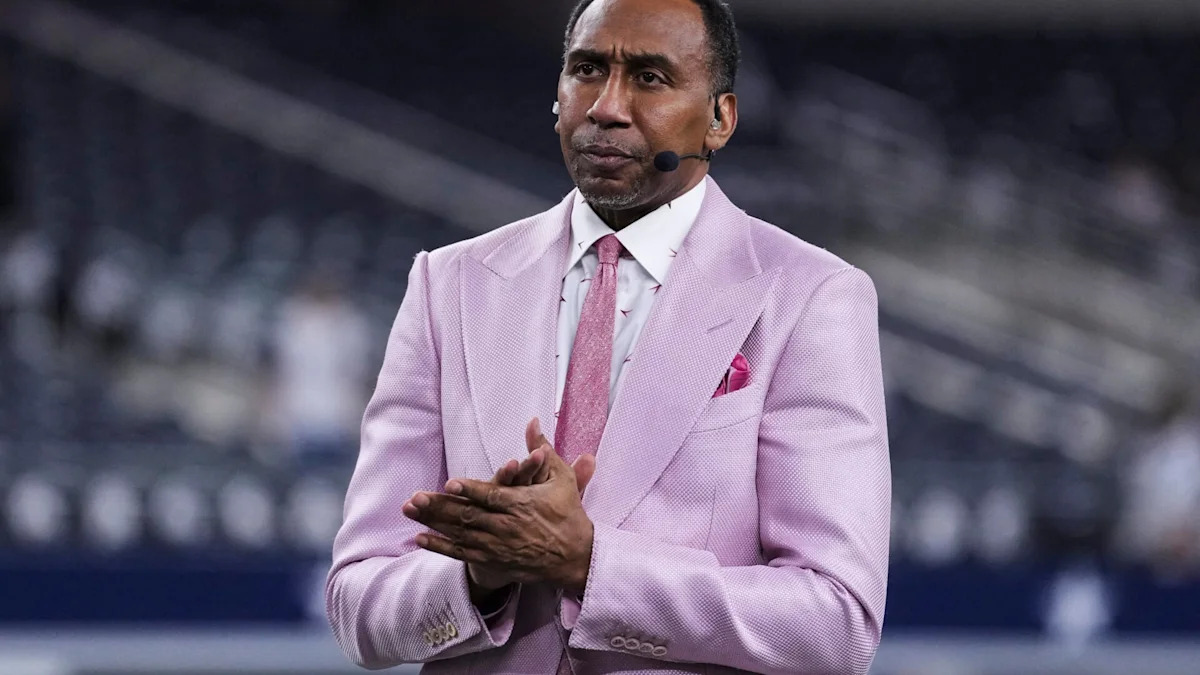
This is why Stephen A. Smith should stick to sports.
Nick Wright, host of First Things First on FS1, publicly called out Stephen A. Smith over his recent political commentary.
Wright wrote on X: “The problem with refusing to be honest with your audience (and potentially yourself!) about your politics while creating political content is you end up creating political content that appeals to… absolutely no one.”
This came after the U.S. midterm elections on November 3, 2026.
Smith, ESPN’s highest-profile personality, had released a video analyzing the Democratic Party’s performance and warning that their dominance could cost them in 2028.
Smith has been increasingly active in political commentary in recent months.
There have even been suggestions that he might eventually run for political office.
Smith has said in the past that he would run as a Democrat if he had to, but he has also agreed with Republicans on various issues.
Wright’s criticism was direct: Smith, he argued, is not being honest with his audience or himself about his political leanings.
The result, Wright said, is political content that satisfies no one.
Smith has not yet responded publicly to Wright’s comments.

But the criticism does not end with Wright.
An op-ed published November 4, 2026, in the Minnesota Spokesman-Recorder, written by Raynard Jackson, makes the same case in stronger terms.
Jackson’s piece is titled: “This Is Why Stephen A. Smith Should Stick to Sports.”
Jackson opens by referencing a dinner he had with “Stephen, King Solomon and I” — a rhetorical device — and says Solomon asked him to pass along a message from Proverbs 17:28.
The verse reads: “Even a fool, when he holdeth his peace, is counted wise: and he that shutteth his lips is esteemed a man of understanding.”
Jackson writes that social media has pushed high-profile Black men like Smith to respond to everything said about them online, making them more emotional and too verbose.
“We need to get back to the old-school notion of letting the truth speak for itself,” Jackson writes.
He quotes actor Denzel Washington, who once told him: “The loudest one in the room is the weakest one in the room.”
Jackson argues that at 58, Smith still has not learned that sometimes the best response is silence.
The immediate trigger for Jackson’s op-ed was Smith’s private dinner at the White House with President Donald Trump, comedian Bill Maher and musician Kid Rock.
Smith attended as Maher’s guest.

After heavy criticism from liberal voices such as Jemele Hill, Cari Champion, Charlamagne tha God and D.L. Hughley, Smith ran to his YouTube channel to justify himself.
Jackson says that only made matters worse.
In his video, Smith said his mission is “to look out for my community.”
He told the president that Black unemployment is about 7%, compared with roughly 3.7% for white Americans.
Jackson disputes the framing of Smith’s points on Black unemployment, DEI, federal job losses and corporate support for HBCUs.
He points instead to Black labor force participation data as a better indicator of Black economic health.
Jackson’s broader argument is that too many Black leaders hold power and position without understanding how to use it.
He writes that the Congressional Black Caucus is a sizable voting bloc in Congress, and African nations make up the largest bloc in the United Nations, yet both have little to show for their numbers.
“They have the power and the position, but not the understanding,” Jackson writes.
He applies the same criticism to Smith.
Jackson’s alternative proposal: Smith should have offered to bring 10 HBCU presidents to a White House meeting with corporate leaders to discuss long-term support.

Instead, Jackson argues, Smith used his access to the president to make a general point about unemployment numbers — without a specific ask or a concrete plan.
The op-ed frames Smith’s political foray as a failure of strategy, not just of messaging.
Smith, meanwhile, continues to be one of the most influential voices in sports media.
His daily show, First Take on ESPN, draws millions of viewers.
He has built a career on strong, often provocative opinions about the NBA and NFL.
But when he turns to politics, his critics say, he loses the sharpness that makes him effective on sports.
Wright’s X post and Jackson’s op-ed represent two different kinds of criticism — one from a fellow sports analyst, one from a political commentator — but they converge on the same point.
Both say Smith is out of his depth in political commentary.
Both say he would be better off sticking to sports.
Whether Smith will respond to either criticism remains to be seen.
He has a history of clapping back at critics, but he also has a history of letting some attacks pass without comment.
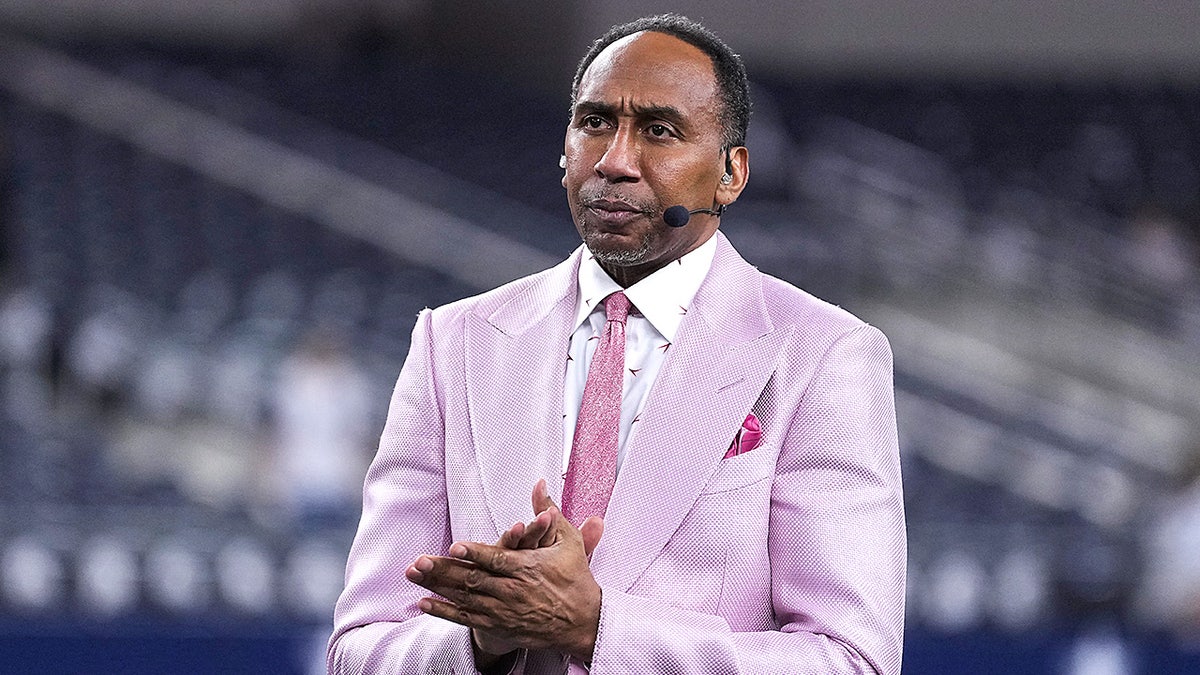
The political climate in the United States is tense, with multiple issues — including some that touch the sports world — being debated in races across the country.
Sports media personalities are increasingly drawn into political discussions, whether they seek them out or not.
Smith is not the first to wade into these waters, and he will not be the last.
But the question his critics are raising is whether he is doing it well — or whether he is doing it at all clearly.
Wright’s accusation is that Smith is refusing to be honest with his audience about his own politics.
Jackson’s accusation is that Smith is using his platform without understanding how power works.
Both are saying, in different ways, that Smith’s political content is not serving his audience, his community or himself.
The op-ed ends with a pointed biblical reference.
Jackson suggests that Smith would be wiser to stay silent — or at least to think more carefully before speaking.
Whether Smith takes that advice is another matter.
For now, the ball is in his court.
And the sports media world is watching to see how he plays it.
Advertisement
You may also like
NASCAR Veteran Condemns Roger Penske’s Driver Over Decision to Spare Controversial Cup Star
A NASCAR veteran publicly called out a Roger Penske driver over the decision to spare a controversial Cup star. The public criticism has ignited…
Yankees' Trust In Aaron Boone And Jorge Posada Story Spills Into Election Discourse
The New York Yankees' offseason debate over accountability has reached the campaign trail. A football watch party in Queens became the setting for a…
Reports Reveal UNC's $914K Football Probe Began Earlier Than Previously Disclosed
New reports reveal that North Carolina's $914,000 football probe into alleged staff misconduct began earlier than what was previously disclosed to the public. The…
Elina Svitolina Sends Emotional Message To Gael Monfils After 'Brutal' Break-Up Post
Elina Svitolina's emotional message to Gael Monfils has a different tone compared to her 'brutal' break-up post. The Ukrainian tennis star had previously stunned…
Keith Lee Secretly Backed Brother Kevin With Car Review And $10,000 After No-Promo Request
Kevin Lee originally asked his famous brother Keith not to promote Braised, leading Keith to secretly send someone inside to purchase the food so…
Kyle Shanahan Admits He Has Moved On Mentally As Brandon Aiyuk Prepares Friday Return
San Francisco 49ers head coach Kyle Shanahan says he has no expectations and has already moved on mentally, even as Brandon Aiyuk prepares to…