Norris slams F1 speed cap for making racing boring
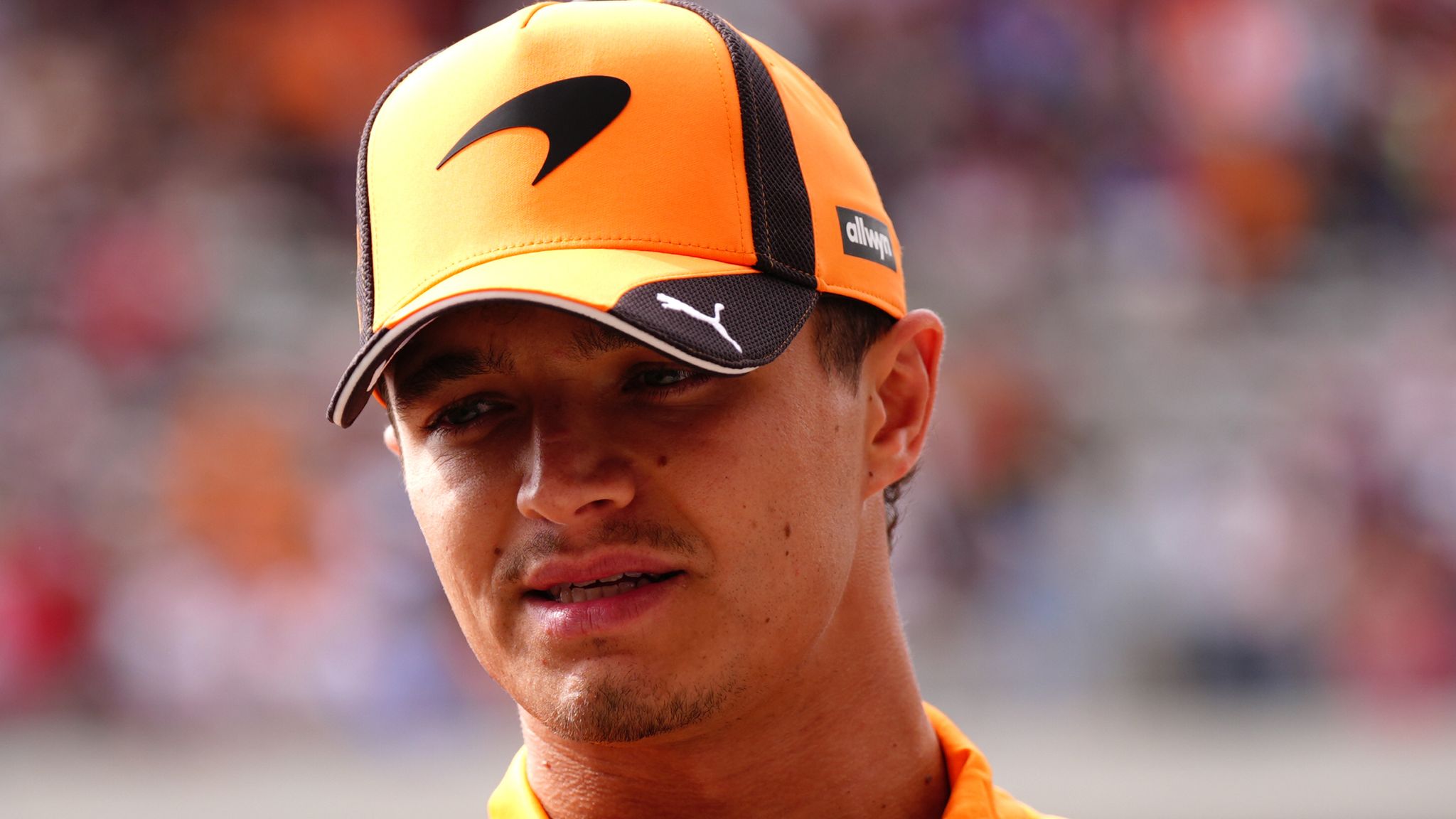
Lando Norris has taken direct aim at Formula 1's 2026 battery-deployment speed limit, calling it a rule that is 'ruining racing.'
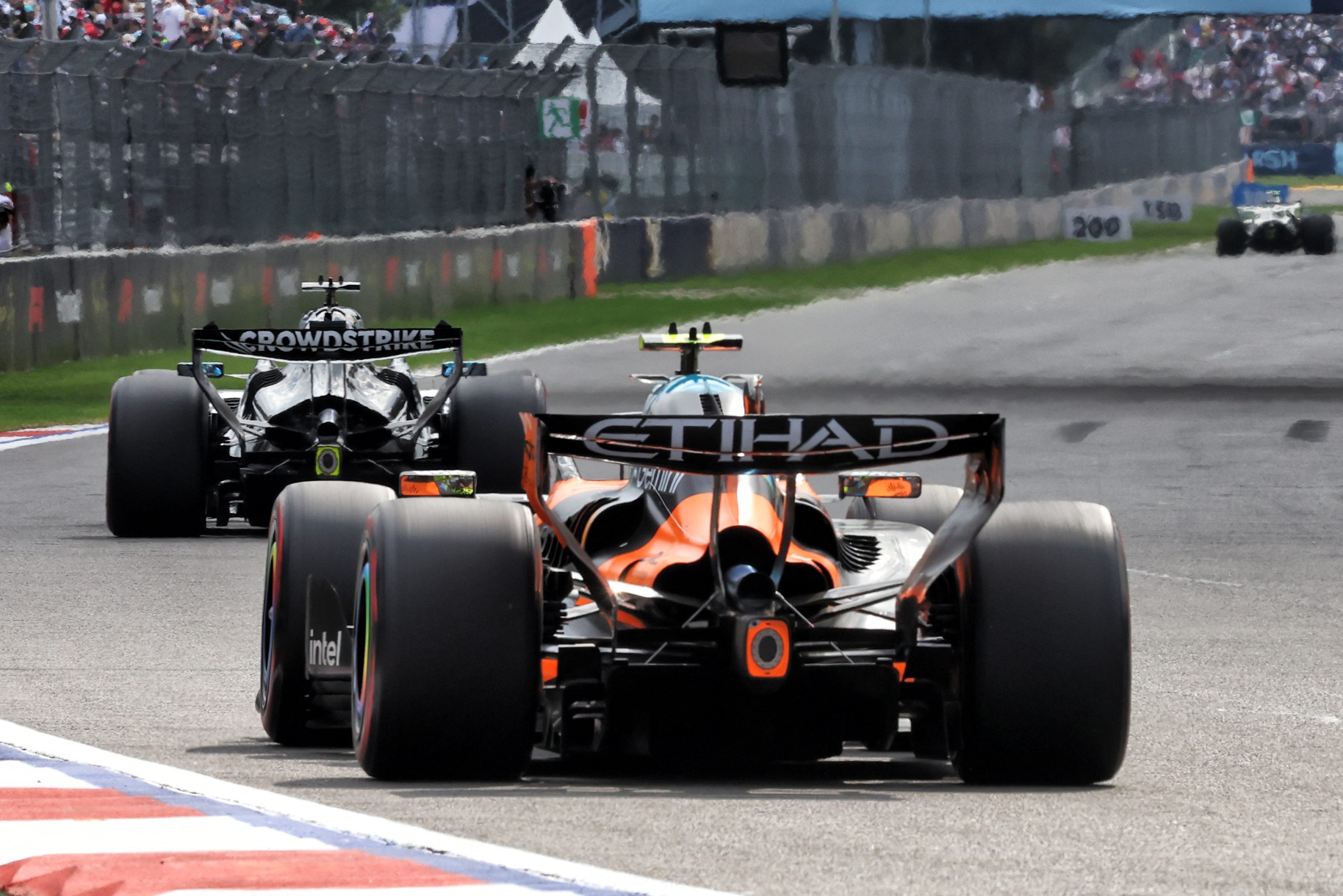
The McLaren driver made the comments after the Mexico City Grand Prix, where he found himself stuck behind Ferrari's Charles Leclerc on the long front straight.
Norris said the electronic limiter that governs top speed makes it nearly impossible to pass a car of similar pace, even when the attacking driver has a clean slipstream.
"I mean the main thing with overtaking is you just have the limiter on," Norris explained.
"Like you literally have a limiter that stops you from going over a speed, so it doesn't matter if you come out two tenths behind the guy, you just hit the limiter and the same limiter as them, and then you cannot do anything, so it kind of ruins racing."
The 2026 technical regulations introduced a new relationship between electrical energy and performance.
Active aerodynamics and a 'Straight Mode' that reduces drag are central to the new generation of cars.
But Norris argues that the potential of those systems is compromised by restrictions on how much electrical power drivers can deploy.
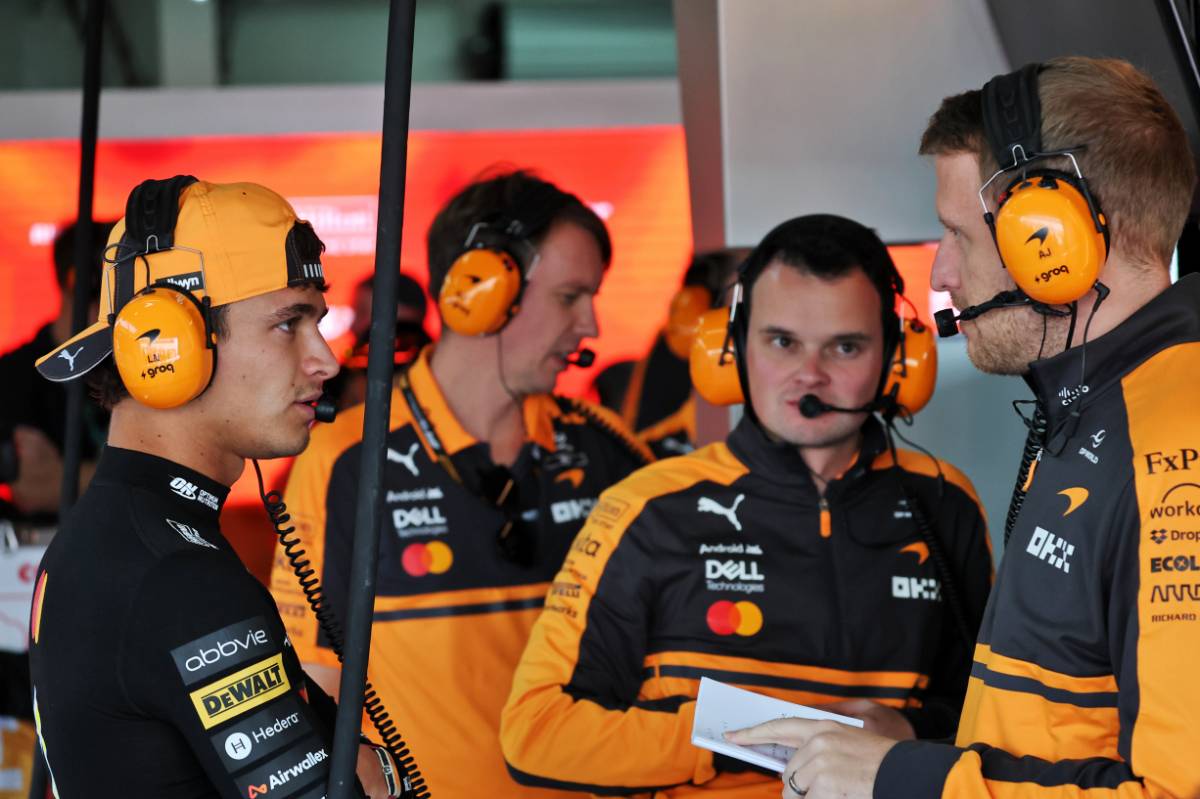
The maximum electrical deployment is capped at 350 kW.
In standard mode, deployment tapers above about 290 km/h and stops at 345 km/h.
Overtake mode raises the limit to 355 km/h.
That means when two cars are closely matched on pace, the pursuing car cannot use a tow to gain a meaningful speed advantage.
The Autódromo Hermanos Rodríguez front straight stretches approximately 1.2 kilometers.
That should be an ideal place to use a slipstream and make a decisive move.
Instead, both cars hit the same ceiling, and the attacking driver is left with no way through.
Norris invoked an unusual comparison to illustrate how restrictive the rule feels.

He argued that F1 cars "should easily go quicker than a motorbike" under the current regulations.
Lewis Hamilton has also criticized the rule separately, pointing to the engine profile that causes the speed clipping.
Norris was careful to note that the problem is not about the power unit hardware itself, but the software limits that govern its use.
The issue has been building since the 2026 rules were finalized.
Formula 1 introduced the energy deployment restrictions with the goal of creating closer racing and more overtaking.
Norris believes the opposite is happening.
He says that when the software neutralizes the slipstream, it takes away one of racing's simplest and most reliable passing tools.
The frustration is understandable.
A driver can emerge from a corner close behind a rival, pick up the tow and prepare to launch an attack, only to find that both cars are held to the same maximum speed by the energy deployment limit.
That makes a mockery of the effort involved in getting close enough to mount a challenge.
Norris acknowledged that a major pace advantage can still make a pass possible.
But when cars are closely matched, the limiter becomes the deciding factor.
He also said that McLaren's poor Saturday in Mexico City contributed to his result, not just the regulations.
The speed-linked deployment limits are set to be removed from the 2027 regulations.
Planned changes include increased fuel flow, turbo boost and energy harvesting, which are intended to ease the energy shortages that cause the clipping.
Until then, drivers will race under the current restrictions.
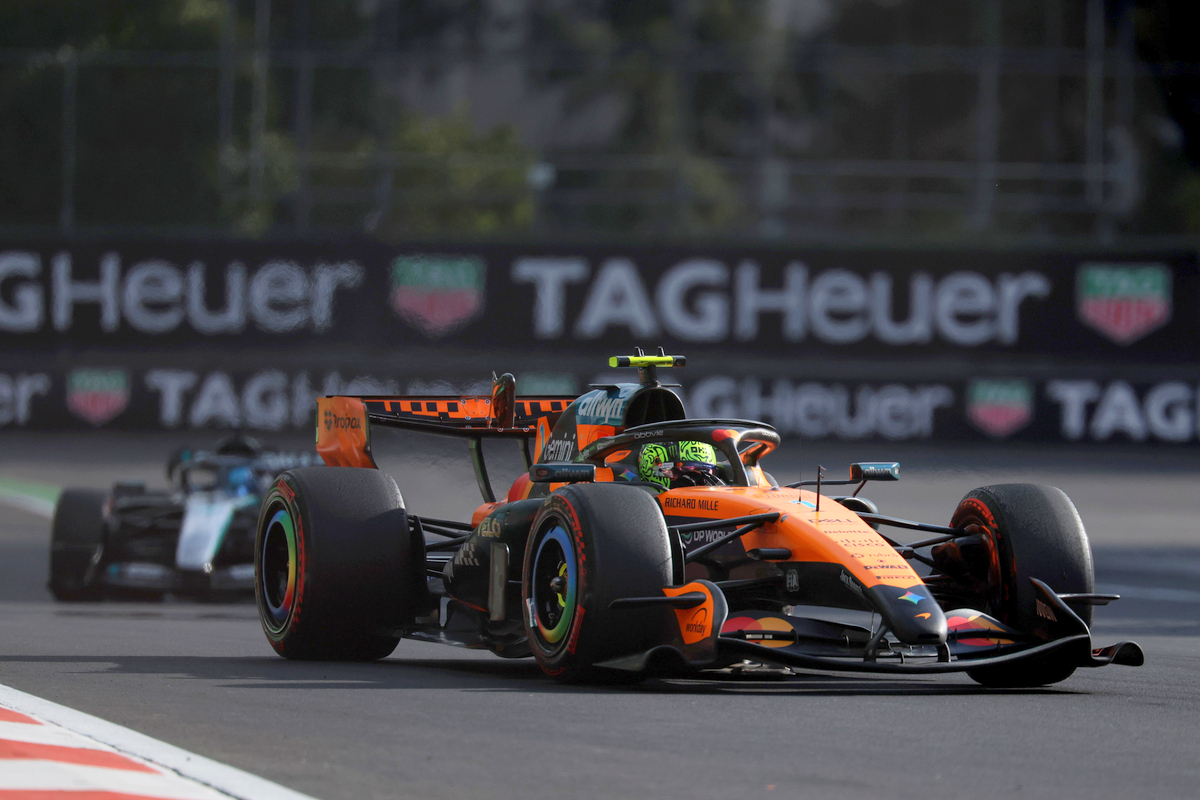
Norris is not alone in his criticism.
Hamilton has separately voiced concerns about the engine profile that causes the speed clipping.
Other drivers have also expressed frustration with the way the 2026 rules affect racing.
The debate is about more than outright speed.
When software limits neutralize a slipstream, they can take away one of racing's most fundamental weapons.
Norris's comments come at a sensitive time for McLaren.
The team has not been in contention for victory in recent races.
Norris puts that down to being outdeveloped by Mercedes, Red Bull and Ferrari.
McLaren introduced upgrades in Baku in September and have not been at the sharp end of the grid since.
Norris is currently sixth in the F1 Drivers' Championship.
He described the MCL40 car as "horrible" and "difficult to drive the whole season."
"Other teams have brought a lot more upgrades since and improved a lot more than what we have," he said.
"The fact we won almost three races was a pretty sizeable achievement in itself."
The question now is whether the rule makers will listen to the drivers before 2027.
Norris made clear that the problem deserves attention before the regulations become further entrenched.
For now, the speed cap remains in place.
And drivers like Norris and Hamilton are saying it is making the racing worse, not better.
Advertisement
You may also like
Belmont Park Race 7: Claiming Showdown You Can't Miss
Race 7 at Belmont Park on Thursday, November 5, 2026, was a claiming race for 3-year-olds and upward. The race went off at 20:43…

Ella Langley and Kacey Musgraves Set to Rock the 2026 CMA Awards
The Country Music Association and ABC have announced an initial round of eight performers for the 2026 CMA Awards. Ella Langley and Kacey Musgraves…

Musetti's Paris Masterclass Stuns Van Assche
Lorenzo Musetti vs Luca Van Assche at the Rolex Paris Masters on Thursday delivered a result that rewrote the recent history between the two.…

Sami Zayn just proved the doubters wrong for good
Sami Zayn may have just settled arguments about his greatness. The WWE Champion sat down with Cathy Kelley for an interview that dropped on…

LPGA Pro Fires Back at Chamblee Over LIV Golf Reality Check
Brandel Chamblee says LIV Golf stars got a "slap in the face of reality" as the breakaway tour prepares to shut down. The Golf…

Conor Benn says he could fight Manny Pacquiao next year: “No problem
Conor Benn has revealed that he could fight boxing legend Manny Pacquiao early next year. Benn told Sky Sports that he was offered a…