Olympic medalist’s 2-year ban upheld by sports court
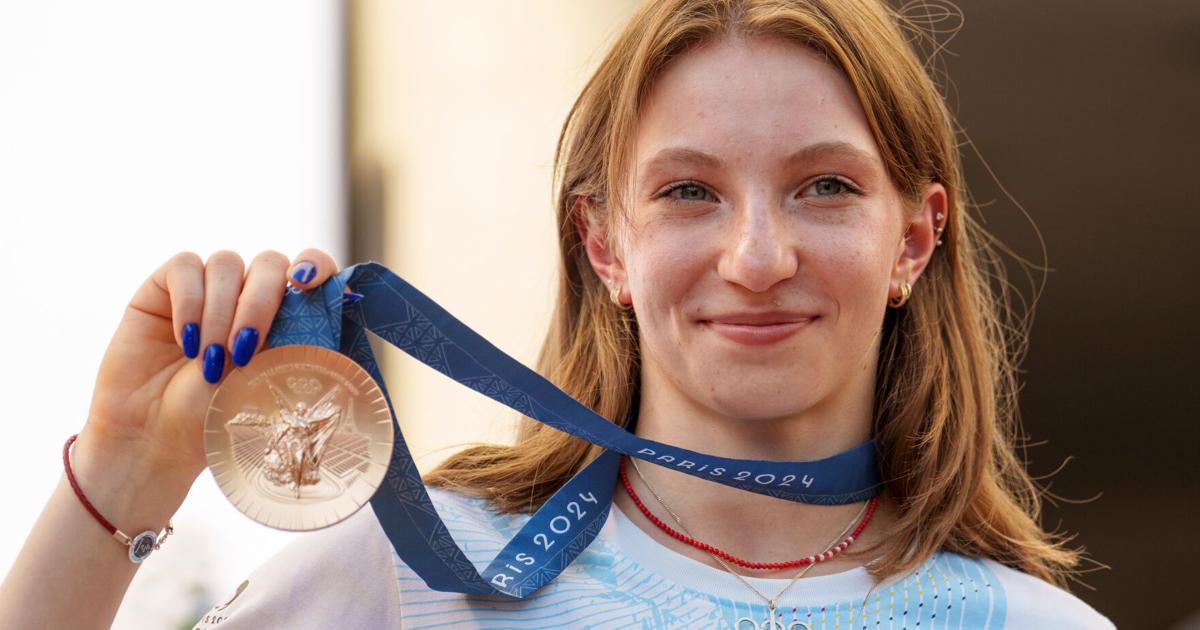
The Court of Arbitration for Sport has upheld a two-year ban for Romanian gymnast Ana Bărbosu, the athlete at the center of the controversial bronze medal dispute at the 2024 Paris Olympics.
The decision was announced Wednesday by CAS in Lausanne, Switzerland.
Bărbosu was initially given a provisional two-year suspension effective May 5, 2026, after the International Testing Agency recorded three whereabouts failures against her between September and December 2025.
Whereabouts failures occur when an athlete fails to provide accurate location information for out-of-competition drug testing, misses a test, or does not update their schedule properly.
Under World Anti-Doping Agency rules, three such failures within a 12-month period count as an anti-doping rule violation.
The standard penalty for this violation is a two-year ban.
World Gymnastics requested disciplinary proceedings against Bărbosu after the ITA reported the three failures.
CAS said it "partially upheld" that request.
The court confirmed the two-year ban, with credit given for the suspension time already served.
Bărbosu had appealed the original decision to CAS, arguing against the length of the ban and the disqualification of her results.
CAS ruled in Bărbosu's favor on one key point: her competitive results since December 2025 still stand.
This means her performances during the period when the whereabouts failures occurred have not been stripped.

But the ban itself remains in place, keeping her out of competition until at least May 2028.
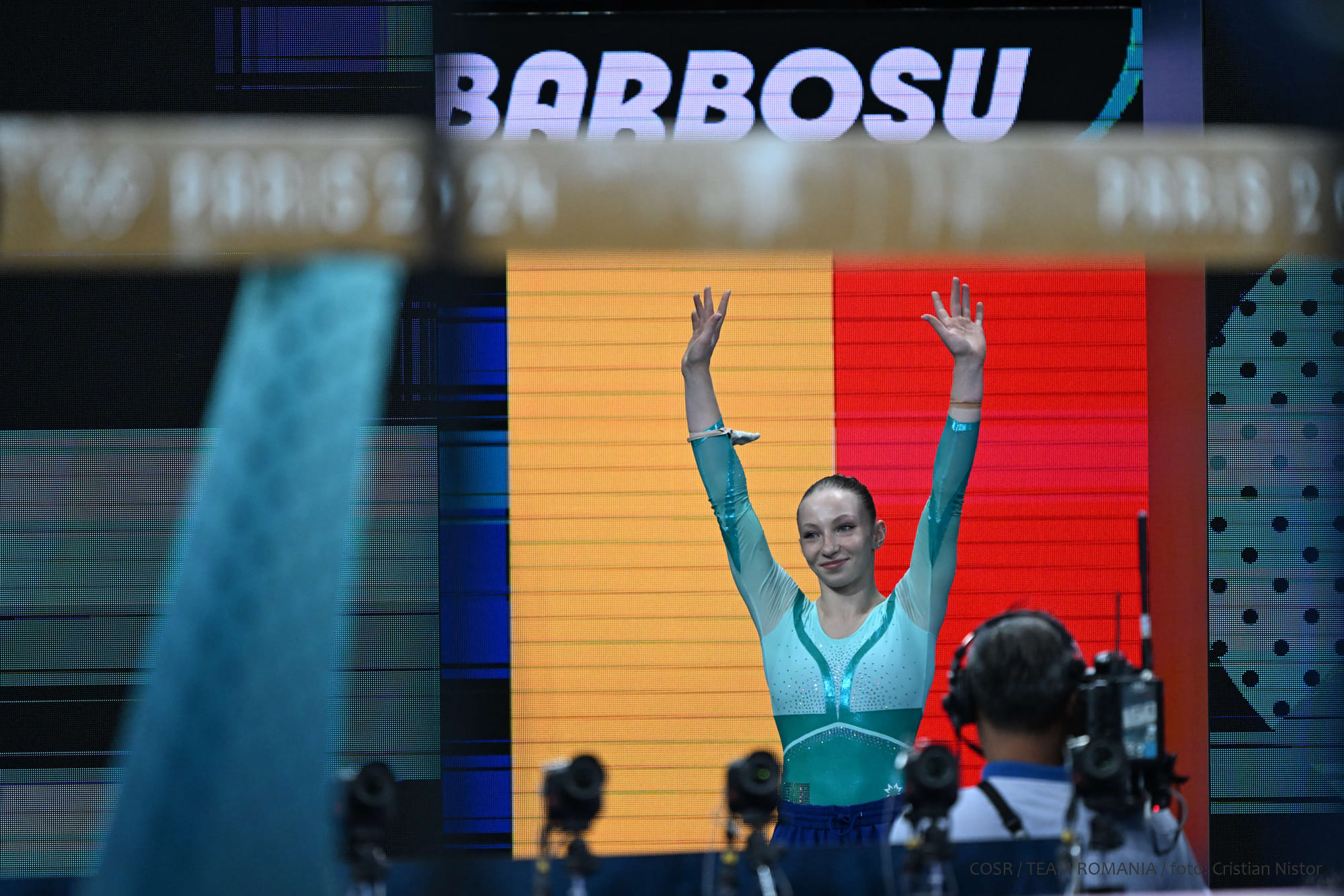
Bărbosu first gained international attention at the Paris 2024 Olympics during the women's artistic gymnastics floor final.
She initially finished third in the event and was awarded the bronze medal.
Then came the controversy.
American gymnast Jordan Chiles, who had originally placed fifth, was awarded the bronze after a 1.0 difficulty inquiry by her coach was accepted by the judges, bumping her score above Bărbosu's.
The Romanian Olympic and Sports Committee and Bărbosu's team appealed the decision.
The Court of Arbitration for Sport ruled in August 2024 that the inquiry had been filed four seconds too late, according to the rules, and ordered the bronze medal returned to Bărbosu.
USA Gymnastics and the U.S. Olympic and Paralympic Committee argued that the timing was within the acceptable window, but CAS upheld its decision.
The medal was physically re-awarded to Bărbosu during a ceremony in Bucharest on August 16, 2024.
That separate case over the bronze medal is still ongoing.
CAS is currently arbitrating a separate case concerning Bărbosu's medal from the 2024 Olympics.
A hearing in that matter is not expected before May 2027.
This means the legal fight over the floor final bronze will continue for at least another year, even as Bărbosu serves her doping ban.
The two cases are legally distinct, but they involve the same athlete and the same Olympic moment.
Bărbosu has not publicly commented on the latest CAS ruling as of the time of this report.
Her legal team has not issued a statement regarding a possible appeal to the Swiss Federal Tribunal, which is the only court that can overturn a CAS decision on very narrow grounds.
The International Testing Agency, which recorded the whereabouts failures, has not commented on the ruling.
The World Gymnastics organization has not issued a statement either.
The anti-doping rule that triggered the ban is part of the World Anti-Doping Code, which applies to all Olympic sports.
Athletes in the registered testing pool must provide quarterly whereabouts information, including a 60-minute daily window when they can be located for testing.
A missed test or failure to file accurate information counts as a whereabouts failure.
Three such failures in 12 months constitute a violation.
The system is designed to allow no-notice testing, which anti-doping authorities consider essential for catching athletes who use performance-enhancing drugs.
Critics of the system say it places a heavy administrative burden on athletes, particularly those who train in multiple locations or have irregular schedules.
Supporters argue it is the only effective way to deter doping in elite sport.
Bărbosu's case has drawn attention because of the timing: the whereabouts failures occurred in late 2025, more than a year after the Olympics.
This separates the doping issue entirely from the medal controversy, though the two are often conflated in public discussion.
The ban means Bărbosu cannot compete in any World Gymnastics-sanctioned events, including the 2027 World Championships and the 2028 Los Angeles Olympics, if the ban runs its full term.
She will be eligible to return to competition on May 5, 2028, assuming no further sanctions are added.
The 2028 Los Angeles Games open on July 14, 2028, leaving a narrow window of just over two months between the end of the ban and the start of the Olympics.
Whether Bărbosu would be selected for the Romanian team under those circumstances is uncertain.
The Romanian Gymnastics Federation has not commented on the CAS ruling or on Bărbosu's future with the national team.
The case has also drawn attention to the whereabouts system itself, with some athletes and officials calling for reform.
But no changes to the World Anti-Doping Code have been proposed as a direct result of this case.
The CAS ruling is final and binding under the Code, except for the limited appeal option to the Swiss Federal Tribunal on procedural grounds.
Such appeals are rarely successful.

The two-year ban is one of the longer penalties for whereabouts failures, though it is the standard sanction under the rules.
Some athletes have received reduced bans by proving they were not at fault or by showing that the failures were not intentional.
Bărbosu's appeal to CAS did not succeed in reducing the length of the ban, though it did preserve her results.
The preserved results mean she keeps any titles, medals, or records she earned between September and December 2025.
This is a significant point for her competitive record, which includes national and international competitions during that period.
The case continues to be followed closely by gymnastics fans and Olympic observers, particularly in Romania and the United States.
The overlapping legal battles have made Bărbosu one of the most talked-about athletes in the sport over the past two years.
Her future in gymnastics remains uncertain, pending both the outcome of the medal case and the completion of the doping ban.
The next major development in this story will be the CAS hearing on the Olympic bronze medal, which is not scheduled until at least May 2027.
Until then, Bărbosu is suspended from competition but retains her results and her Olympic medal.
The full text of the CAS decision has not been publicly released as of this report.
CAS typically publishes redacted versions of its rulings after the parties have had time to review them.
The Associated Press reported the ruling on November 4, 2026, citing CAS's statement that it had partially upheld World Gymnastics' request for disciplinary proceedings.
This article draws on that report and on publicly available information about the World Anti-Doping Code and the Court of Arbitration for Sport's procedures.
Advertisement
You may also like

NBA champion Steve Kerr trolls Donald Trump with a savage jab
Golden State Warriors head coach Steve Kerr took a sharp, humorous jab at President Donald Trump during his Wednesday media availability, referencing a campaign…

John Cena’s subtle salute to Gunther after his return
John Cena made a surprise appearance on the Oct. 30, 2026 edition of WWE NXT. As he walked to the ring, he stopped in…

Braden Smith Makes NBA Debut With the Pacers
Purdue basketball alum Braden Smith makes NBA debut with the Pacers. Braden Smith, the former Purdue Boilermakers guard, stepped onto an NBA floor for…

Red Wings vs. Golden Knights Live Score and Game Updates
NHL.LIVE: Detroit Red Wings vs Vegas Golden Knights LIVE STREA.MS NHL Game On TV Coverage 6 Nov 2026. Puck drop is set for 7…

Business leaders face a tough choice with workplace monitoring.
Big Brother 2026 has officially crowned a winner. Rochelle took the title on the live final, hosted by AJ Odudu and Will Best on…

WWE Plans Huge 30th Anniversary Celebration for The Rock
WWE is planning to celebrate 30 years of The Rock this month. Plans include a commemorative championship belt. Special merchandise releases are also in…