Over 175 LPGA Hopefuls Send Joint Letter Demanding Higher Refunds After Costly Delay

More than 175 golfers organized a group chat and sent a joint letter demanding higher entry-fee refunds after an administrative postponement at Stage 2 left competitors with sunk expenses reaching as high as $10,000.
The extraordinary player revolt followed a sudden three-week disruption to the LPGA Qualifying Series.
Contenders arrived in Florida expecting to battle for their professional futures on the course.
Instead, they walked into unplayable conditions and an abrupt schedule change that decimated personal budgets.
The controversy centered on Stage 2 at Plantation Golf and Country Club in Venice, Florida.
Tournament officials originally scheduled the four-round qualifier for October 13 through October 16.
Just 90 minutes into practice, tour officials scrapped the event.
The postponement forced players to pack their bags and head home with nothing to show for their spending.
Play was pushed back three weeks to November 3 through November 6.
That delay left touring hopefuls with massive sunk costs on flights, lodging, and rental vehicles.
In response to the disruption, the LPGA offered each participant a $1,000 refund.
For the players bearing the financial brunt of the delay, that gesture fell remarkably short.
A MASSIVE FINANCIAL BLOW WITH ZERO PURSE
Professional qualifying tournaments are already among the most expensive tests in sports.
Across the three distinct phases of LPGA Q-School, entry fees can climb as high as $6,500.
Unlike standard tour stops, Stage 2 carries no prize money whatsoever.
There is no check at the end of the week to offset travel expenses.
Every single dollar spent by a player is paid entirely out of pocket.
When officials called off the competition, those personal investments simply vanished.
Typical financial losses for individual golfers quickly reached $3,000 or more.
Prepaid hotel reservations and non-refundable rental cars accounted for large portions of that sum.
Overseas competitors faced even steeper penalties.
Many international players traveled with coaches, caddies, or family members across multiple time zones.
For several of those overseas contenders, individual losses escalated to $9,000.
According to Golfweek, at least one player was down more than $10,000 before hitting a single shot that counted.
Gigi Stoll documented her soaring expenses down to the dollar.

Between her entry fee, rental car, caddie fees, and Airbnb, Stoll had already spent $8,159.
Flying home after the initial cancellation cost her roughly another $2,000.
Her overall expenditures crossed the $10,000 mark before tournament action finally got underway.
THE BREAKDOWN AT PLANTATION
The venue itself had faced serious agronomic challenges long before players arrived on property.
Course management had rebuilt all 18 greens on the Panther Course during the summer months.
That construction work forced the course to remain closed ahead of the initial practice rounds.
On October 7, the LPGA sent an email warning players about local weather trends.
The correspondence noted that more than 50 inches of rain had hammered the area since mid-July.
The Panther Course finally opened its gates briefly on October 11.
Shortly after, torrential rains from Hurricane Isaias completely overwhelmed the property.
Lakes overflowed across the layout and turned fairways into deep swamps.
During practice, the turf was so soaked that one caddie completely walked out of his shoe in the mud.

Golfer Hailee Cooper detailed the unplayable conditions to Golfweek.
"If you hit your ball in the middle of the fairway, you might lose it," Cooper explained.
"A couple of the girls were like, I don’t know how we’re going to play."
Officials quickly realized the grounds could not support championship play.
Yet the timing of the cancellation infuriated competitors who had already incurred maximum travel costs.
THE PLAYERS ORGANIZE
Faced with mounting debt and little administrative recourse, the golfers took collective action.
More than 175 players joined a private group chat to coordinate their response.
Together, they drafted and submitted a joint letter directly to tour leadership.
The letter demanded a partial refund of their entry fees and a transparent explanation of the tour's decisions.
While the LPGA provided a flat $1,000 refund, the coalition pushed for reimbursements as high as $4,500.
Maria Fassi, the 2019 individual NCAA Champion, emerged as an outspoken voice on the matter.
Fassi viewed the initial payout as a clear sign of tour culpability.
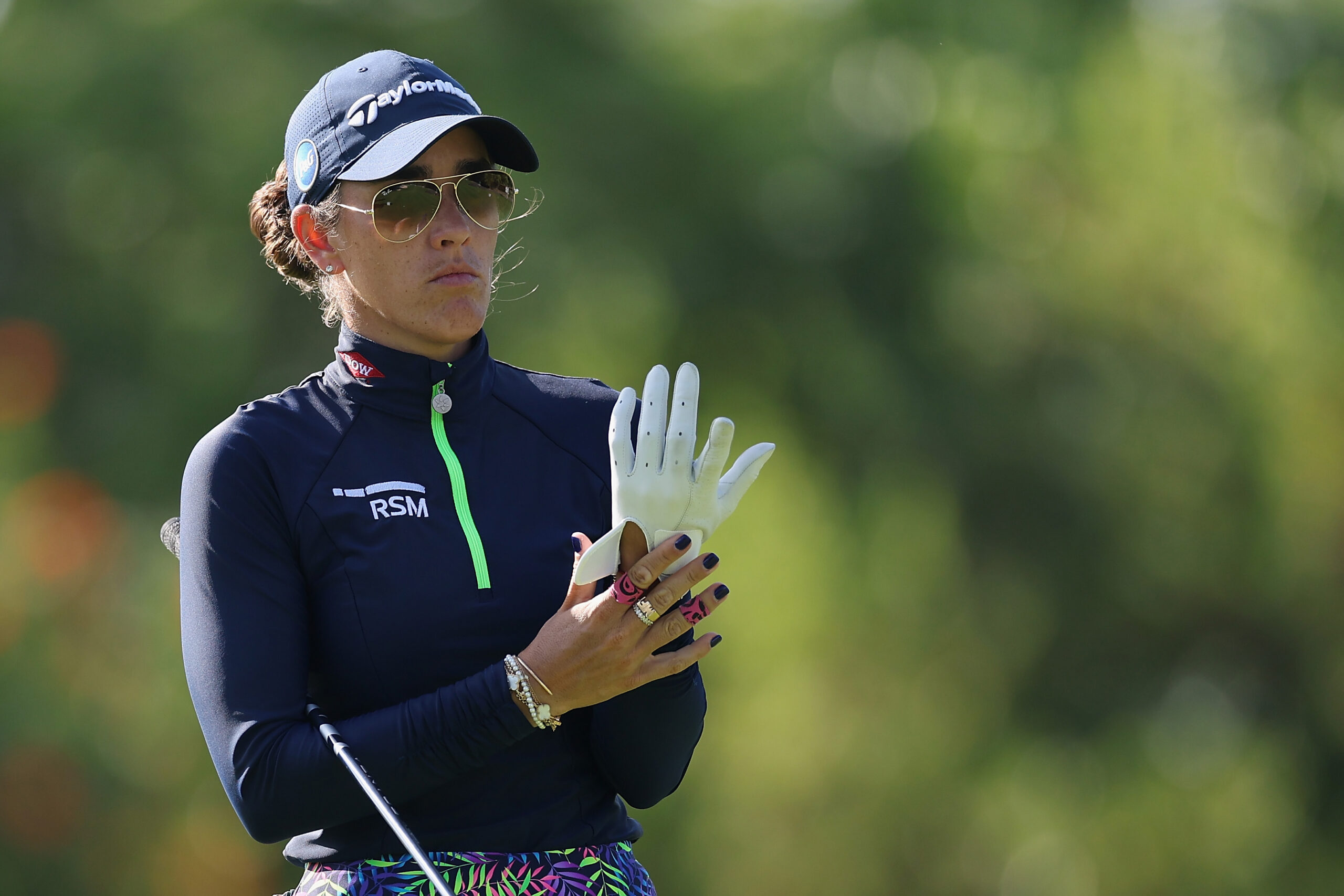
"The way I read it was they knew they had made a mistake, and that’s why we were given that $1,000," Fassi told Golfweek.
"I’ve been around long enough to know the LPGA, or anybody, is just not going to give you money without asking."
Fassi emphasized the commercial scale of the qualifying series compared to the vulnerable position of the athletes.
"They make a lot of money off of Q-School," Fassi said.
"It's our livelihoods."
Contenders argued that developmental tour hopefuls should not bear the cost of administrative misjudgments.
Stoll estimated that the LPGA distributed approximately $200,000 in total refunds to the field.
She pointed out that those funds would have been better directed toward securing an alternate venue in October.
QUESTIONS OVER ALTERNATIVE VENUES
The LPGA neither confirmed nor disputed Stoll's financial estimate.
Instead, tour leadership focused its public statements on the logistical hurdles of finding a substitute course.
Jody Brothers, the general manager of the Epson Tour and LPGA Qualifying Series, addressed the venue search.
"Did we call around to see if another golf course would be suitable for us to play? No, we did not do that," Brothers told Golfweek.

Brothers cited severe, widespread regional conditions that made nearby courses equally problematic.
He also pointed to the tight geographical radius players could travel based on prepaid accommodations.
Additionally, unexpected venue changes would have presented operational problems, such as a complete lack of course yardage books.
For many competitors, that rationale offered little comfort against drained bank accounts.
THE GRUELING ROAD FORWARD
When the competition finally resumed three weeks later, the field had already begun to shrink.
The original roster of 204 competitors fell to 198 returning golfers.
Six players chose not to return, walking away from their initial investments entirely.
Those who came back faced the exact same high-stakes competitive pressure under worsened financial strain.
Stage 2 represents a vital gateway in the journey to the elite tier of women's golf.
The top 55 finishers and ties earn advancement to the Final Qualifying stage in Mobile, Alabama.
Final Qualifying provides the ultimate pathway toward securing full LPGA Tour membership or status on the Epson Tour.
Reaching that final hurdle requires immense focus and elite performance over multiple rounds.
Yet for this class of hopefuls, the mental challenge was compounded by deep institutional frustration.
They were forced to chase their dreams while auditing thousands of dollars in lost personal capital.
The standoff between tour leadership and the 175-player coalition highlighted the precarious financial realities facing aspiring tour professionals.
Did the LPGA's $1,000 refund offer show accountability, or should the tour have fully reimbursed players for their travel losses?
Advertisement
You may also like

NBA champion Steve Kerr trolls Donald Trump with a savage jab
Golden State Warriors head coach Steve Kerr took a sharp, humorous jab at President Donald Trump during his Wednesday media availability, referencing a campaign…

John Cena’s subtle salute to Gunther after his return
John Cena made a surprise appearance on the Oct. 30, 2026 edition of WWE NXT. As he walked to the ring, he stopped in…

Braden Smith Makes NBA Debut With the Pacers
Purdue basketball alum Braden Smith makes NBA debut with the Pacers. Braden Smith, the former Purdue Boilermakers guard, stepped onto an NBA floor for…

Red Wings vs. Golden Knights Live Score and Game Updates
NHL.LIVE: Detroit Red Wings vs Vegas Golden Knights LIVE STREA.MS NHL Game On TV Coverage 6 Nov 2026. Puck drop is set for 7…

Business leaders face a tough choice with workplace monitoring.
Big Brother 2026 has officially crowned a winner. Rochelle took the title on the live final, hosted by AJ Odudu and Will Best on…

WWE Plans Huge 30th Anniversary Celebration for The Rock
WWE is planning to celebrate 30 years of The Rock this month. Plans include a commemorative championship belt. Special merchandise releases are also in…