Paul Heyman Breaks Silence On Why Vince McMahon Never Considered Himself A Good Man
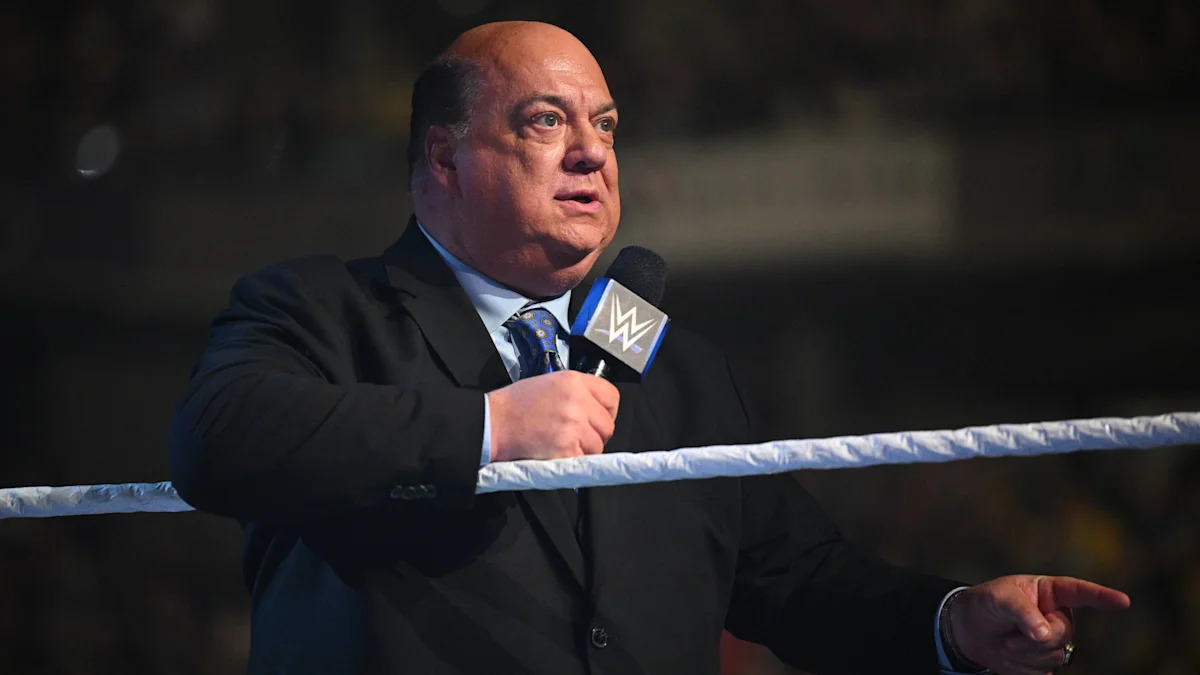
During an appearance on In Depth with Graham Bensinger, Paul Heyman stated that Vince McMahon never viewed himself as a good man and was unconcerned with being judged by that standard.
The legendary wrestling figure offered a remarkably candid evaluation of his former employer.
Heyman has spent decades working alongside McMahon at the highest level of professional wrestling.
Their working relationship produced iconic creative eras as well as severe creative warfare.
When Bensinger asked Heyman directly if he considered McMahon a good man, Heyman did not offer a simple answer.
Instead, he framed the former WWE chairman as a supremely complicated human being of great accomplishment.
Heyman then explained that conventional moral categories simply did not apply to McMahon's own worldview.
"No, I don't think Vince ever considered himself a good man," Heyman revealed.
"I don't think he cared about it."
"I don't think that was part of his self-judgment."
"I don't think he felt he was placed on this planet to be a good man."
A UNIQUE INTERNAL CODE
Heyman made it clear that McMahon measured his life by an entirely different metric.
Rather than seeking moral validation, McMahon focused exclusively on relentless ambition and unmatched achievement.
Heyman noted that McMahon never questioned whether his actions aligned with being a traditional good person.
In Heyman's view, that standard simply was not a priority for the former WWE patriarch.

McMahon viewed his existence through the prism of conquest, building, and dominating the sports entertainment landscape.
Heyman fully acknowledged the sheer magnitude of what McMahon built over multiple decades.
"Do I think he's a man of great accomplishment? Yes," Heyman admitted.
At the same time, Heyman did not shy away from the intense friction that defined their partnership.
"Do I regret the battles? I had some battles with Vince."
"He liked confrontation."
Heyman explained that McMahon actively relished personal and professional tension in the workplace.
Confrontation was not something McMahon avoided; it was something he actively invited.
THE GRUELING 24/7 REALITY
Working with McMahon required enduring an exhausting and unrelenting pace.
Heyman detailed how McMahon lived with a legendary, round-the-clock work ethic.
For decades, McMahon was notorious across the wrestling industry for sleeping very few hours each night.
He expected everyone in his inner circle to match his boundless energy and continuous drive.
Heyman revealed that keeping up with McMahon's 24/7 schedule was virtually impossible for ordinary human beings.
Meetings frequently took place at all hours of the night and early morning.
Creative scripts were constantly torn apart and rewritten on McMahon's sudden whim.

That frantic environment created intense stress for executives, writers, and performers alike.
Heyman had to navigate that high-pressure ecosystem while attempting to protect his own creative vision.
THE 2006 ECW REBOOT DISASTER
Their clash of philosophies reached an absolute boiling point in 2006.
That year, WWE officially revived Extreme Championship Wrestling as a weekly television brand.
Heyman had founded the original ECW in Philadelphia during the 1990s as a gritty counterculture phenomenon.
When WWE brought the brand back, McMahon initially promised Heyman complete creative stewardship.
Heyman was told he would have full control over the presentation and direction of the revived show.
However, that promise evaporated almost immediately.
Recalling how the situation unfolded, Heyman described a sudden and dramatic shift in authority.
"2006, when he relaunched ECW, he told me he was putting me in charge of it and 30 seconds later started stripping me of any authority that I had in controlling or contouring or tailoring or creating the product."
McMahon stepped in and altered the creative elements without hesitation.
Instead of letting Heyman guide the gritty alternative brand, McMahon insisted on applying WWE's corporate polish.
Heyman felt that McMahon took pleasure in stripping away his influence.
"He got off changing ECW on me," Heyman bluntly stated.
The creative disagreement quickly spiraled into a bitter, draining personal dispute.
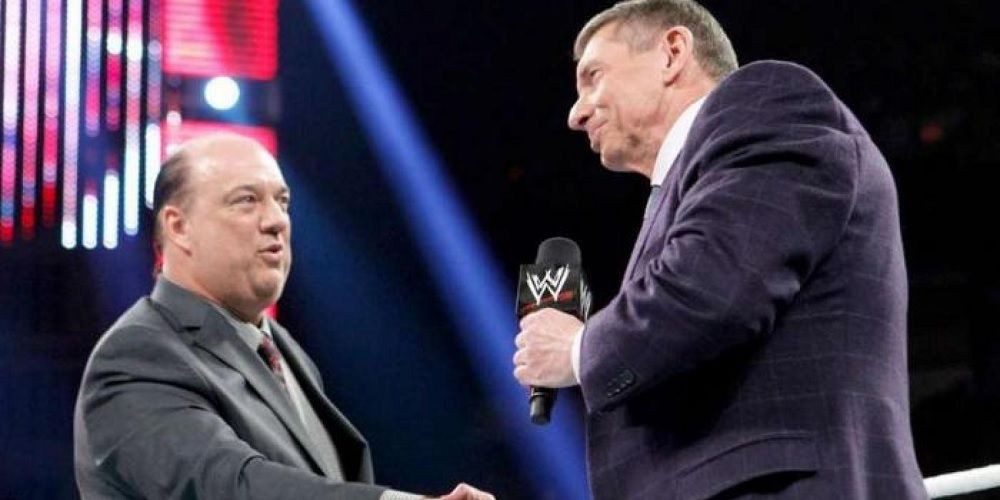
"And it became such a personal battle that it was terrible for the product, terrible for the company, and even worse for the audience."
"That was the most miserable six months."
The revised ECW product disappointed original fans and alienated casual viewers.
The tension culminated in a massive fallout toward the end of that year.
Heyman officially left WWE in December 2006 following profound creative disagreements at the December to Dismember pay-per-view.
He remained away from the company for nearly six years.
Heyman eventually made his triumphant WWE return in 2012, reigniting his storied career on screen.
A DICTATOR VERSUS A COLLABORATOR
Heyman's interview on In Depth did not just dwell on the distant past.
He also drew a sharp contrast between McMahon and WWE's current Chief Content Officer, Paul "Triple H" Levesque.
McMahon maintained total, autocratic rule over WWE creative for four decades.
Heyman candidly described McMahon's executive leadership style as that of a classic dictator.
Under McMahon, writers and producers could not merely present ideas; they had to desperately sell them to a singular ruler.
If McMahon did not personally connect with a concept, it was immediately discarded.
By comparison, Heyman praised Levesque for introducing a fundamentally healthier environment.
"Paul Levesque is not a dictator," Heyman stressed.

"He's a collaborator."
Heyman offered the highest possible praise for Levesque's creative instincts and openness.
"He's the best editor I've ever worked with in my entire life."
"Ever."
According to Heyman, Levesque actively welcomes diverse perspectives from his team.
Levesque does not walk into creative meetings with an unyielding, fixed agenda.
Instead, he listens patiently, tests theories, and refines proposals to maximize talent potential.
Heyman clearly thrives in this modern, collaborative framework far more than under the old regime.
A COMPLICATED LEGACY
Heyman's words provide an authentic glimpse inside the machine that defined sports entertainment for generations.
As a WWE Hall of Famer, Heyman possesses a historical vantage point that few people on earth can match.
He witnessed McMahon build a regional promotion into a dominant global media enterprise.
Yet he also endured the toxic confrontation, creative sabotage, and dictatorial tendencies that accompanied that rise.
Heyman does not attempt to clean up McMahon's image or soften the rough edges of their history.
He acknowledges McMahon's towering professional triumphs while refusing to rewrite his personal character.
McMahon never sought to be remembered as a virtuous man.
He sought power, global dominance, and absolute control over his industry.
For those who worked closely with him, that stark truth was always impossible to ignore.
Do you separate Vince McMahon's monumental wrestling accomplishments from his personal reputation?
Advertisement
You may also like
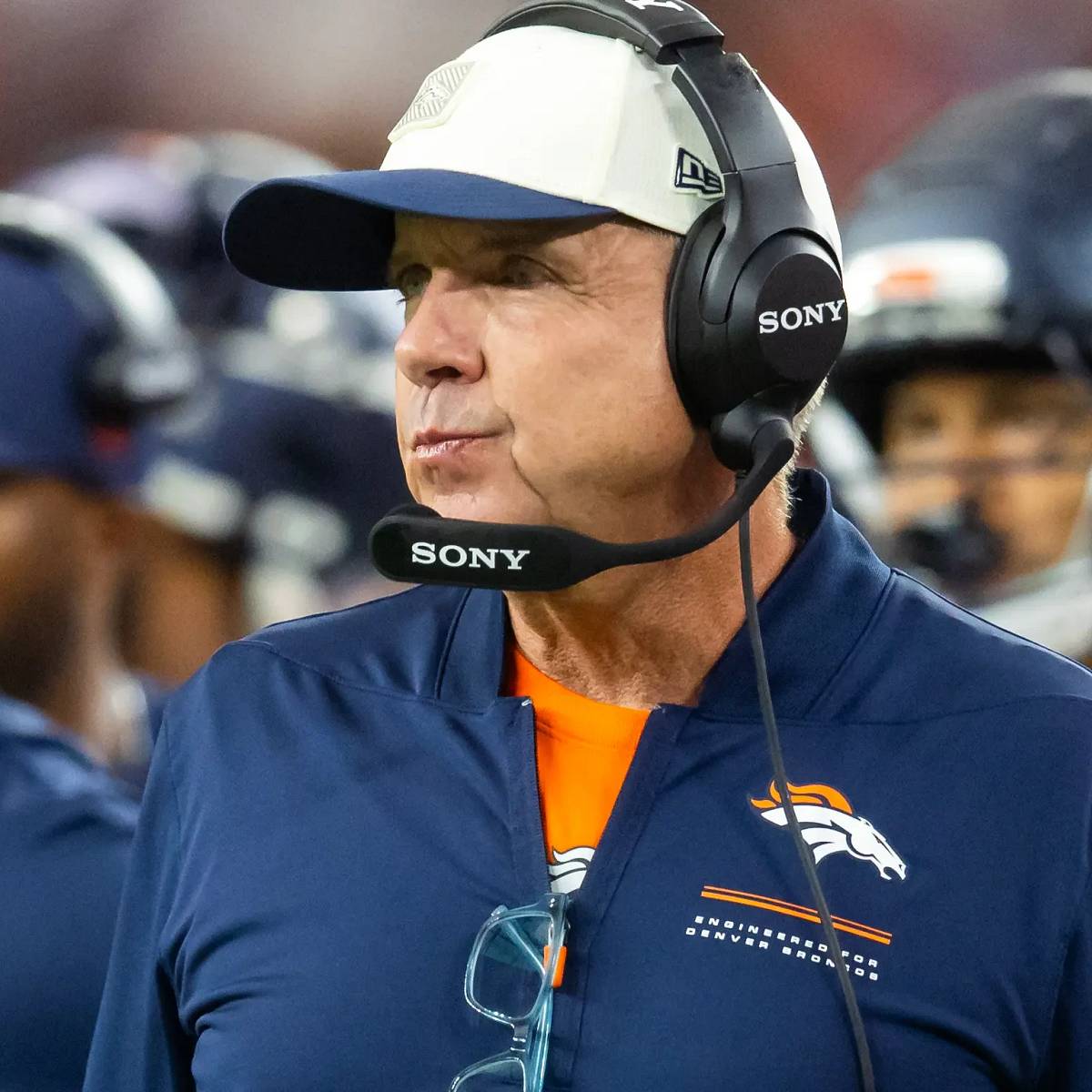
Sean Payton confirms J.K. Dobbins is still key to Broncos' plans
Sean Payton says J.K. Dobbins remains "a huge part of what we're doing" in Denver. That statement came Wednesday when reporters asked the Broncos…
Kris Jenner Breaks Silence on Kim's Scary Health Diagnosis
Kim Kardashian's ultra-plunging latex dress is so rare it will send fans wild. But behind the glamorous photo shoots and vintage Paco Rabanne looks,…

UNC Athletics Unveils Golfing Rameses Logo, Finley Collection Of Merch
The University of North Carolina Department of Athletics has introduced a new golfing Rameses logo, Carolina and deputy athletic director/chief revenue officer Rick Barakat…
Jessica Pegula Slammed as "Outrageous" After Shading Coco Gauff and Mirra Andreeva
“Jessica Pegula Should Be Banned.” “Outrageous.” That is the reaction flooding social media after a courtside microphone picked up the World No. 5 criticizing…
Perkins: Draymond Green is now more liability than asset
Kendrick Perkins has delivered a blunt verdict on Draymond Green. "Draymond Green has been more of a liability than an asset," Perkins said. The…
Adrian Meronk reveals 4 reasons LIV Golf players are leaving
LIV Golf star Adrian Meronk has revealed the four major reasons why players are leaving the embattled league. Meronk, a one-time winner on the…