Paul Heyman Compares Vince McMahon's Dictatorial Rule With Triple H's Creative WWE Leadership
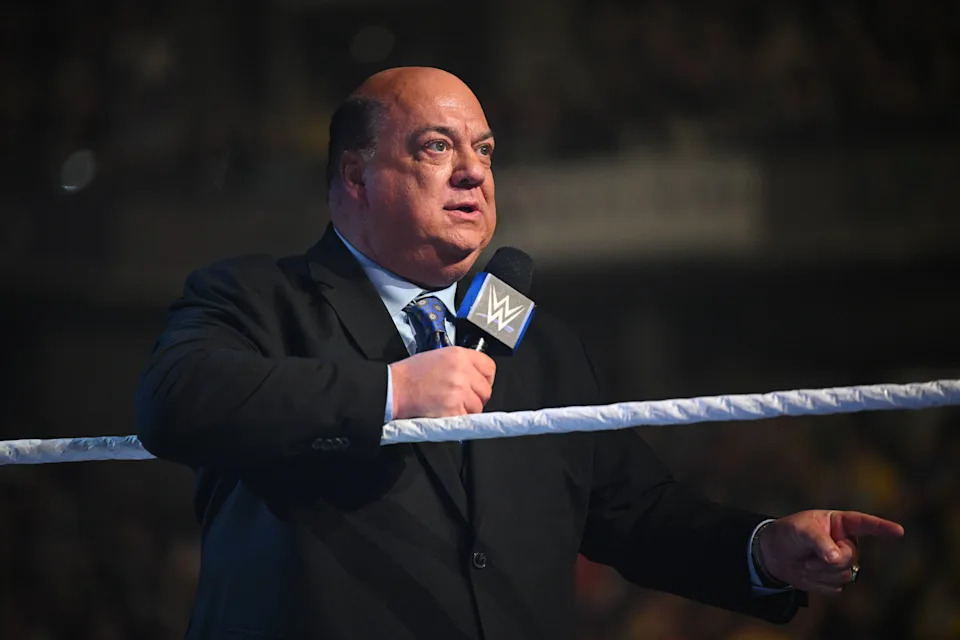
Paul Heyman revealed that while Vince McMahon acted as a dictator who demanded ideas be sold to him, Paul 'Triple H' Levesque operates as an open collaborator who listens to different perspectives.
Heyman shared these candid observations during an appearance on the interview show "In Depth" with Graham Bensinger.
The WWE veteran offered an unfiltered look at his complicated relationship with McMahon across several decades.
He also evaluated how creative power is exercised today under Levesque's creative leadership.
Few individuals in professional wrestling have experienced the backstage styles of both men as intimately as Heyman.
His assessment presents a clear contrast between two completely different philosophies of running WWE.
TWO CONTRASTING LEADERSHIP STYLES
Heyman explained that McMahon's style required people to constantly sell concepts directly to him.
In that system, McMahon functioned as the ultimate authority whose personal approval was required for everything.
Heyman did not hesitate to describe McMahon's management approach as that of a dictator.

In contrast, Heyman offered extraordinary praise for the current creative environment fostered by Levesque.
"Paul Levesque is not a dictator. He's a collaborator. He's the best editor I've ever worked with in my entire life. Ever."
According to Heyman, Levesque does not enter creative meetings with a fixed, unbending vision.
Instead, Levesque makes a conscious effort to listen to people who offer diverse viewpoints.
Heyman highlighted how Levesque acts as an editor who refines and improves ideas rather than issuing top-down mandates.
This collaborative method marks a sharp departure from the regime that controlled WWE creative for decades.
MCMAHON AND THE QUESTION OF MORALITY
During the conversation, Bensinger asked Heyman whether he considered McMahon to be a good man.
Heyman answered thoughtfully, recognizing the scale of McMahon's life work.
He described the former WWE chairman as a "supremely complicated human being of great accomplishment."

However, Heyman maintained that being seen as a good person was never McMahon's objective.
"No, I don't think Vince ever considered himself a good man."
"I don't think he cared about it."
"I don't think that was part of his self-judgment."
"I don't think he felt he was placed on this planet to be a good man."
Heyman emphasized that while McMahon achieved monumental success, morality was simply not the standard by which he measured himself.
"Do I think he's a man of great accomplishment? Yes."
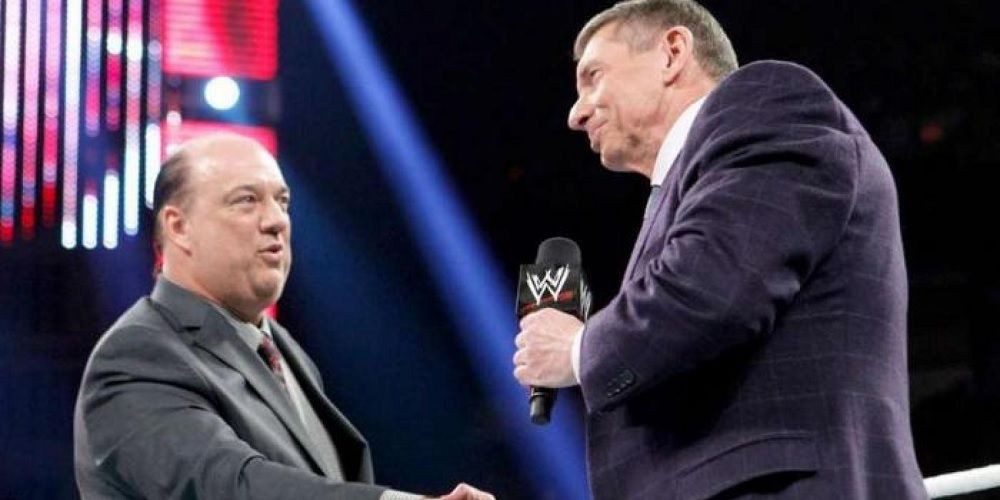
Heyman also addressed the turbulent nature of their working history.
"Do I regret the battles? I had some battles with Vince. He liked confrontation."
According to Heyman, McMahon actively welcomed disagreements and workplace tension.
THE PRESSURE OF A RELENTLESS SCHEDULE
Creative disputes were not the only challenge of working closely with McMahon.
Heyman pointed to McMahon's relentless work ethic as a defining reality of his regime.
McMahon famously operated on an intense 24/7 schedule that never slowed down.
Heyman explained that trying to keep up with that level of pace was virtually impossible for anyone on his team.
The constant demand for round-the-clock availability set an unforgiving tone across the company's creative staff.
Navigating that environment required navigating McMahon's intense personal drive alongside his creative demands.
THE ECW RELAUNCH COLLAPSE IN 2006
The most damaging creative clash between Heyman and McMahon occurred in 2006.
That year, WWE revived the Extreme Championship Wrestling brand as a regular weekly television program.
Heyman was initially told that he would be placed in charge of the resurrected ECW product.
However, Heyman revealed that his authority was stripped away almost instantly.
"2006, when he relaunched ECW, he told me he was putting me in charge of it and 30 seconds later started stripping me of any authority that I had in controlling or contouring or tailoring or creating the product."
Heyman had planned to guide the presentation and tone of ECW based on the vision he originally built.
Instead, McMahon began intervening directly and implementing his own alterations to the show.
Heyman believed McMahon derived personal enjoyment from changing ECW specifically to challenge him.
"He got off changing ECW on me."
What began as a creative disagreement rapidly deteriorated into a bitter personal conflict.
Heyman explained that the backstage hostility severely harmed the television product.
"And it became such a personal battle that it was terrible for the product, terrible for the company, and even worse for the audience."

Heyman reflected on that period as one of the lowest points in his professional life.
"That was the most miserable six months."
The fallout from the ECW project led to Heyman's formal departure from WWE in December 2006.
He stayed away from the company for several years before ultimately returning in 2012.
THE EVOLUTION OF WWE'S CREATIVE PROCESS
Heyman's return in 2012 allowed him to experience the slow shift of WWE's backstage landscape.
Now an inductee into the WWE Hall of Fame, Heyman remains a critical creative asset on television.
His current position gives him an insider perspective on how Levesque has overhauled creative operations.
Under Levesque, creative discussions rely on constructive feedback rather than combative resistance.
Performers and writers are encouraged to present diverse ideas without fear of an immediate veto.
Levesque's focus on collaborative editing has generated a vastly different workplace culture.
Heyman's comments highlight how dramatically WWE's leadership style has shifted across two distinct eras.
While McMahon built a global empire through autocratic control, his confrontational style created severe strain.
Today, WWE operates under a collaborative system led by an executive willing to listen.
Do you prefer WWE's creative direction under Triple H's collaborative approach compared to Vince McMahon's vision?
Advertisement
You may also like

NBA champion Steve Kerr trolls Donald Trump with a savage jab
Golden State Warriors head coach Steve Kerr took a sharp, humorous jab at President Donald Trump during his Wednesday media availability, referencing a campaign…

John Cena’s subtle salute to Gunther after his return
John Cena made a surprise appearance on the Oct. 30, 2026 edition of WWE NXT. As he walked to the ring, he stopped in…

Braden Smith Makes NBA Debut With the Pacers
Purdue basketball alum Braden Smith makes NBA debut with the Pacers. Braden Smith, the former Purdue Boilermakers guard, stepped onto an NBA floor for…

Red Wings vs. Golden Knights Live Score and Game Updates
NHL.LIVE: Detroit Red Wings vs Vegas Golden Knights LIVE STREA.MS NHL Game On TV Coverage 6 Nov 2026. Puck drop is set for 7…

Business leaders face a tough choice with workplace monitoring.
Big Brother 2026 has officially crowned a winner. Rochelle took the title on the live final, hosted by AJ Odudu and Will Best on…

WWE Plans Huge 30th Anniversary Celebration for The Rock
WWE is planning to celebrate 30 years of The Rock this month. Plans include a commemorative championship belt. Special merchandise releases are also in…