Paul Heyman Details Painful 2006 ECW Relaunch Clashes With Vince McMahon Leading To WWE Exit
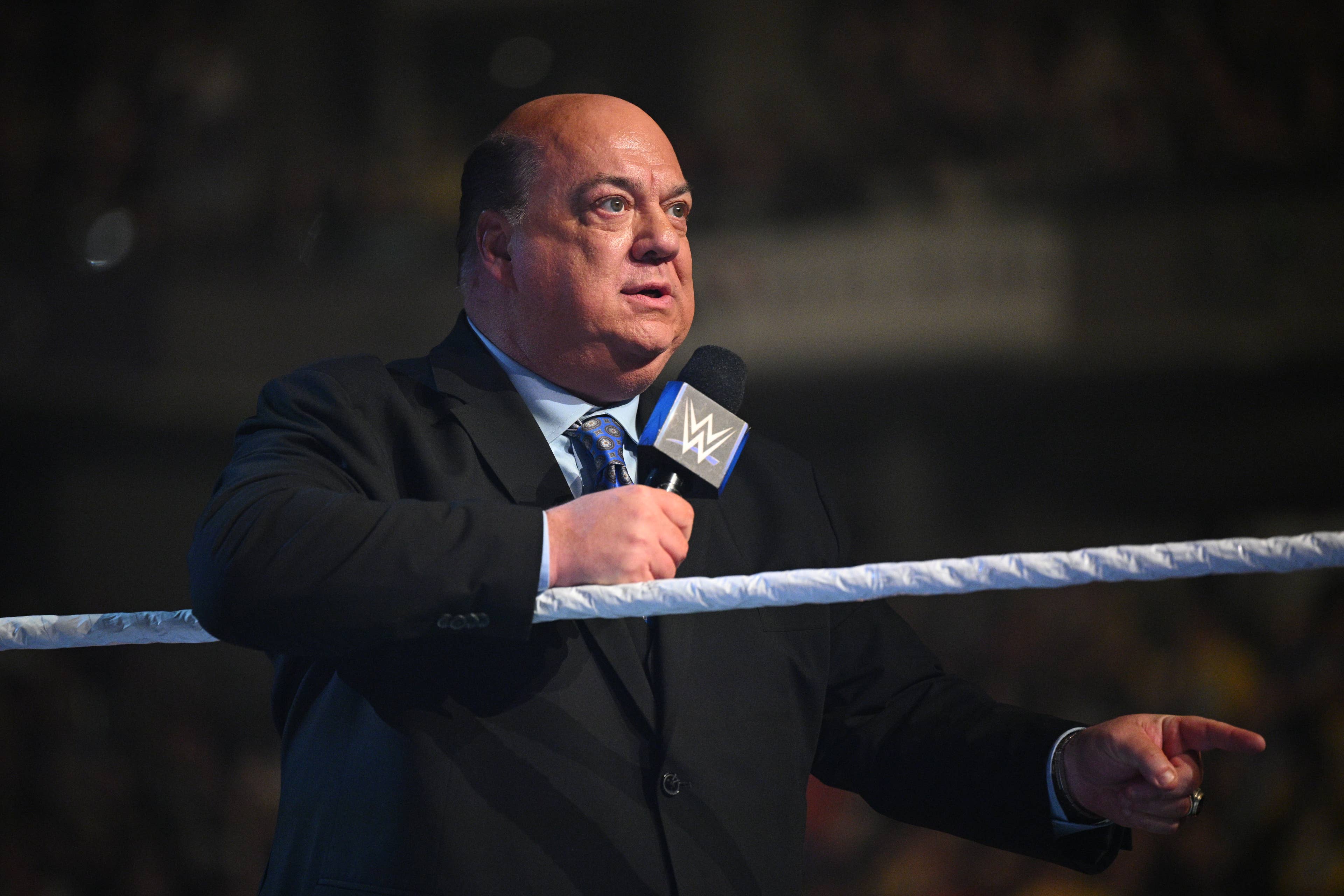
Paul Heyman described the 2006 ECW revival as the most miserable six months of his life after Vince McMahon promised him creative authority only to strip it away almost immediately.
The legendary wrestling mastermind opened up candidly about that bitter chapter during an extensive interview on "In Depth" with Graham Bensinger.
Heyman reflected on the volatile dynamics that defined his working relationship with the former WWE chairman over the decades.
While recognizing McMahon's historic business accomplishments, Heyman pulled no punches regarding the creative tug-of-war that unfolded when WWE decided to resurrect Extreme Championship Wrestling.
ECW had originally stood as Heyman's groundbreaking, counter-culture promotion during the 1990s, changing the wrestling industry with its gritty presentation and rebellious attitude.
Years after the original Philadelphia-based company closed its doors, WWE acquired its intellectual property and sought to bring the brand back as a regular television entity in 2006.
Heyman was brought into the project with the explicit understanding that he would steer the ship.
A PROMISE BROKEN IN SECONDS
According to Heyman, the assurance that he would have genuine creative command over the resurrected ECW brand vanished almost instantly.
McMahon had offered him leadership of the revival, but the reality behind the scenes shifted without delay.

Recalling how the situation unfolded, Heyman shared the blunt truth about how fast his promised power evaporated.
“2006, when he relaunched ECW, he told me he was putting me in charge of it and 30 seconds later started stripping me of any authority that I had in controlling or contouring or tailoring or creating the product,” Heyman stated.
Heyman had envisioned an updated version of the innovative product that had built a fiercely devoted fan base a decade earlier.
Instead, he found himself watching McMahon overhaul storylines, reshape character presentations, and alter the direction of the weekly broadcasts.
The WWE chairman began making direct changes to the revived product himself, ignoring Heyman’s intended vision for the show.
That persistent creative meddling created an environment of unrelenting friction between two men with fundamentally contrasting viewpoints on professional wrestling.
THE MISERY OF A PERSONAL BATTLE
As the weeks wore on, Heyman felt the dynamic between them morphed from an ordinary creative disagreement into something far more toxic.
Heyman believed McMahon actually relished the ongoing tension and took satisfaction in asserting dominance over the ECW format.
“He got off changing ECW on me,” Heyman recalled during the interview.

The constant interference quickly escalated beyond a disagreement over scripts and match outcomes.
“And it became such a personal battle that it was terrible for the product, terrible for the company, and even worse for the audience,” Heyman explained.
The revived brand became caught between two worlds, pleasing neither the hardcore ECW loyalists nor traditional WWE viewers.
For Heyman, who poured his creative soul into the original ECW, seeing the relaunch compromised from the top down took an immense emotional toll.
“That was the most miserable six months,” Heyman admitted while reflecting on that grueling period.
THE BITTER DECEMBER DEPARTURE
The mounting frustration reached its breaking point as 2006 drew to a close.
Unable to execute his vision and weary of fighting a losing battle against McMahon’s creative control, Heyman officially exited WWE in December 2006.
The departure marked a dramatic conclusion to what was supposed to be a triumphant restoration of an iconic wrestling property.
Following that painful separation, Heyman stepped completely away from WWE programming for years.
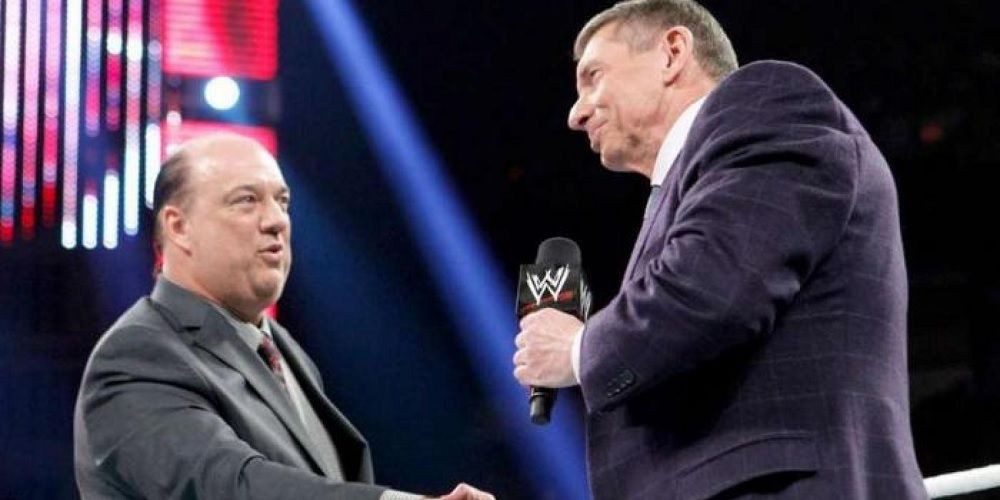
He would not return to the company until 2012, when he made his celebrated comeback to television as the advocate for Brock Lesnar.
MCMAHON AND THE PURSUIT OF GOODNESS
During his sit-down with Bensinger, Heyman also offered broader psychological insight into who Vince McMahon was as both a boss and a human being.
When Bensinger directly asked Heyman whether he viewed McMahon as a good man, the WWE Hall of Famer delivered a remarkably frank answer.
Heyman labeled his former employer as a “supremely complicated human being of great accomplishment.”
However, Heyman noted that moral goodness was simply never a measuring stick McMahon cared to apply to himself.
“No, I don’t think Vince ever considered himself a good man,” Heyman said.
“I don’t think he cared about it,” Heyman continued.
“I don’t think that was part of his self-judgment,” he noted.
“I don’t think he felt he was placed on this planet to be a good man,” Heyman added.

Heyman made sure to separate McMahon's personal morality from the undeniable scale of what he built in sports entertainment.
“Do I think he’s a man of great accomplishment? Yes,” Heyman admitted.
Heyman acknowledged that their relationship was defined by conflict, but he harbor no overall regrets about standing his ground.
“Do I regret the battles? I had some battles with Vince,” Heyman said.
“He liked confrontation,” Heyman explained, summarizing McMahon's appetite for workplace friction.
Heyman also touched upon McMahon's legendary work ethic, explaining that keeping up with the chairman's relentless 24/7 schedule was virtually impossible for anyone around him.
DICTATOR VERSUS COLLABORATOR
Heyman used his Bensinger interview to draw a sharp contrast between McMahon's authoritarian regime and WWE's current leadership.
Under McMahon, WWE creative functioned strictly under a top-down model where ideas had to be aggressively pitched to a singular judge.
Heyman frankly described McMahon as a dictator who demanded that personnel sell their concepts to him before anything could reach television.

By comparison, Heyman offered glowing praise for Paul “Triple H” Levesque, who now oversees WWE's creative direction.
Heyman highlighted how Levesque approaches creative development with humility and genuine curiosity.
“Paul Levesque is not a dictator,” Heyman stated.
“He’s a collaborator,” Heyman emphasized.
Heyman went even further in his praise for the current creative leader, offering one of the highest compliments of his storied career.
“He’s the best editor I’ve ever worked with in my entire life,” Heyman declared.
“Ever,” Heyman reiterated for emphasis.
According to Heyman, Triple H actively listens to people with contrasting perspectives rather than entering the creative room with an unyielding, fixed vision.
That open philosophy represents a total departure from the suffocating dynamic that doomed the 2006 ECW relaunch.
Heyman’s candid reflections shine a spotlight on the painful creative power struggle that drove him out of WWE nearly two decades ago.
How different would the 2006 ECW revival have been if Vince McMahon had actually let Paul Heyman run the show his way?
Advertisement
You may also like

NBA champion Steve Kerr trolls Donald Trump with a savage jab
Golden State Warriors head coach Steve Kerr took a sharp, humorous jab at President Donald Trump during his Wednesday media availability, referencing a campaign…

John Cena’s subtle salute to Gunther after his return
John Cena made a surprise appearance on the Oct. 30, 2026 edition of WWE NXT. As he walked to the ring, he stopped in…

Braden Smith Makes NBA Debut With the Pacers
Purdue basketball alum Braden Smith makes NBA debut with the Pacers. Braden Smith, the former Purdue Boilermakers guard, stepped onto an NBA floor for…

Red Wings vs. Golden Knights Live Score and Game Updates
NHL.LIVE: Detroit Red Wings vs Vegas Golden Knights LIVE STREA.MS NHL Game On TV Coverage 6 Nov 2026. Puck drop is set for 7…

Business leaders face a tough choice with workplace monitoring.
Big Brother 2026 has officially crowned a winner. Rochelle took the title on the live final, hosted by AJ Odudu and Will Best on…

WWE Plans Huge 30th Anniversary Celebration for The Rock
WWE is planning to celebrate 30 years of The Rock this month. Plans include a commemorative championship belt. Special merchandise releases are also in…