Pennsylvania Denies Juan Vazquez: Completed Suspension Does Not Guarantee Return To Racing
Even though Juan Vazquez's original Pennsylvania suspension expired on January 26, 2025, the commission concluded his past actions continue to disqualify him from receiving a new occupational license.
The Pennsylvania State Horse Racing Commission issued an official ruling on October 23, 2026, rejecting his application for an owner's permit.
Vazquez had formally submitted that application on May 28, seeking permission to re-enter the state's racing operations as a racehorse owner.
Regulators made it clear that simply serving out a designated ban does not create an automatic path back into the sport.
In racing oversight, completing disciplinary time does not wipe away the underlying conduct that triggered the penalty.
The regulatory body determined that Vazquez failed to satisfy the legal burden required of applicants seeking licensure.
Specifically, the commission concluded that he failed to demonstrate by clear and convincing evidence that he is a person of good character, honesty, and integrity.
Regulators also determined that he did not prove his prior activities would not pose a threat to the public interest or the effective regulation and control of horse racing.
In state administrative law, the clear and convincing evidence threshold requires an applicant to present highly persuasive proof.
Vazquez was unable to meet that evidentiary standard in the eyes of the Pennsylvania commissioners.
THE CASE OF SHINING COLORS
The denial stems directly from disciplinary proceedings that originated in Pennsylvania back in 2022.
On July 7, 2022, Pennsylvania stewards issued a severe ruling against Vazquez following a formal investigation.
That ruling suspended his training license through January 26, 2025, sidelining him for more than two years.
The stewards also assessed a $5,000 civil fine against the trainer.
The disciplinary action followed the death of Shining Colors, a Thoroughbred mare under his care.
Shining Colors was shipped across state lines from Belmont Park in New York to Parx Racing in Pennsylvania.
Records show that the horse was transported while suffering from severe chronic laminitis.
Laminitis is an agonizing foot condition that affects the sensitive tissues within a horse's hoof.
The disease can cause devastating structural failure inside the hoof capsule, leading to unbearable pain for an equine athlete.
Upon arrival at Parx Racing, the mare's condition was so catastrophic that she had to be humanely euthanized.
Following their investigation into the mare's transport and care, the commission reached a harsh finding.
Regulators concluded that Vazquez's conduct in caring for Shining Colors was grossly negligent, cruel, and abusive.
That finding became the focal point of the multi-year suspension that kept him out of Pennsylvania racing through early 2025.
RETURN TO COMPETITION IN WEST VIRGINIA
Vazquez's Pennsylvania penalty officially expired on January 26, 2025.
Following that date, he looked to restart his horse racing career in another mid-Atlantic racing jurisdiction.
On April 27, 2025, Vazquez officially resumed his training activities at Mountaineer Casino, Racetrack & Resort in West Virginia.
Equibase performance records confirm that he chose to base his operations exclusively at the West Virginia oval.
Over the course of his comeback, he competed actively at Mountaineer as both a licensed trainer and an owner.
Through the first ten months of 2026, Equibase charts documented significant activity for his stable.
Vazquez saddled 243 starters as a trainer during that ten-month window.
Those 243 training starts yielded 44 victories at the Mountaineer track.
During the exact same span of 2026, he campaigned runners under his own name as an owner.
His ownership ledger recorded 116 starts and 18 wins through the first ten months of the year.
While West Virginia permitted him to participate, the Pennsylvania commission took a completely different regulatory stance.
REASONING BEHIND THE PENNSYLVANIA DENIAL
Horse racing in the United States does not operate under a single unified licensing agency.
Every individual state racing commission maintains the legal sovereignty to enforce its own occupational standards.
A licensee cleared to race in one state is never guaranteed a reciprocal green light in another.
Pennsylvania regulators examined Vazquez's past conduct and decided that his record remained an active disqualifier.
In the ruling issued on October 23, the commission outlined its findings in explicit language.
"Mr. Vazquez has presented no supporting information to refute the conclusion that his previous conduct and corrupt actions remain a threat to the public interest, the effective regulation and control of horse racing and to the health, safety and welfare of the racing participant and the racehorse," the Oct. 23 ruling stated.
The commission underscored that public perception and equine safety form the foundation of their oversight mission.
"Mr. Vazquez's presence at a licensed racetrack under the jurisdiction of the Commission remains detrimental to the best interest of horse racing and to the integrity of the betting public in the Commonwealth."
By citing the betting public, regulators highlighted that wagering integrity depends heavily on strict participant oversight.
The decision established that merely waiting out a suspension term does not cleanse an applicant's occupational file.
A LONG REGULATORY HISTORY
The Shining Colors case was not an isolated disciplinary event in Vazquez's racing career.
The commission referenced a broad history of regulatory infractions across multiple racing jurisdictions.
Public regulatory records maintained by the ThoroughbredRulings.com database highlight an extensive trail of citations.
The database reflects 135 total records connected to Vazquez dating as far back as 2006.
Some single violations account for multiple records within that system when stewards modify or rescind earlier administrative orders.
Nonetheless, the sheer volume of records reflects frequent scrutiny from racing regulators across the country.
Private racetrack operators have also intervened over the years to keep him away from their properties.
In 2015, track management at Delaware Park made the administrative decision to ban Vazquez from its grounds.
That same year, track management at Laurel Park in Maryland implemented a similar property ban against him.
Racetracks hold the private property right to exclude individuals even when state commissions permit them to work.
These collective historical actions provided context for Pennsylvania's recent refusal to grant an owner's credential.
THE STATUS OF THE APPEAL
Following the October 23 denial, Vazquez chose not to accept the commission's determination quietly.
He submitted a formal, timely appeal seeking to overturn the denial of his owner's license.
In response to his filing, the Pennsylvania commission issued a follow-up ruling on October 30.
That October 30 order formally granted his request to proceed with an appeal hearing.
Granting an appeal does not equal an immediate legal victory for the applicant.
The procedural ruling merely guarantees Vazquez an administrative forum to present his defense.
It does not overturn the commission's substantive conclusions regarding animal cruelty or integrity.
It also does not issue him an active license while the appeal process runs its course.
Until an appeals body officially alters the decision, Vazquez remains barred from owning racehorses in Pennsylvania.
THE CORE QUESTION FOR RACING
This case highlights an enduring philosophical debate across horse racing and professional sports governance.
Suspensions are created to punish wrongdoing and remove individuals from competition for specified periods.
Many licensees operate under the assumption that fulfilling a penalty guarantees a clean slate.
Pennsylvania regulators have pushed back firmly against that premise.
Their ruling asserts that state licensing remains a privilege rather than an absolute legal entitlement.
When past behavior involves severe welfare violations, the passage of time may not be enough to satisfy regulatory standards.
The ultimate outcome of the appeal will be watched closely throughout the Thoroughbred industry.
It tests how much authority state racing commissions possess when vetting former offenders.
Once a licensee finishes serving a suspension term, should regulators have the authority to block them from coming back?
Advertisement
You may also like
NBA champion Steve Kerr trolls Donald Trump with a savage jab
Golden State Warriors head coach Steve Kerr took a sharp, humorous jab at President Donald Trump during his Wednesday media availability, referencing a campaign…
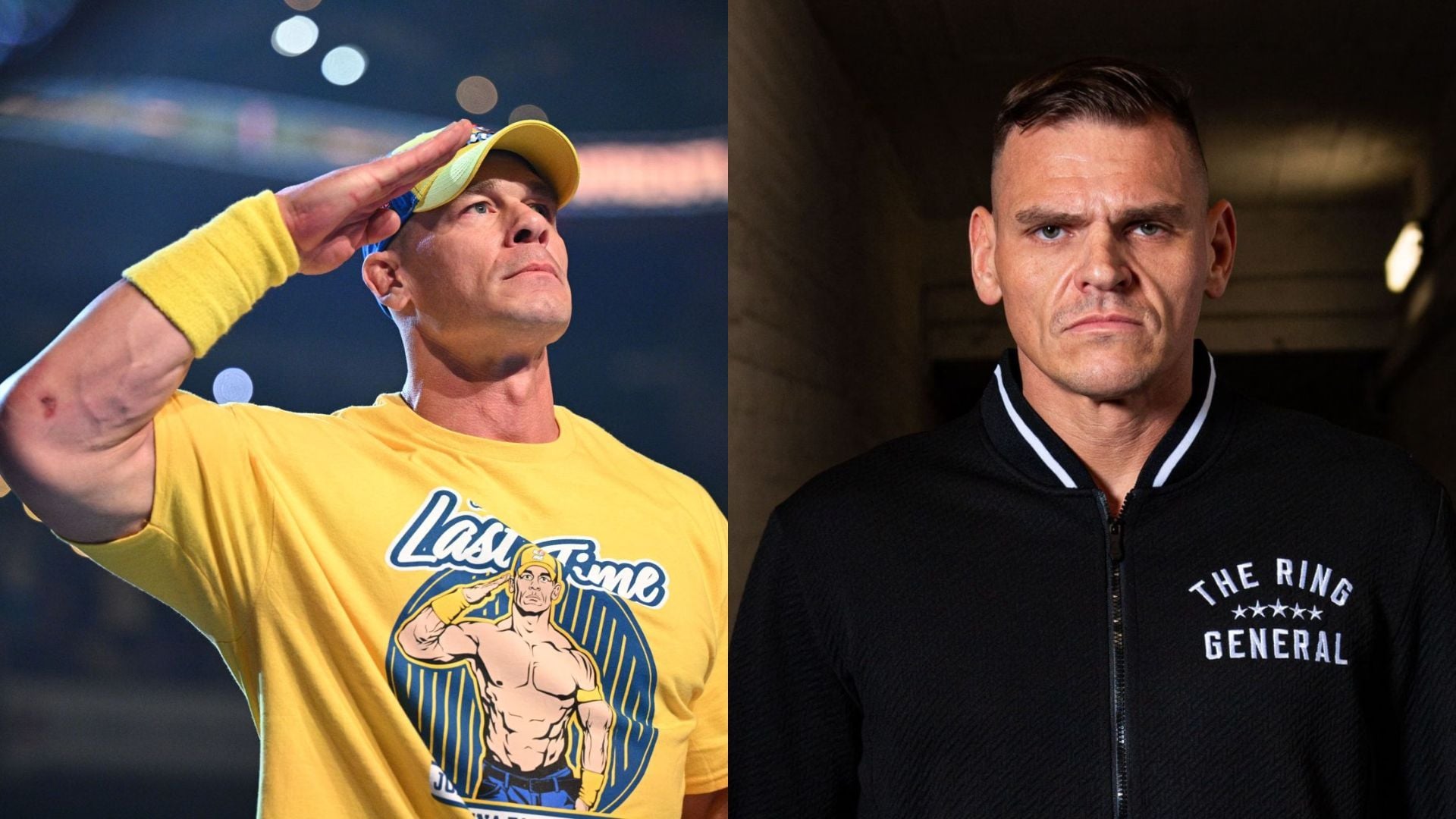
John Cena’s subtle salute to Gunther after his return
John Cena made a surprise appearance on the Oct. 30, 2026 edition of WWE NXT. As he walked to the ring, he stopped in…

Braden Smith Makes NBA Debut With the Pacers
Purdue basketball alum Braden Smith makes NBA debut with the Pacers. Braden Smith, the former Purdue Boilermakers guard, stepped onto an NBA floor for…

Red Wings vs. Golden Knights Live Score and Game Updates
NHL.LIVE: Detroit Red Wings vs Vegas Golden Knights LIVE STREA.MS NHL Game On TV Coverage 6 Nov 2026. Puck drop is set for 7…
Business leaders face a tough choice with workplace monitoring.
Big Brother 2026 has officially crowned a winner. Rochelle took the title on the live final, hosted by AJ Odudu and Will Best on…
WWE Plans Huge 30th Anniversary Celebration for The Rock
WWE is planning to celebrate 30 years of The Rock this month. Plans include a commemorative championship belt. Special merchandise releases are also in…