Pennsylvania Denies Juan Vazquez License Despite 44 Mountaineer Wins Through October 2026
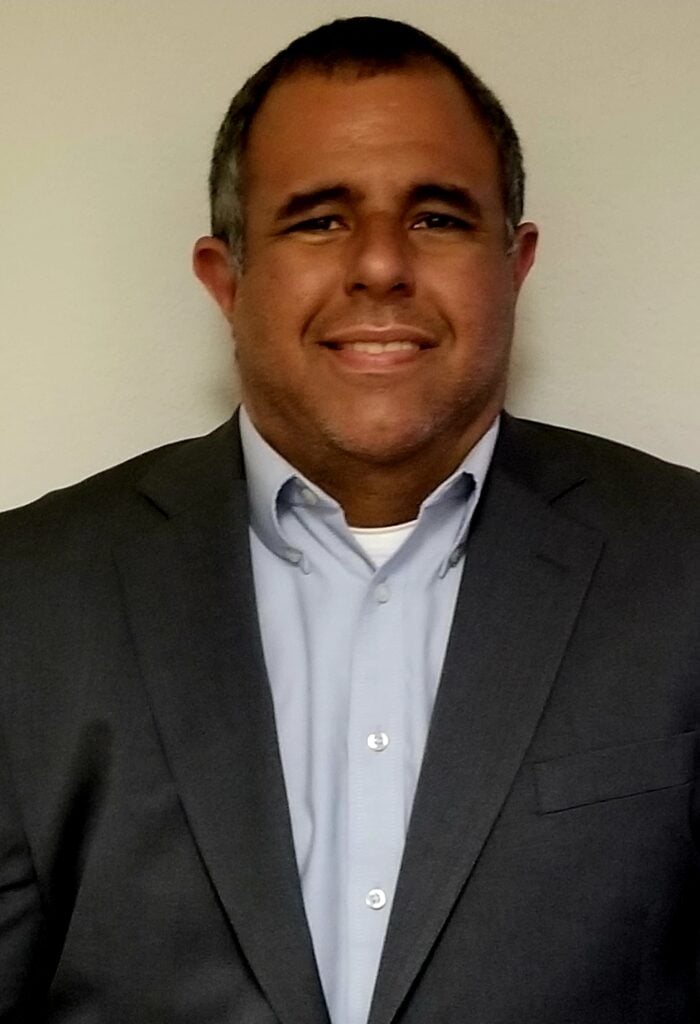
Despite being turned away by Pennsylvania, Juan Carlos Vazquez has logged 243 starts and 44 wins as a trainer at Mountaineer through the first 10 months of 2026.
His horses have continued to enter the starting gate across the state line in West Virginia.
Yet just across the border, Pennsylvania racing regulators have delivered a firm and decisive refusal.
On Oct. 23, 2026, the Pennsylvania State Horse Racing Commission officially denied Vazquez’s application for an owner’s license.
The formal denial came roughly five months after Vazquez submitted his paperwork on May 28, 2026.
In its ruling, the commission concluded that Vazquez failed to prove he meets the character standards required of occupational licensees in the Commonwealth.
Regulators stated that his presence at Pennsylvania tracks remains detrimental to the sport and the wagering public.
The decision highlights a vivid jurisdictional contrast within American Thoroughbred racing.
While one state allows an individual to run horses and visit the winner's circle dozens of times, an adjacent state keeps its gates firmly closed.
A TALE OF TWO JURISDICTIONS
Official Equibase records document that Vazquez has remained active exclusively at Mountaineer Casino, Racetrack & Resort in New Cumberland, West Virginia.
His return to competitive racing in West Virginia began on April 27, 2025.
Since that return, he has maintained a heavy racing schedule as both a conditioner and a horse owner.
Through the first 10 months of 2026 alone, Vazquez saddled 243 runners as a trainer at Mountaineer.
Those 243 starts yielded 44 victories on the track.
During the same 10-month span, Vazquez also campaigned actively in his own name as an owner.
Equibase figures show 116 starts and 18 victories for his ownership account through October 2026.
By traditional racetrack metrics, those numbers reflect an active, productive, and visible stable operation.
Yet Pennsylvania regulators made it clear that race records and win totals in West Virginia do not erase past misconduct.
To the Pennsylvania commission, previous disciplinary findings carried far more weight than current boxcar stats.
THE 2022 PARX DISCIPLINARY CASE
The roots of Pennsylvania's recent denial trace directly back to a severe disciplinary case originating in 2022.
On July 7, 2022, Pennsylvania stewards issued a major ruling against Vazquez.
The stewards suspended his training license through Jan. 26, 2025, and assessed a $5,000 fine.

The severe penalty arose following the tragic death of Shining Colors, a racing mare under his care.
Shining Colors was shipped from Belmont Park in New York to Parx Racing in Bensalem, Pennsylvania.
At the time of the transport, the mare was suffering from severe chronic laminitis.
Laminitis is a debilitating, intensely painful inflammation of the sensitive tissue inside a horse's hoof.
Upon her arrival at Parx Racing, the mare's physical condition was dire.
Veterinary officials had to euthanize Shining Colors due to the severity of her suffering.
Following an investigation, the Pennsylvania commission concluded that Vazquez’s conduct in caring for the mare was grossly negligent, cruel, and abusive.
That finding resulted in the multi-year suspension that sidelined Vazquez from Pennsylvania racing through early 2025.
THE OCTOBER DENIAL ORDER
Vazquez’s Pennsylvania training suspension officially expired on Jan. 26, 2025.
Having sat out the required period, he resumed training horses at Mountaineer three months later.
In May 2026, he sought to regain a formal regulatory foothold in Pennsylvania by applying for an owner's license.
State racing regulators reviewed the application against his extensive regulatory record.
The Pennsylvania commission determined that the passage of time had not alleviated their regulatory concerns.
In its Oct. 23 ruling, the commission cited his history of racing violations across multiple jurisdictions.
The regulators concluded that Vazquez failed to demonstrate by clear and convincing evidence that he is a person of good character, honesty, and integrity.
They also determined he failed to prove his prior activities would not pose a threat to the public interest or to the effective regulation of horse racing.
The commission’s written order pulled no punches regarding the threat regulators perceived.
Officials wrote that Vazquez had presented no supporting information to refute the conclusion that his previous conduct remains a threat to the public interest.
The ruling added that his past corrupt actions continue to threaten the effective regulation and control of horse racing.
Regulators emphasized that his record posed ongoing concerns for the health, safety, and welfare of racing participants and the racehorse itself.
The ruling further concluded that his presence at any licensed racetrack under Pennsylvania jurisdiction remains detrimental to the best interest of racing and the integrity of the betting public.
A LONG REGULATORY TRAIL
The Shining Colors case was not an isolated incident on the trainer's regulatory record.
Vazquez carries an unusually extensive violation history spanning two decades.
According to the industry regulatory database ThoroughbredRulings.com, Vazquez has amassed 135 records relating to violations dating back to 2006.
In regulatory databases, a single violation can occasionally generate multiple entries if stewards issue subsequent orders amending, clarifying, or rescinding prior rulings.
Nonetheless, the triple-digit total reflects constant friction with racing authorities across multiple states.
His history has also led to exclusion by private racetrack operators.
In 2015, track management at Delaware Park issued a ban prohibiting Vazquez from their grounds.
That same year, track management at Laurel Park in Maryland similarly barred him from their property.
Private track bans operate independently of state racing commission licenses, allowing track operators to exclude individuals under common-law property rights.
When Pennsylvania regulators reviewed his May 2026 application, they weighed that cumulative history against his request.
THE APPEAL PROCESS BEGINS
Despite the commission’s scathing assessment, the administrative process in Pennsylvania has not concluded.
Following the Oct. 23 ruling, Vazquez exercised his administrative rights and filed a timely appeal of the license denial.
On Oct. 30, 2026, the Pennsylvania commission issued a separate ruling granting his request for an appeal.
The administrative grant ensures that Vazquez will have an opportunity to challenge the commission's conclusions through official legal channels.
However, the commission’s Oct. 30 action does not overturn the underlying findings of the denial.
Nor does granting an appeal provide Vazquez with a valid owner's license while the challenge is adjudicated.
For the immediate future, his status in Pennsylvania remains completely unchanged.
He remains unlicensed in the Commonwealth and excluded from participation at Pennsylvania tracks.
THE INTERSTATE QUESTION
The ongoing divide between Pennsylvania and West Virginia underscores a long-standing debate within North American racing governance.
Each state racing commission retains sovereign authority over occupational licensing within its own borders.
While commissions frequently honor reciprocal suspensions, the expiration of a penalty in one state does not guarantee re-licensing in another.
Pennsylvania regulators utilized their broad statutory authority to deny an applicant based on past character and animal welfare findings.
Meanwhile, West Virginia has permitted Vazquez to actively train and run horses under its jurisdiction.
Racing fans, animal welfare advocates, and bettors are left to watch the conflicting signals sent by neighboring states.
Should state racing commissions have unified licensing standards across state lines for individuals with past cruelty suspensions?
Advertisement
You may also like
Anna Leigh Waters Expands Global Platform In Manila To Champion Active Living And Nutrition
Beyond holding the world No. 1 ranking across all three pickleball divisions, Anna Leigh Waters is taking center stage in Manila to represent an…
As Jon Rahm Accepts Fines To Move On, Bryson DeChambeau Faces A Brutal Tour Dilemma
While Jon Rahm accepted DP World Tour fines and stipulations to secure his competitive future, Bryson DeChambeau's last-minute vocal support for LIV 2.0 leaves…

Jen Affleck Files for Divorce from Zac After Seven Turbulent Years of Marriage
Jennifer Affleck filed for divorce from Zac Affleck in Utah after seven years of marriage, following years of relationship struggles that played out across…
Damian Lillard Confronts Dillon Brooks After Dangerous Contact To Repaired Achilles That Cost Him A Year
Damian Lillard was playing in just his seventh game back after missing the entire 2025-26 season rehabbing the left Achilles tendon he completely ruptured…

Aminata Gueye and Tiffany Hayes Sparked Angel Reese Trolling Right After Game 7
The mocking of Angel Reese did not start at the parade. It began immediately after Game 7 when Valkyries forward Aminata Gueye and guard…
LIV 2.0 Collapses as League Secures Only 30 of the 40 Players Required by Backers
Potential backer BC Partners required roughly 40 players to commit to LIV 2.0, but the tour only managed to secure around 30 sign-ups with…