Pennsylvania Regulators Reject Juan Vazquez's Owner Application On Serious Integrity Grounds
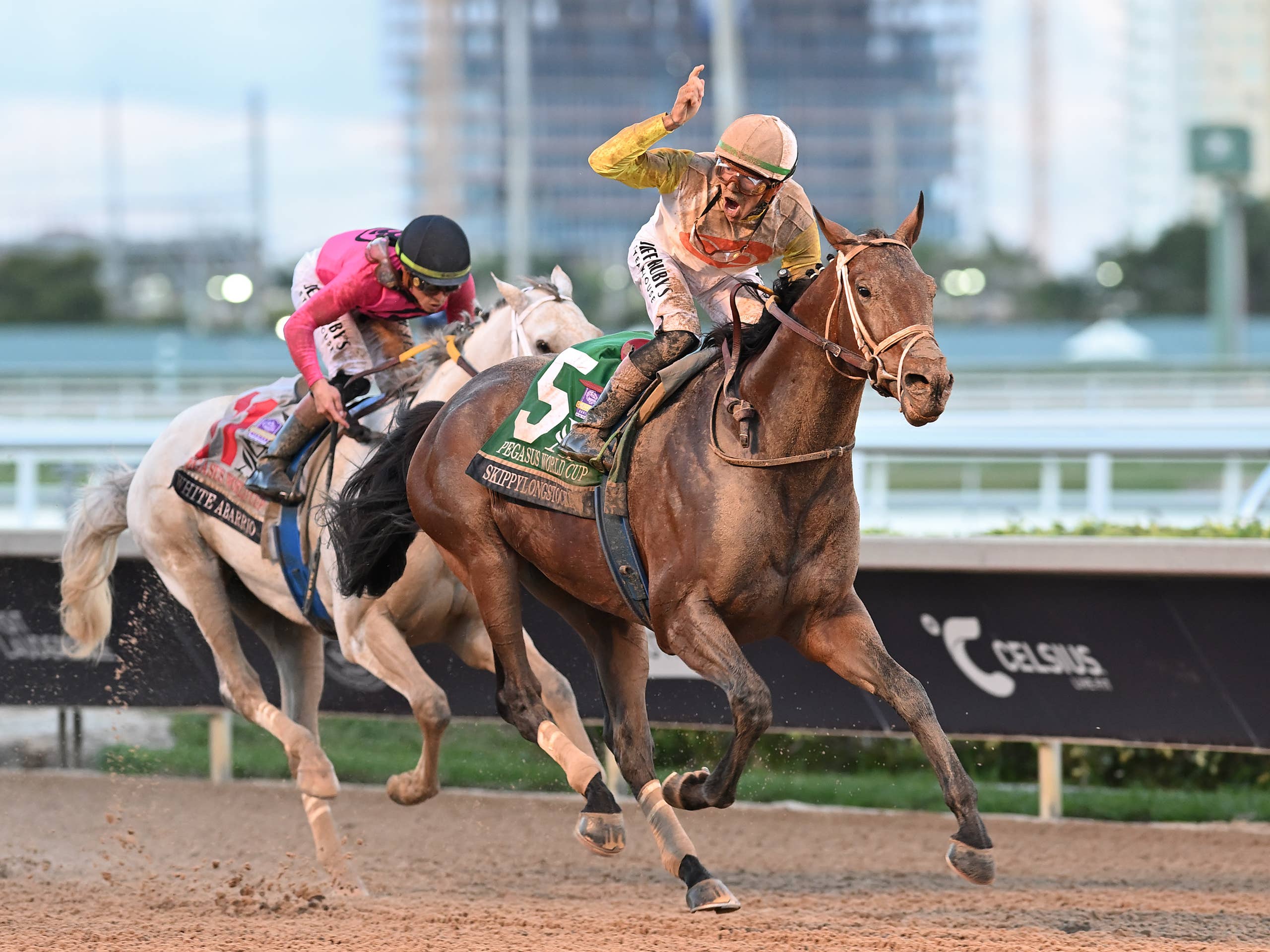
Pennsylvania regulators formally rejected Juan Carlos Vazquez's application for an owner's license in an October 23 ruling.
The decision delivered a firm message about the Commonwealth's standards for racing integrity and animal welfare.
Vazquez originally submitted his application for a Pennsylvania owner's license on May 28.
State racing regulators reviewed the request alongside his extensive history of disciplinary violations across multiple racing jurisdictions.
Following that review, the regulatory commission concluded that Vazquez could not meet the state's threshold for licensure.
The formal ruling determined that he "failed to demonstrate by clear and convincing evidence that he is a person of good character, honesty, and integrity, or that his prior activities will not pose a threat to the public interest or the effective regulation and control of horse racing."
With that declaration, state authorities closed the door on his immediate return to Pennsylvania racing as a thoroughbred owner.
A PAST FINDING OF CRUELTY
The denial stems directly from disciplinary actions tied to a severe 2022 animal welfare case.
On July 7, 2022, Pennsylvania stewards issued a major ruling against Vazquez that suspended his trainer's license through January 26, 2025.
Stewards also assessed a $5,000 fine in connection with the case.
The disciplinary action followed the death of Shining Colors, a racehorse under his care.
Shining Colors was an ailing mare suffering from severe chronic laminitis.
Despite the mare's debilitating condition, Vazquez arranged for the horse to be transported from Belmont Park in New York to Parx Racing in Pennsylvania.
Following that transit, the mare's condition worsened to the point that she had to be euthanized.
Upon investigating the incident, Pennsylvania racing regulators concluded that Vazquez's conduct in caring for Shining Colors was "grossly negligent, cruel, and abusive."
The resulting suspension removed Vazquez from active participation in Pennsylvania racing for more than two and a half years.
RETURN TO THE SADDLE IN WEST VIRGINIA
Vazquez's Pennsylvania suspension formally expired on January 26, 2025.
Rather than seeking an immediate return in Pennsylvania, he resumed his training career across state lines.
On April 27, 2025, Vazquez officially returned to training at Mountaineer Casino, Racetrack & Resort in West Virginia.
Official Equibase records show that he established a continuous presence at the West Virginia oval throughout his comeback.
Over that stretch, Vazquez operated exclusively at Mountaineer in dual capacities as both a licensed trainer and an owner.
During the first 10 months of 2026, he built up significant operational volume at the track.
Vazquez logged 243 starts and secured 44 victories as a thoroughbred trainer during that 10-month span.
As an owner at Mountaineer, he entered 116 races and earned 18 trips to the winner's circle over the same period.
Yet his active status and racing success in West Virginia did not soften the stance of Pennsylvania regulators.
PENNSYLVANIA STANDS FIRM ON INTEGRITY
When Vazquez sought an owner's license in Pennsylvania in May, regulators evaluated his record under state administrative standards.
In licensing evaluations, racing commissions hold wide authority to protect the public, the wagering pool, and equine athletes.
Pennsylvania regulators determined that his previous actions continued to disqualify him from holding an occupational credential.
The regulatory body held that the passage of time had not alleviated the severity of his prior offenses.
"Mr. Vazquez has presented no supporting information to refute the conclusion that his previous conduct and corrupt actions remain a threat to the public interest, the effective regulation and control of horse racing and to the health, safety and welfare of the racing participant and the racehorse," the October 23 ruling stated.
The commission then delivered an unsparing assessment of what his presence would mean for racetracks in the state.
"Mr. Vazquez's presence at a licensed racetrack under the jurisdiction of the Commission remains detrimental to the best interest of horse racing and to the integrity of the betting public in the Commonwealth."
A DECADE-LONG VIOLATION RECORD
The 2022 laminitis case was not an isolated incident in Vazquez's professional racing background.
Official regulatory archives demonstrate a long pattern of disciplinary scrutiny surrounding his stables.
The public racing database ThoroughbredRulings.com lists 135 violation-related records involving Vazquez dating back to 2006.
Some single violations generate multiple database entries when stewards or appellate panels amend, rescind, or modify earlier decrees.
Nevertheless, the total volume of entries underscores decades of intense oversight across racing jurisdictions.
Private track operators have previously taken their own measures against him as well.
In 2015, track management at Delaware Park moved to ban Vazquez from its property.
That same year, track management at Laurel Park in Maryland similarly barred him from entering its grounds.
Such administrative exclusions by track operators reflect the ongoing challenges Vazquez has faced regarding his professional standing.
THE ROAD TO AN APPEAL
Vazquez did not accept the Pennsylvania commission's October 23 denial without a challenge.
Following the adverse ruling, he submitted a timely administrative appeal to contest the state's determination.
On October 30, Pennsylvania racing authorities issued a separate ruling granting his request for an appeal proceeding.
Under administrative law, an appeal grant provides a formal mechanism for an applicant to present arguments against a regulatory decision.
However, granting the appeal request does not reverse the October 23 denial.
It does not overturn the commission's underlying findings regarding his conduct.
Nor does the procedural step grant Vazquez an owner's license while the legal process moves forward.
For now, the Commonwealth's refusal stands, keeping him barred from racing ownership in Pennsylvania.
The coming proceedings will test whether past findings of animal cruelty create an insurmountable barrier to relicensure.
Do you agree with Pennsylvania regulators ruling that his presence remains detrimental to the sport's integrity?
Advertisement
You may also like

Aminata Gueye and Tiffany Hayes Sparked Angel Reese Trolling Right After Game 7
The mocking of Angel Reese did not start at the parade. It began immediately after Game 7 when Valkyries forward Aminata Gueye and guard…
LIV 2.0 Collapses as League Secures Only 30 of the 40 Players Required by Backers
Potential backer BC Partners required roughly 40 players to commit to LIV 2.0, but the tour only managed to secure around 30 sign-ups with…

Is Rick Barnes Entering His Final Season As Tennessee Chases Its First Final Four?
As Rick Barnes embarked on his 12th season as Tennessee's head coach, sports radio discussions immediately shifted to whether this campaign could mark his…
Lee Westwood Admits He Is Unemployed After Rejecting LIV 2.0 But Has Zero Regrets
Lee Westwood confirmed he is currently unemployed after turning down LIV 2.0, while asserting that he would have been stupid to decline the massive…
BC Partners Pulls Out Of $300M Deal, Pushing LIV Golf Into Bankruptcy Liquidation
Private credit firm BC Partners has pulled out of a proposed $300 million deal to finance LIV 2.0, effectively leaving the tour to be…
Damian Lillard Torches Dillon Brooks With a Reverse Layup and Step-Over on Next Play
On the very next play following their heated exchange, Damian Lillard blew past Dillon Brooks for a reverse layup and had choice words for…