Piastri admits penalty is fair but rules are "tricky" at Mexico
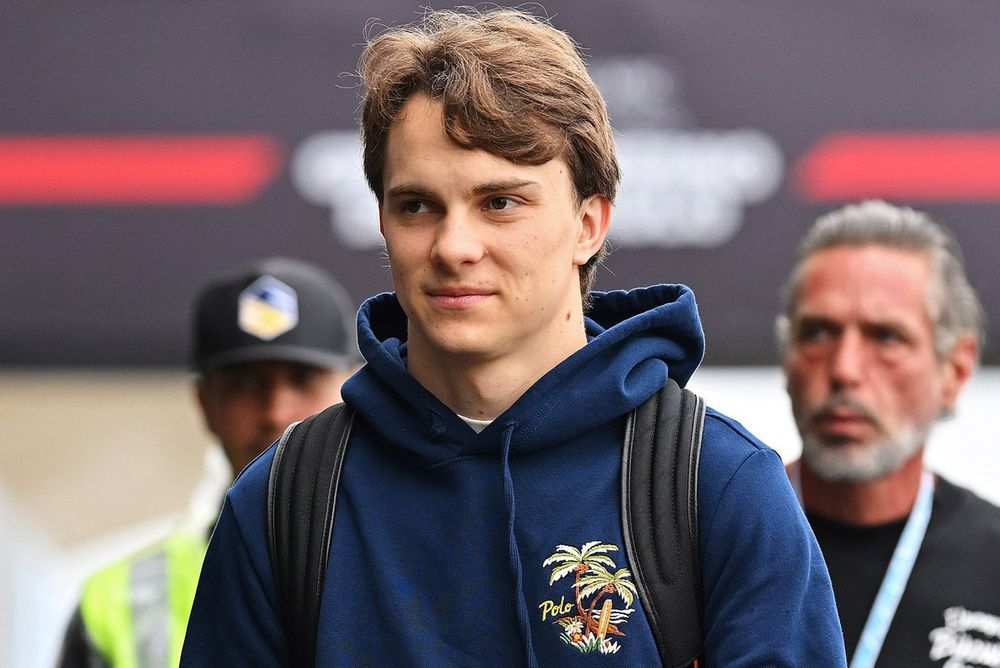
Oscar Piastri has accepted his 10-second penalty for colliding with Arvid Lindblad at the Mexico City Grand Prix.
But the McLaren driver warned that the FIA’s driving standards guidelines are nearly impossible to enforce on the track’s unique Turn 1-2 complex.
The incident happened on the opening lap.
Piastri put his McLaren around the outside of Lindblad’s Racing Bulls car heading into Turn 1.
His plan was to gain the inside line for the immediate approach to Turn 2.
Both drivers held their lines.
That led to contact: Lindblad’s rear-left wheel hit Piastri’s front-right.
The impact sprung the Racing Bulls car into the air.
Lindblad then crashed into the exit wall and was out of the race.
The safety car was deployed.
When the field bunched up, Piastri’s race was effectively over.
He had crossed the line in seventh place.
But the 10-second post-race penalty dropped him to 13th in the final classification.
Piastri did not argue with the stewards’ decision.
“I think looking at the guidelines, it’s kind of hard to argue against the penalty,” he told reporters.
But he immediately pointed to a deeper problem with the rules themselves.
“I think that set of corners in Mexico, that’s where the guidelines are very tricky to enforce,” Piastri said.
“Every corner’s slightly different, every sequence of corners especially.”
The FIA’s driving standards guidelines are the sport’s reference for what constitutes fair racing.
They state that a driver on the inside must have its front axle level with the mirrors of the car in front to earn racing room at the apex.
For a driver on the outside line, the attacking driver must have their front axle level with that of the defending car.
Piastri’s situation fell into a grey area.
He was on the outside, trying to make a move stick through two corners that flow into one another.
When he realized the gap was closing, he tried to back out.
That was the moment the cars touched.
“It kind of feels like when your only option to avoid an incident is to cut the track, you’re not left in a great place,” Piastri said.
Cutting the track is not a realistic option in a Grand Prix.
It would likely bring its own penalty, or at least a time loss that defeats the purpose of racing.
Piastri also acknowledged Lindblad’s role in the incident.
“I think Arvid was very robust,” he said.
“I think if you look at the guidelines he had the right to [defend].
“I think also for myself I had the right to try and make that move stick until the point where I tried to back out which is when we collided.”
The result was a double loss for Piastri.
He lost points in the drivers’ championship.
And McLaren fell further behind Red Bull in the constructors’ standings after the team had already lost ground in Austin.
Piastri is now focused on the Sao Paulo Grand Prix.
He said he simply hopes for a “cleaner” weekend.
McLaren is chasing Red Bull for third place in the constructors’ championship.
The gap to the Milton Keynes team grew after Mexico.
Piastri’s penalty was one of several talking points from the race weekend.

But his comments have reopened a debate about whether the FIA’s guidelines are fit for purpose on every circuit.
The Mexico City track’s first two corners are notorious.
Turn 1 is a long, sweeping right-hander that leads almost immediately into a tight left-hand Turn 2.
Drivers often try to go around the outside of Turn 1 to set up a switchback for Turn 2.
That is exactly what Piastri attempted.
The guidelines were written with single corners in mind.
They do not account well for rapid changes of direction, according to Piastri.
“Every corner’s slightly different, every sequence of corners especially,” he repeated.
The FIA has not yet indicated whether it will review the guidelines.
But Piastri’s status as a Grand Prix winner and McLaren’s lead driver gives his criticism weight.
He is not the first driver to question the rules this season.
Several others have complained about inconsistent enforcement from race to race.
Piastri’s penalty was applied after the race, not during it.
That meant he had no chance to adjust his strategy or fight back on track.
The stewards reviewed the incident and decided he was primarily at fault.
Piastri accepted that judgment.
But he made it clear that the problem is structural, not personal.
“It’s a difficult one for sure,” he said.
The collision also ended Lindblad’s race early.
The Racing Bulls driver had been running in a points-scoring position before the contact.

Lindblad has not publicly commented on the incident since the race.
But Piastri’s admission that Lindblad had the right to defend suggests the rookie was not blamed by his rival.
The question now is whether the FIA will act on the feedback.
Drivers have called for clearer guidelines for years.
The Mexico incident may become a case study in why the current wording is insufficient.
Piastri’s own form has been a talking point as well.
He has not stood on the podium since the Miami Grand Prix.
That is a drought of 15 races, equaling the longest such stretch of his Formula 1 career.
He acknowledged the frustration in Brazil ahead of the Sao Paulo weekend.
“It’s a lot more fun when you’re on the podium than when you’re not, for sure,” he said.
“But I think for me, outside of that, just trying to find more consistency and ease in the car.
“That’s the biggest thing I’m after.”
McLaren has not won a race since the summer break.
The team has slipped behind Red Bull in the constructors’ battle.
Piastri’s penalty in Mexico did not help that cause.
But he is not dwelling on the result.
He is looking ahead to Interlagos, a track that often produces unpredictable racing.
Sao Paulo could offer a reset.
Piastri will hope for a “cleaner” weekend, as he put it.
Whether the FIA listens to his broader point about the guidelines remains to be seen.
For now, one thing is clear: the rules that govern overtaking in Formula 1 are facing renewed scrutiny.
And the driver doing the scrutinizing is one of the sport’s most measured voices.
Advertisement
You may also like

NBA champion Steve Kerr trolls Donald Trump with a savage jab
Golden State Warriors head coach Steve Kerr took a sharp, humorous jab at President Donald Trump during his Wednesday media availability, referencing a campaign…

John Cena’s subtle salute to Gunther after his return
John Cena made a surprise appearance on the Oct. 30, 2026 edition of WWE NXT. As he walked to the ring, he stopped in…

Braden Smith Makes NBA Debut With the Pacers
Purdue basketball alum Braden Smith makes NBA debut with the Pacers. Braden Smith, the former Purdue Boilermakers guard, stepped onto an NBA floor for…

Red Wings vs. Golden Knights Live Score and Game Updates
NHL.LIVE: Detroit Red Wings vs Vegas Golden Knights LIVE STREA.MS NHL Game On TV Coverage 6 Nov 2026. Puck drop is set for 7…

Business leaders face a tough choice with workplace monitoring.
Big Brother 2026 has officially crowned a winner. Rochelle took the title on the live final, hosted by AJ Odudu and Will Best on…

WWE Plans Huge 30th Anniversary Celebration for The Rock
WWE is planning to celebrate 30 years of The Rock this month. Plans include a commemorative championship belt. Special merchandise releases are also in…