Rory McIlroy Backs DP World Tour as LIV Golf Collapses Following Investor Withdrawal
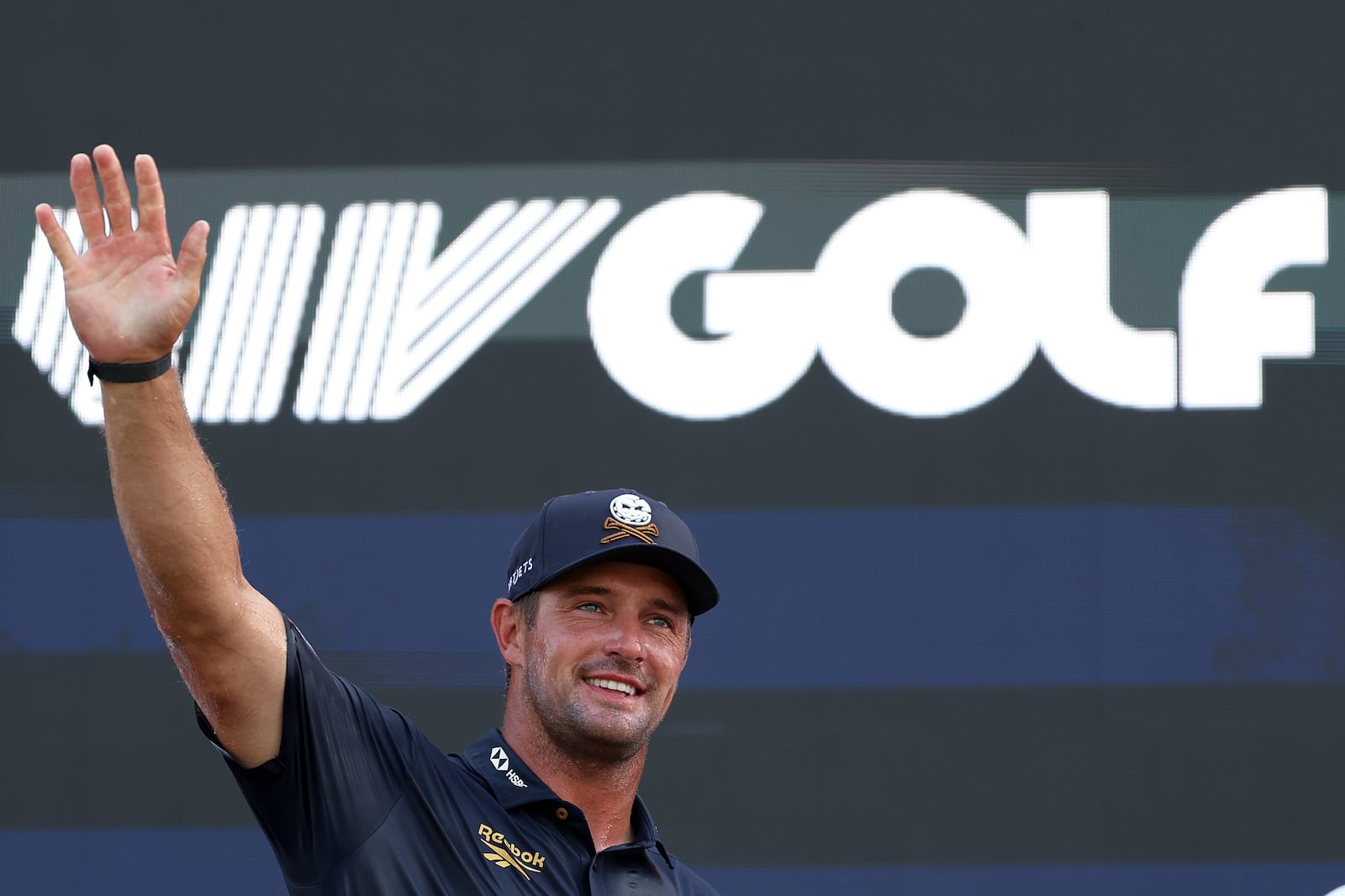
Rory McIlroy strongly backed DP World Tour chief executive Guy Kinnings after LIV Golf's proposed relaunch crumbled, stating the breakaway league turned professional golf into an arms race intended to destroy traditional rival tours.
The Northern Irishman offered his blunt assessment ahead of the Abu Dhabi Championship as the rival circuit faced complete liquidation.
His remarks came immediately after lead private equity investor BC Partners Credit pulled out of a proposed rescue package.
The abrupt collapse of that financial lifeline left the Saudi-backed breakaway tour staring at an immediate shutdown.
McIlroy did not mince words when reflecting on the bitter divisions that have consumed the sport over the past several seasons.
"They took players; they took sponsors; they turned professional golf into an arms race. They were going around Augusta saying they wanted to destroy the European Tour."
McIlroy fully endorsed the aggressive stance recently taken by European circuit leadership to protect their institutional heritage.
"I think we’ll look back on it as a very strange time,"
THE EUROPEAN TOUR DRAWS A LINE
The downfall of the proposed enterprise escalated when DP World Tour chief executive Guy Kinnings issued an uncompromising declaration.
Kinnings informed players that anyone signing up for the venture known as LIV 2.0 would forfeit European tour membership.
Speaking to the Scotsman, Kinnings stressed that leadership held an obligation to defend traditional structures against hostile outside spending.
Kinnings pointed out that the rival league had spent over $7 billion while actively seeking to dismantle the European Tour.
Because European membership remains a mandatory requirement to represent Team Europe in the Ryder Cup, the ruling placed players in an agonizing position.
For European players, choosing the breakaway league meant turning their backs on the historic biennial team contest entirely.
McIlroy voiced unconditional support for Kinnings and the firm stance adopted by the Wentworth-based headquarters.
The former world number one confirmed he agreed with every word Kinnings stated regarding the hostile intentions of the upstart circuit.
THE INVESTOR PULLOUT
Private equity firm BC Partners Credit had initially explored pledging between $300 million and $428 million to fund the revamped version of the league.
That investment was designed to help the tour exit Chapter 11 bankruptcy and establish a newly restructured calendar.
The proposed relaunch was slated to feature at least 10 tournaments alongside team franchises and player equity shares.
League chief executive Scott O’Neil had previously pitched the equity stake to prospective participants as an enticing second bite of the apple.
Ted Goldthorpe, a partner and head of BC Partners Credit, previously expressed confidence in the commercial viability of the existing infrastructure.
Goldthorpe told a Sportico conference in September that previous funding had already built an ecosystem that could be managed sustainably.

However, that financial commitment was entirely contingent on securing signed contractual agreements from a critical mass of recognizable talent.
The private capital firm abruptly walked away after the circuit failed to gather the required roster of marquee names.
With BC Partners officially abandoning the deal, the bankruptcy process has shifted swiftly from reorganization to the total liquidation of assets.
A MASS EXODUS OF STAR TALENT
Reports indicate that BC Partners required a firm threshold of approximately 30 to 40 committed players to move forward.
While four players, including Brendan Steele and Cameron Tringale, publicly pledged their allegiance, headline talent headed for the exits.
Insiders revealed that roughly 30 players were open to staying, but the roster lacked the needle-moving superstars required by private equity.
Spanish star Jon Rahm negotiated an outright release from his lucrative contract prior to the scheduled court proceedings.
Sergio Garcia joined Rahm by publicly announcing his departure from the proposed reboot in recent weeks.
Chilean golfer Joaquin Niemann was another high-profile competitor who walked away from the struggling enterprise.
Bryson DeChambeau, widely viewed as the most prominent remaining advocate for the breakaway tour, did not commit publicly to the new format.
Contradictory reports emerged regarding DeChambeau, with some sources claiming he agreed to return while others noted he never signed binding documents.
Without stars of Rahm's caliber, the remaining lineup simply did not satisfy the demanding investment terms laid down by BC Partners.
The inability to present an elite roster effectively sounded the death knell for the entire reorganization effort.
UNEMPLOYMENT AND A COURTROOM CLIMAX
The human cost of the enterprise unraveling has already rippled across professional golf.
Former European Ryder Cup stalwart Lee Westwood openly declared himself unemployed as the enterprise crumbled around its participants.
Proceedings in the United States Bankruptcy Court in Trenton, New Jersey, were scheduled to address player contracts, outstanding leases, and operational liabilities.
What was initially intended to be a routine approval of Rahm's release became a venue for unwinding remaining commercial assets.
LIV Golf New Jersey recently altered its legal address in court filings, moving its corporate registration from New York to Claymont, Delaware.
Neither tour representatives nor team executives offered immediate public comment when pressed about the impending dissolution.
The sudden unraveling has left dozens of golfers scrambling to determine where they will play competitive tournament rounds in the coming season.
FROM UNLIMITED WEALTH TO INSOLVENCY
The rapid implosion represents a staggering financial retreat for a circuit that spent more than $5 billion after launching in 2022.

The league was initially funded through the immense financial resources of Saudi Arabia's Public Investment Fund.
Under original chief executive Greg Norman, the breakaway league aggressively targeted established PGA Tour and European tour players.
Superstars like Dustin Johnson, Brooks Koepka, DeChambeau, and Rahm were lured across the divide by guaranteed contracts exceeding nine figures.
Even mid-tier touring professionals with a single PGA Tour title commanded guaranteed deals worth $30 million.
That unprecedented level of compensation frequently exceeded what those players had generated throughout their entire professional careers.
Traditional golf tours found themselves utterly unable to match the unchecked sovereign wealth entering the marketplace.
The resulting friction fractured friendships, spawned bitter antitrust litigation, and alienated golf fans across the globe.
THE TACTICAL RETREAT OF SOVEREIGN FUNDS
The financial reality began shifting radically following regional geopolitical turmoil and a revised fiscal approach in the Middle East.
A few months after the outbreak of the Iran war, the Public Investment Fund modified its international capital deployment strategy.
In April, the Saudi fund revealed it would cease funding the breakaway tour entirely following the conclusion of the 2026 campaign.
The sudden deadline forced league management to pursue external private investment far earlier than originally anticipated.
The Asian Tour, which had previously partnered with the breakaway league through the lucrative International Series, recognized the changing landscape.
In July, the Asian Tour opted to renew its strategic alliance with the traditional PGA Tour and DP World Tour.
Deprived of regional partners and faced with the loss of sovereign backing, the breakaway tour filed for Chapter 11 bankruptcy on September 8.
A strict deadline of October 30 was imposed by the Saudi fund to finalize an agreement with BC Partners.
Although the deadline was briefly extended to facilitate negotiations, the tour ultimately ran completely out of operational runway.
THE ROAD AHEAD FOR PROFESSIONAL GOLF
With liquidation hearings now taking center stage, traditional circuits must navigate how to handle returning defectors.
The DP World Tour and the PGA Tour hold immense leverage as players seek pathways back into elite competitive tournaments.
Sanctions, financial penalties, and probationary periods remain significant hurdles for competitors who previously abandoned the established ecosystems.
Tour leadership must now balance competitive integrity with the commercial desire to welcome elite talents back into tournament fields.
Fans across the world are left reflecting on four turbulent years that disrupted professional tournament golf to its core.
The aggressive attempt to monopolize elite golf through unprecedented cash injections has ended inside a New Jersey bankruptcy courtroom.
Did the DP World Tour's strict Ryder Cup ban deliver the final fatal blow to LIV Golf?
Advertisement
You may also like

NBA champion Steve Kerr trolls Donald Trump with a savage jab
Golden State Warriors head coach Steve Kerr took a sharp, humorous jab at President Donald Trump during his Wednesday media availability, referencing a campaign…

John Cena’s subtle salute to Gunther after his return
John Cena made a surprise appearance on the Oct. 30, 2026 edition of WWE NXT. As he walked to the ring, he stopped in…

Braden Smith Makes NBA Debut With the Pacers
Purdue basketball alum Braden Smith makes NBA debut with the Pacers. Braden Smith, the former Purdue Boilermakers guard, stepped onto an NBA floor for…

Red Wings vs. Golden Knights Live Score and Game Updates
NHL.LIVE: Detroit Red Wings vs Vegas Golden Knights LIVE STREA.MS NHL Game On TV Coverage 6 Nov 2026. Puck drop is set for 7…

Business leaders face a tough choice with workplace monitoring.
Big Brother 2026 has officially crowned a winner. Rochelle took the title on the live final, hosted by AJ Odudu and Will Best on…

WWE Plans Huge 30th Anniversary Celebration for The Rock
WWE is planning to celebrate 30 years of The Rock this month. Plans include a commemorative championship belt. Special merchandise releases are also in…