Rory McIlroy gets 2-shot penalty after first round in Abu Dhabi as Laporta leads with a 62
The DP World Tour issued an official statement on Thursday explaining that Rory McIlroy voluntarily applied a two-stroke penalty to himself during the opening round of the Abu Dhabi Aldar Championship at Yas Links.
The decision turned what would have been a double-bogey six on the par-4 12th hole into a quadruple-bogey eight.
It dropped McIlroy from a first-round score of 68 — four under par — to 70, or two under par.
That left him eight strokes behind tournament leader Francesco Laporta, who shot a 62.
But the story is not about the score.
It is about how the penalty came about and who decided it.
THE INCIDENT
The controversy began on the 12th hole at Yas Links.
McIlroy hit his first chip shot from the bottom of a sandy depression near the green.
His ball rolled back down the hill and came to rest in a divot in the rough.
Before playing his next chip, McIlroy placed his club behind the ball.
In doing so, a small piece of grass near the divot appeared to flatten.
A television camera captured the moment from a close-up angle.
After the round ended, tournament officials reviewed the footage.
They determined that McIlroy may have improved his lie, which is a violation of Rule 8.1 of the Rules of Golf.
That rule prohibits a player from improving the area of their intended swing by pressing down on the ground.
THE DP WORLD TOUR STATEMENT
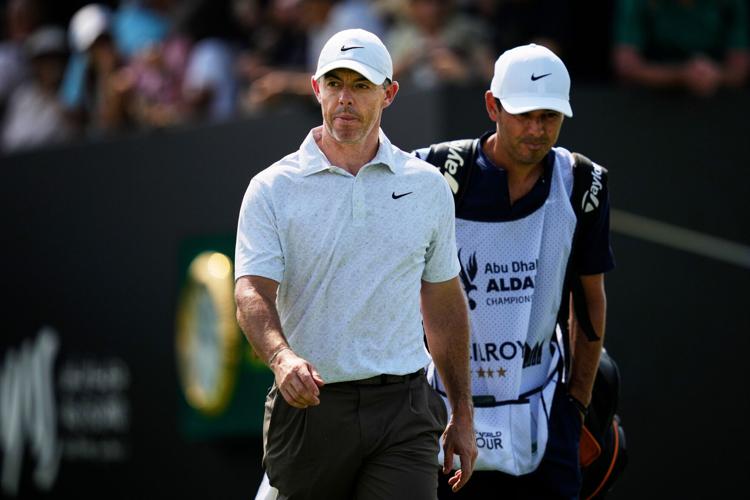
The DP World Tour released an official statement detailing the process.
The statement read: "Having reviewed the footage, McIlroy was unable to say whether he had pressed the club on the ground or not."
That sentence is critical.
It means the officials did not have clear evidence that McIlroy intentionally pressed the grass down.
The video was ambiguous enough that McIlroy himself could not confirm what happened.
Under normal circumstances, a rules official would need to determine whether a breach occurred beyond a reasonable doubt.
But McIlroy did not wait for that determination.
The statement continued: "However, given his concern over perception of the footage, he was not comfortable proceeding without penalty."
That is the key phrase: "concern over perception."
McIlroy was worried about how the footage would look to the public.
He did not want golf fans to watch the clip and conclude that he had cheated.
The statement concluded: "He therefore chose to apply a two stroke penalty."
It was McIlroy's own decision.
The DP World Tour did not force the penalty on him.
He volunteered it.
MCILROY'S EXPLANATION
McIlroy spoke to reporters after the round and explained his reasoning.
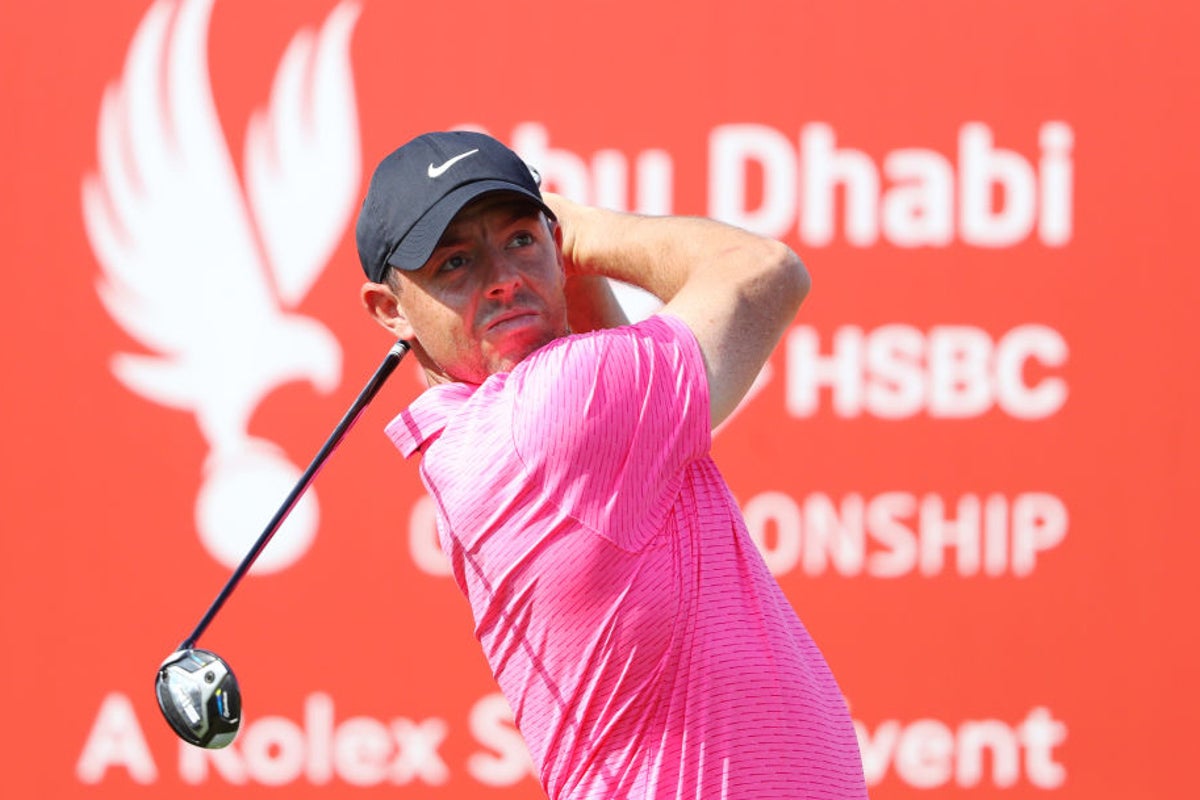
He said he had no intention of breaking the rules.
His only goal was to assess the lie of the ball, which was sitting in a difficult spot inside a sandy depression.
"I went to sort of just get a feel for the lie," McIlroy said.
He acknowledged that the close-up camera angle made the situation look worse than it was.
"The close-up of the camera, you can see like a little piece of grass around the divot sort of lies down as I put my club down behind the ball, and it doesn't — I guess the grass doesn't return," he said.
McIlroy admitted that the visual evidence was damaging.
"It doesn't look very good," he said.
He said he did not want to risk the perception that he had gotten away with something.
"I don't want the perception of people thinking I got away with something," McIlroy told reporters, according to the Irish Independent.
That concern drove his decision to accept the penalty.
THE CHACARRA SUBPLOT
One of the most unusual elements of the story involves McIlroy's competitor, Eugenio Chacarra.
Chacarra is currently leading the Race to Dubai standings.
McIlroy is chasing him for the title.
After the round, McIlroy and Chacarra were tied at two under par.
Despite that direct competition, Chacarra tried to help McIlroy escape the penalty.
According to multiple reports, Chacarra spoke to officials on McIlroy's behalf.

He argued that the penalty was too harsh.
He pointed out that McIlroy had not intentionally pressed the grass down.
But McIlroy overruled his competitor's efforts.
He accepted the penalty anyway.
This is a rare moment in professional golf.
Competitors do not typically intervene to help rivals facing sanctions.
Chacarra's gesture was noted by several media outlets, including The Mirror US and AOL.com.
THE IMPACT ON THE LEADERBOARD
McIlroy's penalty changed the complexion of the first round.
He had made six birdies on the day.
His only bogeys came from the quadruple bogey on the 12th hole.
Without the penalty, McIlroy would have been four under par and in contention near the top of the leaderboard.
With the penalty, he sits at two under par.
Francesco Laporta leads the tournament with a 62, which is 10 under par.
McIlroy is eight shots behind.
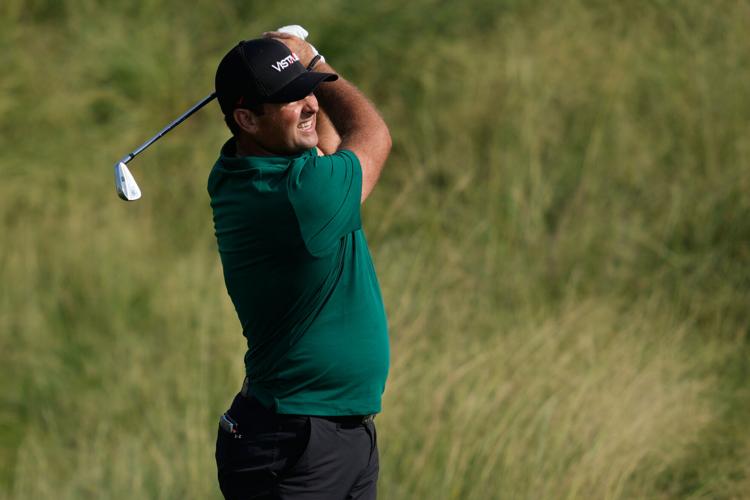
Patrick Reed, who is second in the Race to Dubai standings and one place ahead of McIlroy, shot a 74.
That means McIlroy lost ground to Reed as well.
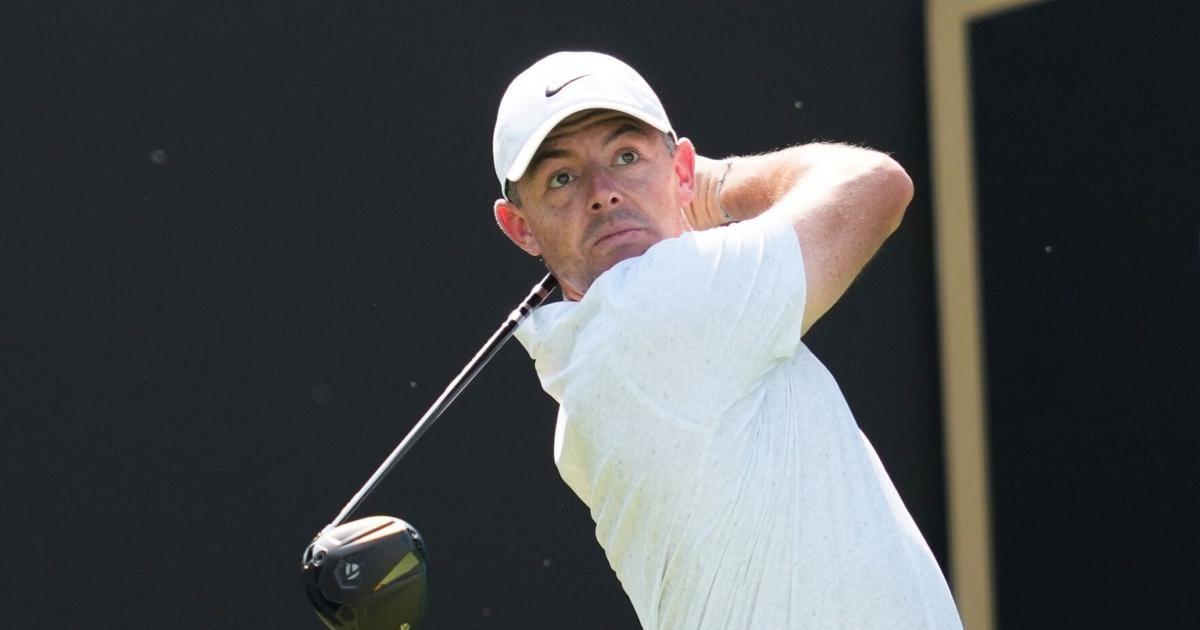
McIlroy can equal the record by winning his eighth Race to Dubai title.
This penalty makes that path more difficult.
THE PRECEDENT QUESTION
The unusual nature of McIlroy's self-imposed penalty raises a broader question for golf.
Should players be allowed to decide whether to penalize themselves based on perception?
Under the current rules, the answer is yes.
If a player is uncertain whether they have breached a rule, they can consult with officials.
If the evidence is ambiguous, the player can choose to add a penalty to avoid any appearance of impropriety.
But this creates a potential inconsistency.
Some players might accept a penalty for an ambiguous action.
Others might refuse, forcing officials to make a definitive ruling.
The outcome could be different depending on the player's personal standards.
McIlroy's decision was widely praised as honorable.
Golf commentators noted that he prioritized integrity over score.
But it also set a precedent that could be cited in future disputes.
If a player in a similar situation refuses to penalize themselves, fans may compare them unfavorably to McIlroy.
THE RULE IN DETAIL
Rule 8.1 of the Rules of Golf covers improving the area of the intended swing.
The rule states that a player must not improve the area of their intended swing by pressing a club on the ground.
The penalty for a breach is two strokes in stroke play.
If the breach is serious enough, disqualification is possible.
The rule exists to prevent players from creating an advantage by flattening grass, moving sand, or otherwise altering the lie.
In McIlroy's case, the grass he touched was behind the ball, not directly under it.
That is still a violation because the club can touch the grass during the backswing.
Any improvement to that area is prohibited.
McIlroy did not argue that the rule was wrong.
He accepted that the video could be interpreted as a breach.
WHAT HAPPENS NEXT
McIlroy will continue the tournament from two under par.
He needs a strong second round to get back into contention.
The Race to Dubai standings remain tight.
McIlroy is chasing an eighth title, which would tie a record.
Chacarra's gesture may be remembered as a defining moment of sportsmanship this season.
But the question posed by this incident will linger.
Should rules officials allow players to decide whether to penalize themselves based on perception rather than clear evidence of pressing down?
That is a question golf's governing bodies may need to address.
Advertisement
You may also like
LeBron James Threatens to Sue ‘Bron’ AI Betting App After Viral Ad
LeBron James has sent a cease and desist letter to an AI-powered sports betting app called “Bron” after a viral ad used his likeness…
Randy Arozarena’s Silver Slugger nod boosts his free agency value
Randy Arozarena is a finalist for a Louisville Slugger Silver Slugger award, and that in itself is an improvement. In 2025, he was a…
Caitlin Clark Skips 2026 ANNIKA Pro-Am After Reported Rift
Sources confirm Caitlin Clark will not return to the ANNIKA Pro-Am in 2026. The Indiana Fever guard has played the event for two straight…
Armenians edge closer to visa-free EU travel, official confirms
European Commissioner for Enlargement Marta Kos has confirmed that Armenian citizens are one step closer to being able to travel to the European Union…
World No. 1 pickleball star returns to Manila for December showdown
World No. 1 pickleball player Anna Leigh Waters will return to the Philippines for a series of exhibitions at the Smart Araneta Coliseum on…
Drake Maye named AFC Offensive Player of the Month
Drake Maye is the AFC offensive player of the month. The New England Patriots quarterback received the honor Wednesday from the NFL. It is…