Sharks Hold Closed-Door Meeting After 7-2 Loss as Leaders Defend Ryan Warsofsky
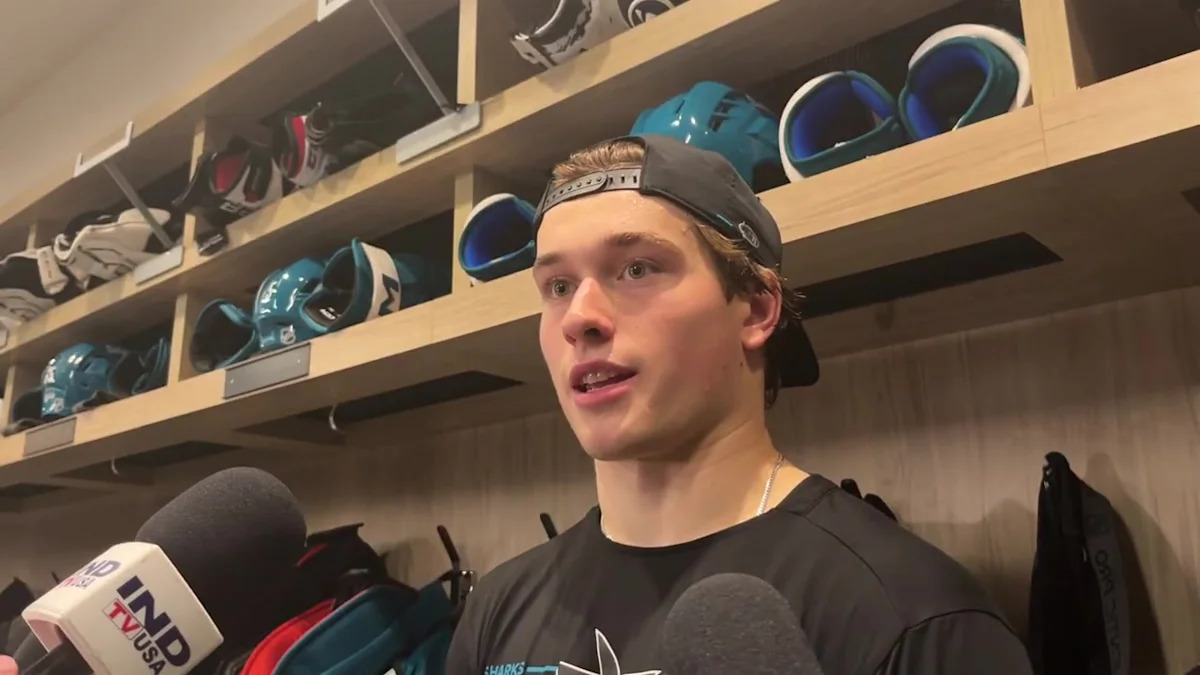
After dropping to 7-9-1 on the season with a 7-2 loss to the Kings, the San Jose Sharks held an immediate postgame players-only meeting to address their effort and connection.
The lopsided defeat in Los Angeles marked the team's third consecutive loss in what has become an increasingly turbulent stretch of the regular season.
Inside the visiting dressing room, the players closed the doors to conduct an honest, private review of where their game has unraveled.
When the locker room doors finally reopened to the media, the leadership group made their message abundantly clear.
Rather than pointing fingers at the coaching staff, the Sharks players placed the blame squarely on their own shoulders.
Forward Kiefer Sherwood was among the most vocal figures following the difficult night in Southern California.
"We don't deserve any praise right now," Sherwood told reporters after emerging from the closed-door session.
The blunt assessment underscored the growing urgency surrounding a roster that entered the 2024-25 campaign with elevated hopes.
Instead of making early progress, San Jose currently sits sixth in the Pacific Division standings.
Only the Los Angeles Kings and Vancouver Canucks hold inferior records in the division.
That reality has ramped up the outside pressure on the organization, especially with the team stumbling through early November.
A CLOSED-DOOR SUMMIT IN LOS ANGELES
Players-only meetings are often viewed across professional hockey as a critical measuring stick for team accountability.
They occur when standard coaching critiques are no longer enough to stem a downward slide.
According to the players, the postgame gathering on Wednesday was convened immediately after the final horn sounded.
Sherwood confirmed the private meeting took place and detailed the core topics discussed behind those closed doors.
"We just had one," Sherwood said of the postgame session.
"We’re gonna move forward here," the forward explained.
"We got a lot to learn, and listen, it’s better to go through growing pains now than later on, right?"
Sherwood emphasized that resolving their current malaise requires collective unity rather than internal fractures.

"We’re gonna stick together, and we’re gonna get through it together, and we’re gonna fix our mindset," Sherwood said.
He noted that controlling effort is the simplest remedy for a team struggling with execution.
"We’re gonna fix our work ethic next game, and we’re going to get gritty," Sherwood stated.
In hockey, systemic structures only function when individual compete levels match the tactical plan.
"The outcome, sometimes you can control, sometimes you can’t," Sherwood noted.
"But things that we can control, bringing the energy, bringing the work, being a good teammate, bringing good communication, things like that."
Sherwood added that these fundamental details represent the precise foundation the locker room intends to rebuild immediately.
"That’s the stuff we’re going to fix," he concluded.
DEFENDING RYAN WARSOFSKY
Whenever an NHL club drops three games in a row in blowout fashion, scrutiny naturally falls on the coaching bench.
Head coach Ryan Warsofsky signed a multi-year contract extension back in September, showing management's long-term faith in his vision.
Yet the recent string of lopsided results has led outside observers to wonder if the coach is already sitting on the hot seat.
Warsofsky himself discussed whether his message was still resonating with the locker room following Wednesday's defeat.
However, the players adamantly rejected any notion that their tactical preparation is the problem.
"It's not on the coaches right now," Sherwood insisted directly to reporters.
"We're not winning our battles," Sherwood elaborated.
"We're not being hard to play against," he continued.
"We're not making plays," Sherwood stressed during his postgame availability.
Captain Macklin Celebrini echoed that exact sentiment when addressing how much of the team's swoon belongs to the staff.
"We’re the ones on the ice. It’s not nothing in the structure or anything that’s going really wrong. I think it’s just to a man, we just need to be better."
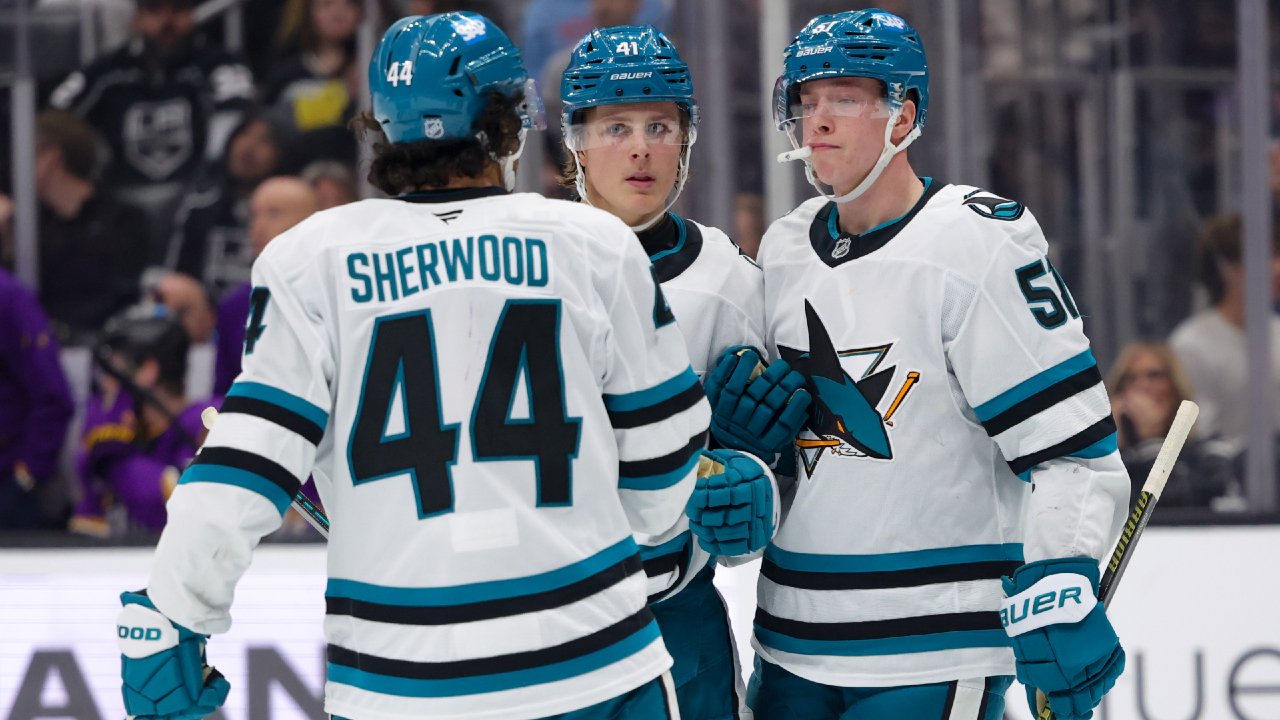
Celebrini also pushed back against concerns regarding whether the roster remains invested in Warsofsky's direction, insisting the players are completely bought in.
"We're frustrated," Celebrini admitted regarding the current slump.
"We're not happy with the way we're playing," the young captain stated.
"We need to move forward," Celebrini added.
"You can't really dwell on it," he said about the setback in Los Angeles.
By taking direct ownership of the slump, the locker room leaders attempted to shield their head coach from mounting external criticism.
THE DISRESPECT FACTOR IN LOS ANGELES
The 7-2 loss was not merely painful on the scoreboard; it also bruised the Sharks' competitive pride.
Late in the third period, with Los Angeles comfortably leading 6-2, the Kings deployed their top power-play unit onto the ice.
For Sherwood, watching the Kings load up on offense during a blowout crossed an unwritten line of professional etiquette.
The forward watched as opposing players walked in for shots and celebrated openly in front of their bench.
Sherwood called the move disrespectful and made it clear that San Jose must respond with greater pride.
"It’s unacceptable," Sherwood said of the team's overall showing.
"It’s not good enough," he reiterated.
"It’s not good enough to a man, to a team," Sherwood stressed.
"It’s not," he repeated for emphasis.
Sherwood pointed out that opposing teams will continue to take liberties until San Jose pushes back physically and competitively.
"We gotta turn it on here," Sherwood stated.
"We gotta stick together here, obviously going through some growing pains, but we got to look ourselves in the mirror & do something about it."
Sherwood specifically referenced the Kings' late-game tactics as fuel for San Jose's needed turnaround.

"They’re up 6-2," Sherwood remarked.
"Put their top power play out," he pointed out.
Sherwood took issue with players walking in for uncontested looks while the Kings were already cruising toward a victory.
"It’s disrespectful," Sherwood said plainly.
"Until we do something about it," he cautioned.
"Things aren’t going to change unless we man up and do something about it," Sherwood said.
DISCONNECTION AND STRUCTURAL FAULTS
Beyond emotional frustration, the Sharks are wrestling with significant tactical and execution disconnects.
When asked where the current gap lies between teammates, Sherwood was candid about the lack of cohesion.
"I don’t know," Sherwood answered honestly.
"I don’t know," he repeated.
"We’re not connected right now," Sherwood acknowledged.
Connection on the ice involves precise positioning, active communication, and anticipation during transition play.
When those elements fail, breakout passes miss their mark and defensive coverages break down rapidly.
"I think there’s intangibles, talking and helping each other out sometimes, and you can see that we’re not on the same page," Sherwood explained.
Those breakdowns were readily visible throughout Wednesday's seven-goal barrage by the Kings.
Sharks goaltender Yaroslav Askarov endured a miserable night in the crease under relentless Los Angeles pressure.
Askarov stopped 20 of the 27 shots directed his way, finishing with an uncharacteristic .741 save percentage.
While the goaltending numbers were lopsided, Askarov received minimal support from the skaters defending the slot.
San Jose did manage to generate occasional offense, with Celebrini and Ivar Stenberg lighting the lamp for the visitors.

Defenceman Eric Pohlkamp also marked a personal milestone by making his NHL debut during the contest.
Pohlkamp addressed reporters after the game to reflect on his first taste of regular-season action under challenging circumstances.
Yet the individual bright spots were completely overshadowed by the team's defensive collapse.
HIGH EXPECTATIONS CLASH WITH HARSH REALITY
The Sharks' current 7-9-1 mark stands in stark contrast to the optimism that surrounded the franchise this past summer.
San Jose made aggressive moves in the offseason to accelerate their rebuilding trajectory.
Front-office executives brought in proven veterans Jacob Trouba, Darnell Nurse, and Mason Marchment to stabilize the lineup.
Those experienced figures were expected to provide veteran leadership and cover for a gifted young core.
Pairing established pros with blue-chip prospects was designed to make San Jose a much tougher opponent to face on a nightly basis.
Instead, the Sharks have struggled out of the gate to integrate new personnel into a cohesive defensive unit.
Losing three consecutive games has brought their playoff aspirations into early question.
As media observers in Los Angeles noted, San Jose must hope this defeat represents rock-bottom for their season.
Rebuilding rosters frequently experience volatile swings, but repeated blowouts risk damaging the competitive culture Warsofsky wants to establish.
The head coach was brought in and subsequently extended to guide this transition with steady leadership.
Whether that guidance can steady the ship depends heavily on how the players respond to their own locker-room summit.
WHAT COMES NEXT ON THE ROAD
The Sharks have zero time to dwell on their defensive shortcomings in California.
Their current road trip continues immediately with a daunting matchup on Friday night.
San Jose travels to face the Central Division-leading Minnesota Wild, one of the hottest teams in the league.
Facing an elite opponent on the road offers the Sharks an immediate test of their resolve.
If the players-only meeting was successful, San Jose should exhibit a noticeable jump in compete level, physical puck battles, and communication.
If those underlying issues persist, the questions surrounding Warsofsky's system and the team's roster construction will only intensify.
The leadership group has explicitly put the responsibility on themselves to change the narrative before the season slips away.
Do you agree with Celebrini that this slump is purely on the players executing, or should head coach Ryan Warsofsky be feeling the heat?
Advertisement
You may also like

NBA champion Steve Kerr trolls Donald Trump with a savage jab
Golden State Warriors head coach Steve Kerr took a sharp, humorous jab at President Donald Trump during his Wednesday media availability, referencing a campaign…

John Cena’s subtle salute to Gunther after his return
John Cena made a surprise appearance on the Oct. 30, 2026 edition of WWE NXT. As he walked to the ring, he stopped in…

Braden Smith Makes NBA Debut With the Pacers
Purdue basketball alum Braden Smith makes NBA debut with the Pacers. Braden Smith, the former Purdue Boilermakers guard, stepped onto an NBA floor for…

Red Wings vs. Golden Knights Live Score and Game Updates
NHL.LIVE: Detroit Red Wings vs Vegas Golden Knights LIVE STREA.MS NHL Game On TV Coverage 6 Nov 2026. Puck drop is set for 7…

Business leaders face a tough choice with workplace monitoring.
Big Brother 2026 has officially crowned a winner. Rochelle took the title on the live final, hosted by AJ Odudu and Will Best on…

WWE Plans Huge 30th Anniversary Celebration for The Rock
WWE is planning to celebrate 30 years of The Rock this month. Plans include a commemorative championship belt. Special merchandise releases are also in…