Sophie Cunningham Reveals FBI Monitoring Roughly 20 Individuals Targeting Her Following Felony Charges
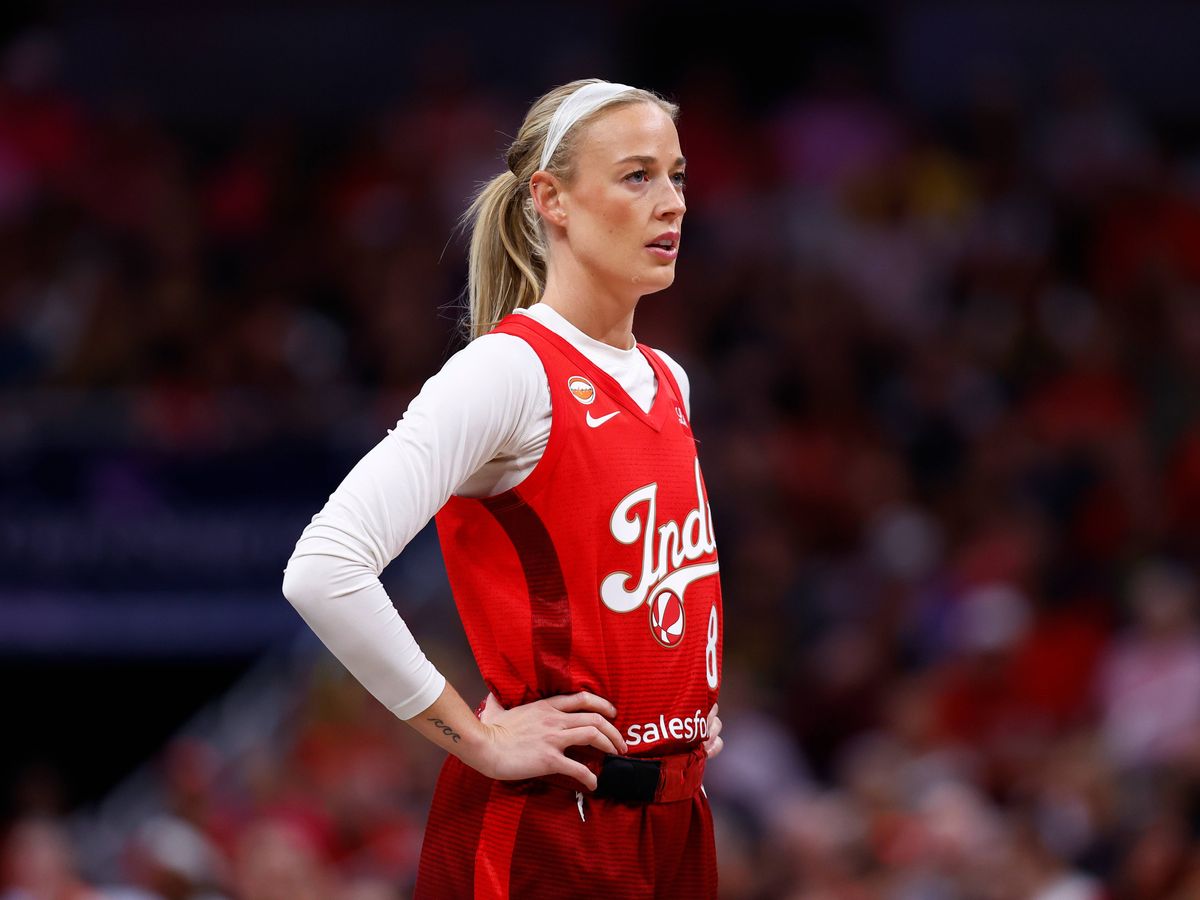
Sophie Cunningham revealed that the FBI is actively monitoring around 20 individuals targeting her, following previous felony stalking and intimidation charges filed against an Indiana man.
The veteran professional basketball player shared the alarming revelation during a candid interview on the This Past Weekend podcast hosted by comedian Theo Von.
Her disclosure highlights the severe personal safety risks that have followed her meteoric rise in public visibility over the past several months.
While elite professional athletes often deal with high levels of public scrutiny, Cunningham explained that the attention directed toward her has crossed into dangerous territory.
"We do have a lot of stalkers," she said of WNBA players.
The 30-year-old guard emphasized that fans rarely understand the hidden perils that accompany widespread celebrity.
"I know I do," Cunningham continued during the interview.
"And like, that's the negative side of things that people don't think about."
She then specified the staggering scale of federal law enforcement involvement currently dedicated to keeping her safe from potential harm.
"I have, I think, 20 ... people that the FBI are watching for me. Me alone."
A TROUBLING PATTERN OF THREATS

The federal monitoring follows a disturbing criminal case that unfolded earlier in the summer in Marion County, Indiana.
In June, law enforcement authorities arrested 48-year-old Kevin Singh in connection with an escalating series of threatening actions directed at Cunningham.
According to official court documents and a probable cause affidavit, Singh sent a package containing a letter and a Guns N' Roses T-shirt directly to her team arena.
Marion County prosecutors formally charged Singh with stalking and intimidation, both designated as Level 6 felonies under Indiana state law.
In addition to the two felony counts, the suspect faced a misdemeanor charge of harassment.
In the state of Indiana, a Level 6 felony is the lowest level of felony offense, but it carries serious statutory penalties.
Convictions for Level 6 felony stalking or intimidation can lead to state prison sentences ranging from six months to two and a half years.
Under Indiana criminal statutes, stalking requires proof of a repeated course of conduct that causes a reasonable person to feel intimidated, frightened, or threatened.
Intimidation charges typically involve communicating a threat with the intent to place another individual in fear of retaliatory violence.
The June arrest confirmed that Cunningham was already dealing with real, physical security breaches at team facilities.
Yet the subsequent involvement of the Federal Bureau of Investigation indicates that law enforcement concerns extend far beyond a single isolated offender.

Federal monitoring generally occurs when threats cross state boundaries, utilize digital communication networks, or suggest an organized pattern of interstate stalking.
EXPANDING TO ROUND-THE-CLOCK SECURITY
Faced with ongoing investigations and federal threat assessments, Cunningham decided she could no longer move through the world without professional protection.
She opened up about the major lifestyle disruption during a recent episode of her No Hesitation podcast, which she co-hosts with Drew Hanlen.
Cunningham announced that she has contracted a private security detail to accompany her everywhere she travels.
"I was already starting...definitely in certain places people kind of knew who I was, and I couldn't really go anywhere," she said.
She explained that what once felt like regional recognition has transformed into an unavoidable, nationwide reality.
"Now it's like, it doesn't matter what state, what city, it's everywhere."
The persistent public recognition and threat atmosphere forced her to make immediate changes to her daily routine.
"So, I've definitely hired security, and they're actually going to start traveling with me next week 24/7."
Cunningham admitted that having bodyguards by her side at all times represents a jarring departure from normal life.

"So, that's a little different," she noted.
"But yeah, it just kind of stops you from your regular routine."
She acknowledged the emotional and psychological toll that constant hyper-vigilance can take on an athlete.
"You have to kind of find a balance of getting away and making sure that you're filling up your own cup and doing what you're supposed to so when you're out, you're able to give people your best energy too."
Despite the underlying fear, she maintained that she wants to remain approachable and kind toward respectful fans.
"That's super important to me, just being nice and being positive and treating people how I wish I could be treated."
THE CATALYST BEHIND THE VIRAL EXPLOSION
Cunningham spent years building a reputation as a tough, respected veteran guard within professional women's basketball.
However, her profile abruptly shifted into the national political and cultural spotlight following a July interview with ESPN.
During that interview, Cunningham addressed the participation of transgender athletes in female athletics.
She argued that young girls "shouldn't have to go against biological men."

She stated that her objective was to protect young female athletes competing across the sports landscape.
Her comments instantly reverberated far beyond the realm of sports journalism.
The remarks ignited fierce debates across political talk shows, news networks, and social media platforms.
Rallies and protests quickly mobilized nationwide as commentators and advocacy groups responded forcefully to her statements.
The intense discourse even prompted an official statement from the White House addressing the national debate.
Within the league, the remarks polarized spectators and amplified scrutiny around every appearance Cunningham made.
UNPRECEDENTED AUDIENCE GROWTH AND DIGITAL FALLOUT
While the controversy sparked intense friction, it also triggered historic metrics across Cunningham's personal social media channels.
According to analytics compiled by Brendan Kaminsky of the agency bknown, Cunningham's audience expanded at a rate never before seen in the WNBA.
Her Instagram following experienced an explosive surge, climbing from 1.4 million followers to more than 4.3 million.
That remarkable gain of over 2.9 million followers outpaced the combined growth of the other 49 most-followed WNBA players during the same timeframe.

According to reporting from the New York Post, Cunningham also accumulated more new social media followers this season than any individual NBA star.
Yet that viral reach proved to be a double-edged sword.
The massive influx of digital attention inevitably attracted hostile accounts, obsessive individuals, and direct personal threats.
Cunningham has noted that while she tries to tune out online hostility, the tangible safety risks cannot be ignored.
MOVING FORWARD AMID UNCERTAINTY
The intense off-court developments unfolded during a grueling basketball season with the Indiana Fever.
Indiana's campaign came to a close after a postseason defeat against the Las Vegas Aces.
With the season wrapped up, Cunningham enters the offseason as an unrestricted free agent.
Her professional future on the court remains a focal point for league observers as team rosters take shape.
Yet her immediate focus off the court revolves around personal safety, strict travel protocols, and federal protection.
The burden of paying for private security details frequently falls directly on individual athletes when they are away from team facilities.
Cunningham's harrowing situation has sparked wider discussions about player welfare and organizational duty of care across women's sports.
As female athletes gain larger platforms and navigate intense cultural debates, the dangers they encounter off the floor continue to multiply.
Should the league provide coordinated security protocols for players dealing with stalkers and federal law enforcement monitoring?
Advertisement
You may also like

NBA champion Steve Kerr trolls Donald Trump with a savage jab
Golden State Warriors head coach Steve Kerr took a sharp, humorous jab at President Donald Trump during his Wednesday media availability, referencing a campaign…

John Cena’s subtle salute to Gunther after his return
John Cena made a surprise appearance on the Oct. 30, 2026 edition of WWE NXT. As he walked to the ring, he stopped in…

Braden Smith Makes NBA Debut With the Pacers
Purdue basketball alum Braden Smith makes NBA debut with the Pacers. Braden Smith, the former Purdue Boilermakers guard, stepped onto an NBA floor for…

Red Wings vs. Golden Knights Live Score and Game Updates
NHL.LIVE: Detroit Red Wings vs Vegas Golden Knights LIVE STREA.MS NHL Game On TV Coverage 6 Nov 2026. Puck drop is set for 7…

Business leaders face a tough choice with workplace monitoring.
Big Brother 2026 has officially crowned a winner. Rochelle took the title on the live final, hosted by AJ Odudu and Will Best on…

WWE Plans Huge 30th Anniversary Celebration for The Rock
WWE is planning to celebrate 30 years of The Rock this month. Plans include a commemorative championship belt. Special merchandise releases are also in…