Speaker Ron Mariano Champions Horse Racing Machines To Fund Vital Healthcare For Uninsured Residents
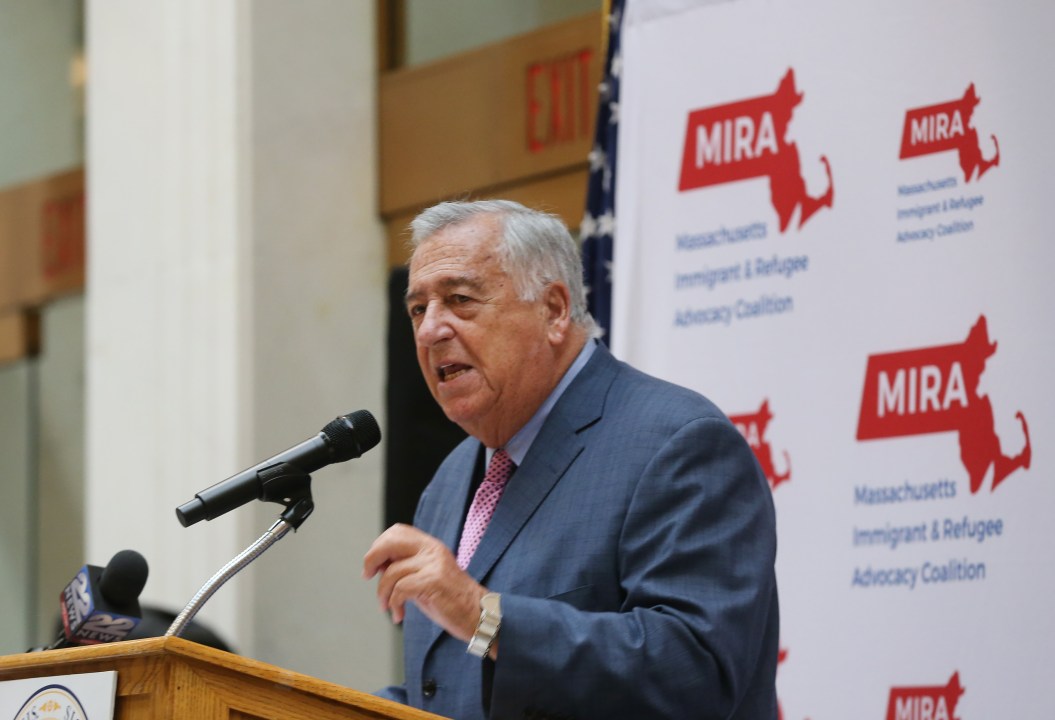
Massachusetts House Speaker Ron Mariano defended the racing machine provision by pointing out that 2.5% of all wagers would fund the state's Health Safety Net trust fund to support uninsured and underinsured patients.
The high-stakes gambling debate has taken center stage on Beacon Hill as lawmakers weigh major changes to state wagering laws.
At the heart of the debate is a plan to authorize historical horse racing machines at two former Massachusetts tracks.
Supporters view the move as a creative revenue stream designed to bolster struggling healthcare infrastructure across the Commonwealth.
The targeted beneficiary is the state Health Safety Net trust fund, which reimburses hospitals and community health centers.
These facilities rely on the fund to offset the immense costs of treating individuals who lack comprehensive medical insurance.
Under the House proposal, a direct 2.5 percent slice of every dollar wagered on these machines would flow straight into that healthcare fund.
Mariano has positioned this revenue structure as the principal justification for expanding wagering options into historic racing grounds.
THE LEGISLATIVE BATTLEGROUND ON BEACON HILL
The controversial measure was embedded within the House version of a major economic development bill that passed in July.
The legislative path forward, however, is far from smooth.
The Massachusetts Senate declined to include the historical horse racing language in its own version of the economic development package.
Because the two legislative chambers passed conflicting drafts, the fate of the racing provision now rests with a six-member conference committee.
Conference committees are tasked with negotiating compromise legislation behind closed doors before a final bill can reach the governor's desk.
Reporting from The Boston Globe confirmed that the machine expansion remains one of the sharpest disputes facing the negotiators.
While House leaders push for enactment, opposition from multiple industry stakeholders continues to mount.
UNDERSTANDING HISTORICAL HORSE RACING MACHINES

Historical horse racing machines, often abbreviated as HHR terminals, look and sound very much like traditional electronic slot machines.
Instead of utilizing a random number generator, HHR machines determine outcomes based on the results of previously run horse races.
Players place bets and spin reels, while the terminal rapidly processes data from an archive of thousands of past racing contests.
The terminals allow racetracks that no longer host live racing to offer electronic wagering without staging live events on an active oval.
In Massachusetts, the proposed legislation would grant operating authorization to two storied former racing venues.
Those designated locations are Suffolk Downs in East Boston and Raynham Park in southeastern Massachusetts.
Both facilities previously held licenses tied to the state's legacy racing industry.
Under the House amendment, operators would be permitted to revitalize those legacy permits to run modern HHR gambling parlors.
FINANCIAL HOPES VERSUS CASINO RESISTANCE
Backers of the House proposal project that the new gaming venues could generate significant financial windfalls.
Proponents estimate that fully operational facilities could produce as much as $120 million in annual tax revenue by their third year.
That projection, however, has drawn fierce skepticism from the state's existing commercial casino operators.
Encore Boston Harbor, MGM Springfield, and Plainridge Park have formally mobilized against the plan.
The three licensed gaming operators sent a joint message urging state lawmakers to reject the racing expansion entirely.
To substantiate their pushback, the casinos commissioned a detailed economic impact study from Morowitz Gaming Advisors and Global Gaming and Hospitality.
The findings of that study paint a starkly different financial picture for the Commonwealth.
According to the consultants, HHR operations would not simply generate brand-new wagering activity.
Instead, the report found that historical horse racing could siphon off between $131 million and $216 million in gross gaming revenue from existing casinos.
Such a severe cannibalization of casino play would directly depress the state taxes currently collected from commercial venues.
The analysis warned that state and local governments could suffer net revenue losses ranging from $45 million to $73 million every year.
The casino-backed report also cautioned that lower foot traffic could prompt venue layoffs and hurt local vendors tied to the casino sector.
REGULATORY DISPARITIES AND EXPANSION SCOPE
A central pillar of the casino operators' argument centers on regulatory fairness.
When Massachusetts passed its landmark Expanded Gaming Act in 2011, it established an intensely regulated framework.
The law restricted commercial resort casino licenses to three strictly defined geographic regions across the state.
Prospective casino operators were required to negotiate extensive community agreements and pay tens of millions in upfront licensing fees.
They also faced exhaustive vetting processes overseen by the Massachusetts Gaming Commission.
Casino representatives argue that the House proposal for HHR terminals sidesteps these rigorous competitive standards.
The House amendment does not place a statutory cap on the total number of HHR machines that could be deployed.
Furthermore, critics point out that the language fails to restrict the specific locations where ancillary betting facilities could operate.
The proposal also contains phrasing that could potentially open the door to online historical horse racing wagering.
An online expansion could introduce a direct commercial rival to the Massachusetts Lottery's newly launched digital platform.
TRIBAL SOVEREIGNTY AND LOCAL CONCERNS
Commercial casinos are not the only entities pushing back against Speaker Mariano's legislative initiative.

The proposal has also drawn formal opposition from the Mashpee Wampanoag Tribe.
The tribe operates the First Light Casino project located in Taunton, Massachusetts.
Mashpee Wampanoag Tribal Chairman Brian Weeden publicly voiced deep concerns regarding the House measure.
Weeden stressed that allowing widespread HHR machines nearby threatens the tribe's long-term economic security.
The tribal leadership warned that encroaching gaming facilities could compromise tribal sovereignty and undermine critical community programs funded by tribal enterprise.
INVESTOR AMBITIONS AND POLITICAL TIES
The prospect of legalizing HHR machines has already catalyzed substantial private commercial interest.
Richard Fields, a prominent investor associated with Suffolk Downs, has actively explored developing a large entertainment and gaming destination.
Fields has also signaled a clear intent to acquire Raynham Park from its longtime owners, the Carney family.
Speaker Mariano has acknowledged having a personal relationship with George Carney, whose family controls the Raynham property.
Mariano addressed the relationship directly, maintaining that his legislative actions are driven entirely by public interest.
The Speaker stated firmly that the measure is crafted to deliver vital revenue to the Commonwealth, not to reward individual business owners.
For Mariano, the priority remains stabilizing funding for healthcare providers caring for society's most vulnerable residents.
THE ROAD AHEAD FOR HEALTHCARE AND GAMING
The ongoing conference committee negotiations mean the ultimate fate of historical horse racing remains unresolved.
Lawmakers must decide whether the anticipated 2.5 percent healthcare benefit outweighs the projected losses warned of by licensed casinos.
The decision carries enormous financial consequences for regional hospitals, commercial gaming companies, and local municipalities alike.
As committee members deliberate, both sides continue to lobby intensely over the future of the state's gaming landscape.
Is funding healthcare for uninsured residents a good enough reason to expand horse racing machine gambling?
Advertisement
You may also like

NBA champion Steve Kerr trolls Donald Trump with a savage jab
Golden State Warriors head coach Steve Kerr took a sharp, humorous jab at President Donald Trump during his Wednesday media availability, referencing a campaign…

John Cena’s subtle salute to Gunther after his return
John Cena made a surprise appearance on the Oct. 30, 2026 edition of WWE NXT. As he walked to the ring, he stopped in…

Braden Smith Makes NBA Debut With the Pacers
Purdue basketball alum Braden Smith makes NBA debut with the Pacers. Braden Smith, the former Purdue Boilermakers guard, stepped onto an NBA floor for…

Red Wings vs. Golden Knights Live Score and Game Updates
NHL.LIVE: Detroit Red Wings vs Vegas Golden Knights LIVE STREA.MS NHL Game On TV Coverage 6 Nov 2026. Puck drop is set for 7…

Business leaders face a tough choice with workplace monitoring.
Big Brother 2026 has officially crowned a winner. Rochelle took the title on the live final, hosted by AJ Odudu and Will Best on…

WWE Plans Huge 30th Anniversary Celebration for The Rock
WWE is planning to celebrate 30 years of The Rock this month. Plans include a commemorative championship belt. Special merchandise releases are also in…