UK’s oldest Indian restaurant sues landlord over alleged eviction scheme
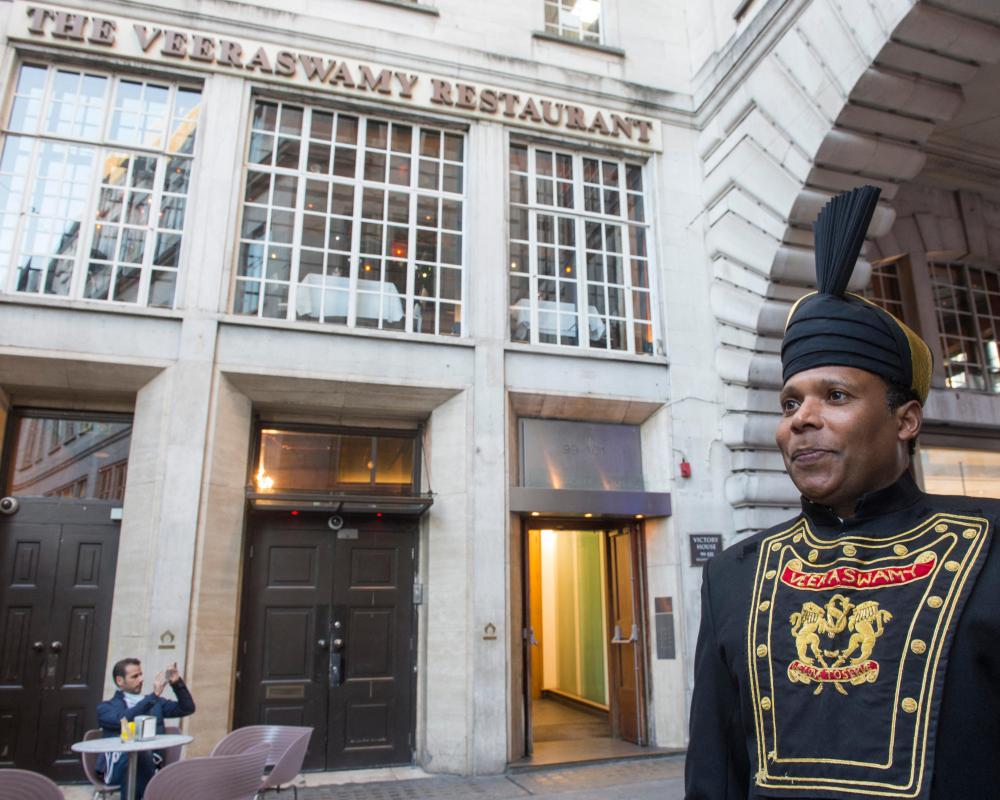
A director of London’s oldest Indian restaurant told a court Thursday that its landlord, the Crown Estate, had proposed unnecessary renovation works to force the business out as part of plans to replace it with high-end office space.
Veeraswamy has served its acclaimed curries from the first floor of a landmark site near Piccadilly Circus since 1926.
Its patrons have included Princess Anne, Lord David Cameron, Mahatma Gandhi, Winston Churchill, Marlon Brando, and Charlie Chaplin.
Its chefs have twice catered for Queen Elizabeth II at Buckingham Palace.
The restaurant is thought to be where Britain's love of lager with curry originated, when Prince Axel of Denmark shipped over Carlsberg to have with his meals.
Now its future hangs in the balance due to a row with the Crown Estate, which manages a vast collection of properties on behalf of King Charles — including the building in which the restaurant is based.
The Crown Estate told the restaurant in 2024 that its lease would not be renewed due to the need to carry out a 'comprehensive refurbishment' of the building, which has been left with vacant office space following a flood.
Ranjit Mathrani, a former investment banker who chairs Veeraswamy's parent company, MW Eat, is challenging the decision at Central London County Court.

He said the landlord claimed it would be unsafe to carry out renovations while the restaurant remained in place and that it could ultimately secure higher rents from office tenants.
'We have done everything to meet their concerns,' Mr Mathrani told the Financial Times.
'It is obvious that they do not appear to have sufficient regard for Veeraswamy and its tradition, its background, its role, and its culinary heritage.'
He asked: 'Would they actually have taken the same stance had it been a cuisine with which they were more familiar?'
'Would they have done that to Gordon Ramsay? No.'
The Crown Estate said: 'We strongly refute any suggestion that The Crown Estate prefers particular types of cuisine.'
'We are proud to have a diverse dining offer across our West End portfolio, reflecting the diversity of London itself.'
The Crown Estate argues that the entire premises requires a full revamp and that Veeraswamy's entrance area is in the way.

Knocking through it would create an additional 11 square metres of space.
Without its own entrance, there can be no restaurant and so, as part of the renovation works, the space currently occupied by Veeraswamy would be eliminated.
The case reached court on Thursday after the restaurant owners asked a judge to rule that the Estate is 'precluded from objecting to the grant of a new tenancy' under the Landlord and Tenant Act 1954.
They said that the only conceivable reason why such a prestigious restaurant is being forced out is that 'the landlord simply does not wish its hoped-for smart new offices to have an Indian restaurant in their midst'.
But lawyers for the Crown Estate insist there is 'nothing remotely improper' about their bid to oust the legendary curry house.
The royal estate generates income for the Treasury and the royal family.
It wants to kick out the restaurant so the upper floors of the building can be turned into 'high-class' offices as part of a £1 billion regeneration of Regent Street.
Veeraswamy was founded in 1926 by Edward Palmer, the great-grandson of General William Palmer, the secretary to the first Governor General of India, and the Moghul Princess Faisan Nissa Begum.

Although centred on the mezzanine floor, it is based on several floors of Victory House, in Regent Street, which is also occupied by a basement level nightclub.
The Landlord and Tenant Act 1954 gives business tenants a right to renew their lease at the end of the term, unless the landlord can prove one of seven statutory grounds for refusal.
One of those grounds is that the landlord intends to redevelop the property.
If the court finds the landlord's redevelopment plans are genuine, the tenant can be evicted.
But if the court finds the plans are a pretext — a cover for a different motive — the tenant can win a new lease.
That is the central question in this case: is the Crown Estate's renovation plan genuine, or is it a scheme to replace a century-old restaurant with more profitable offices?
The case is ongoing at Central London County Court.
A ruling has not yet been issued.
Advertisement
You may also like

NBA champion Steve Kerr trolls Donald Trump with a savage jab
Golden State Warriors head coach Steve Kerr took a sharp, humorous jab at President Donald Trump during his Wednesday media availability, referencing a campaign…

John Cena’s subtle salute to Gunther after his return
John Cena made a surprise appearance on the Oct. 30, 2026 edition of WWE NXT. As he walked to the ring, he stopped in…

Braden Smith Makes NBA Debut With the Pacers
Purdue basketball alum Braden Smith makes NBA debut with the Pacers. Braden Smith, the former Purdue Boilermakers guard, stepped onto an NBA floor for…

Red Wings vs. Golden Knights Live Score and Game Updates
NHL.LIVE: Detroit Red Wings vs Vegas Golden Knights LIVE STREA.MS NHL Game On TV Coverage 6 Nov 2026. Puck drop is set for 7…

Business leaders face a tough choice with workplace monitoring.
Big Brother 2026 has officially crowned a winner. Rochelle took the title on the live final, hosted by AJ Odudu and Will Best on…

WWE Plans Huge 30th Anniversary Celebration for The Rock
WWE is planning to celebrate 30 years of The Rock this month. Plans include a commemorative championship belt. Special merchandise releases are also in…