USC Settles Chad Baker-Mazara Lawsuit After Voiding His NIL Deal Without Explanation
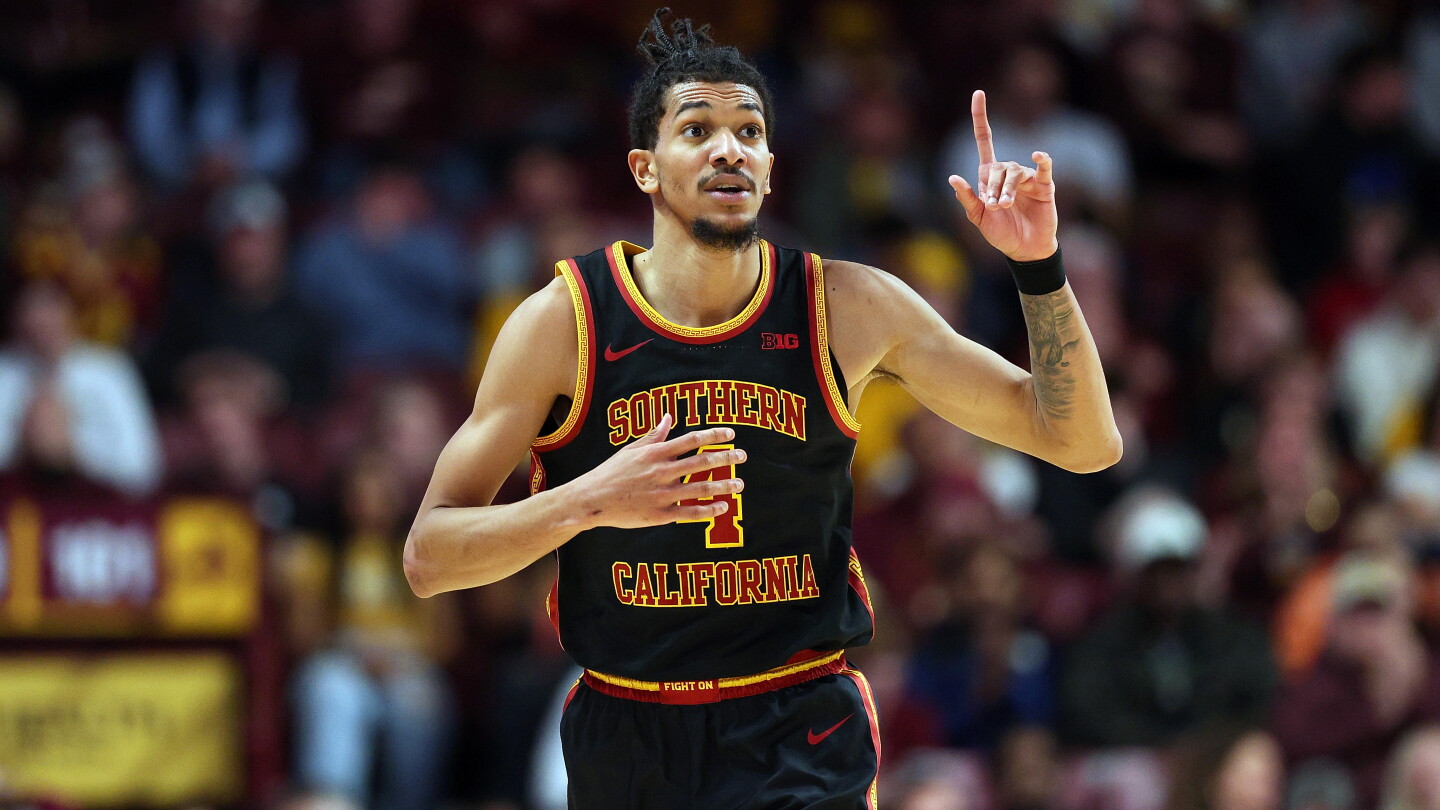
USC's NIL collective terminated Chad Baker-Mazara's contract under a morals clause for alleged obscene or scandalous conduct, yet the lawsuit alleged he was never told what he actually did.
Now, that legal dispute has officially come to an end.
The University of Southern California and its former men's basketball player agreed on Friday to settle the high-profile lawsuit.
The settlement closes a bitter conflict that pulled back the curtain on how modern college athletics contracts operate behind closed doors.
Baker-Mazara had taken the program to court seeking unpaid name, image, and likeness compensation alongside substantial damages.
The university confirmed the resolution with a brief public statement.
“USC is pleased to resolve this matter and will have no further comment,” the school stated.
The initial news of the settlement was first reported on social media platform X by Los Angeles Times reporter Ryan Kartje.
A SUDDEN TERMINATION
At the center of Baker-Mazara's legal challenge was the manner in which his contractual earnings were stripped away.
According to court filings, the formal break between the athlete and the funding arm occurred on March 13.
The lawsuit stated that on that date, USC’s NIL collective “purported to terminate the Agreements pursuant to the purported morals clause contained in the respective Agreements.”
Morals clauses have long been standard fixtures inside entertainment and corporate endorsement agreements.
In recent years, those same clauses have migrated directly into the contracts signed by collegiate student-athletes.
The specific language inside Baker-Mazara's deal gave the collective broad authority to terminate payments.
Under the agreement, a contract could be canceled if the player committed acts considered “immoral, deceptive, scandalous or obscene.”
The clause also covered any conduct that “could adversely affect USC, HOV, the USC athletic department, the USC men’s basketball program, or any related parties or entities.”
Yet despite that sweeping language, Baker-Mazara contended that no justification was ever presented to him.
The lawsuit alleged that Baker-Mazara never received an explanation as to how he allegedly violated the morals clause.
Without a specific infraction cited, the agreement was simply voided.
TENSIONS ON THE COURT
The contractual cancellation followed weeks of turmoil inside the Trojans men's basketball program.
The catalyst for the breakdown occurred on February 28 following a loss to Nebraska.
At the time of the defeat, the Trojans held an 18-11 record and had dropped five consecutive games.
Once viewed as a contender, the team was rapidly sliding toward the wrong side of the NCAA Tournament bubble.
The lawsuit alleged that USC dismissed Baker-Mazara when it “became likely that the Trojans would not make the NCAA Tournament.”
According to court documents, the postgame locker room atmosphere turned explosive.
Baker-Mazara alleged that head coach Eric Musselman directed a profanity-laced, racially charged tirade directly at him.
Court filings alleged that Musselman told the player to “Go back to the f—ing Dominican Republic! Nobody wants you here!! F— you.”
Baker-Mazara is a native of the Dominican Republic.
The lawsuit stated that Baker-Mazara took those words to be racist and discriminatory.
The filing compared the remark to telling an African American individual “to go back to Africa.”
THE AFTERMATH OF THE NEBRASKA LOSS
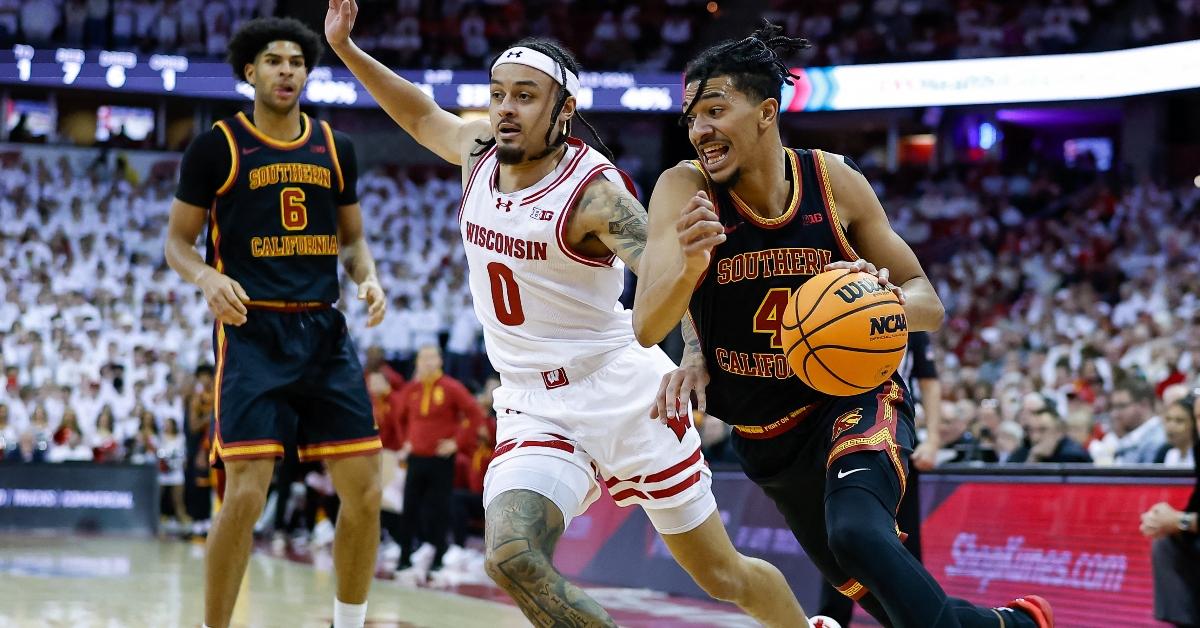
The fallout from the February 28 loss was immediate and decisive.
On the morning after the game, representatives for Baker-Mazara were officially notified of his dismissal.
Along with his removal from the roster, the player was barred from accessing the team facility.
His departure left the Trojans shorthanded with only two regular-season games left on their schedule.
USC went on to lose both of those remaining regular-season matchups.
The Trojans then lost their opening contest in the Big Ten tournament.
The collapse cemented their postseason fate, as the program failed to qualify for the NCAA Tournament.
Less than two weeks later, the collective officially invoked the morals clause to nullify his financial agreement.
THE LEGAL CLAIMS AND DAMAGES
Baker-Mazara chose not to walk away quietly after his dismissal and the cancellation of his payments.
His lawsuit targeted the remaining money left on his binding agreements.
Beyond the base compensation owed under the NIL contract, Baker-Mazara sought additional financial damages.
The lawsuit claimed that the abrupt dismissal and public removal inflicted severe damage on his professional basketball aspirations.
Specifically, the legal filing sought damages for what Baker-Mazara described as direct harm to his NBA Draft stock.
Being ejected from a major program right before the postseason can cast a heavy cloud over an athlete entering professional scouting evaluations.
By settling the case, USC avoided an extended legal discovery process.
A public trial could have forced coaching staff members and collective officials to testify under oath about internal team operations.
COLLECTIVES AND THE MODERN ATHLETE
The settlement highlights an ongoing debate surrounding the structural lack of protections for college athletes in the NIL era.
Collectives generally function as third-party booster organizations rather than direct university departments.
This separation has allowed programs to route donor money to players while attempting to maintain legal insulation.
However, it also creates an environment where players can face sudden financial penalties with limited institutional recourse.
Morals clauses remain an essential safeguard for sponsors looking to protect their public reputations.
When invoked without documentation or formal hearings, those clauses can leave athletes completely vulnerable to unilateral contract cancellations.
Baker-Mazara’s case demonstrated the friction that arises when performance struggles intersect with disciplinary actions and financial guarantees.
LOOKING FORWARD AT USC
With the lawsuit settled, USC can finally close the chapter on one of its most turbulent internal episodes.
The program has since turned its attention entirely toward the current college basketball calendar.
Musselman is currently navigating his third season at the helm of the Trojans.
The team opened its regular season on Monday night with an emphatic 95-63 victory over Milwaukee.
While the program moves forward on the hardwood, the legal precedent surrounding Baker-Mazara will linger across college sports.
Athletes, agents, and universities continue to monitor how NIL contracts are enforced and disputed in courtroom settings.
The resolution of the case leaves unanswered questions about the boundaries of booster-funded player agreements.
Should NIL collectives be required to provide documented proof before voiding an athlete's contract under a morals clause?
Advertisement
You may also like

NBA champion Steve Kerr trolls Donald Trump with a savage jab
Golden State Warriors head coach Steve Kerr took a sharp, humorous jab at President Donald Trump during his Wednesday media availability, referencing a campaign…

John Cena’s subtle salute to Gunther after his return
John Cena made a surprise appearance on the Oct. 30, 2026 edition of WWE NXT. As he walked to the ring, he stopped in…

Braden Smith Makes NBA Debut With the Pacers
Purdue basketball alum Braden Smith makes NBA debut with the Pacers. Braden Smith, the former Purdue Boilermakers guard, stepped onto an NBA floor for…

Red Wings vs. Golden Knights Live Score and Game Updates
NHL.LIVE: Detroit Red Wings vs Vegas Golden Knights LIVE STREA.MS NHL Game On TV Coverage 6 Nov 2026. Puck drop is set for 7…

Business leaders face a tough choice with workplace monitoring.
Big Brother 2026 has officially crowned a winner. Rochelle took the title on the live final, hosted by AJ Odudu and Will Best on…

WWE Plans Huge 30th Anniversary Celebration for The Rock
WWE is planning to celebrate 30 years of The Rock this month. Plans include a commemorative championship belt. Special merchandise releases are also in…