USWNT And Players From 45 Nations Prepare Potential Legal Action Against FIFA Over Prize Money
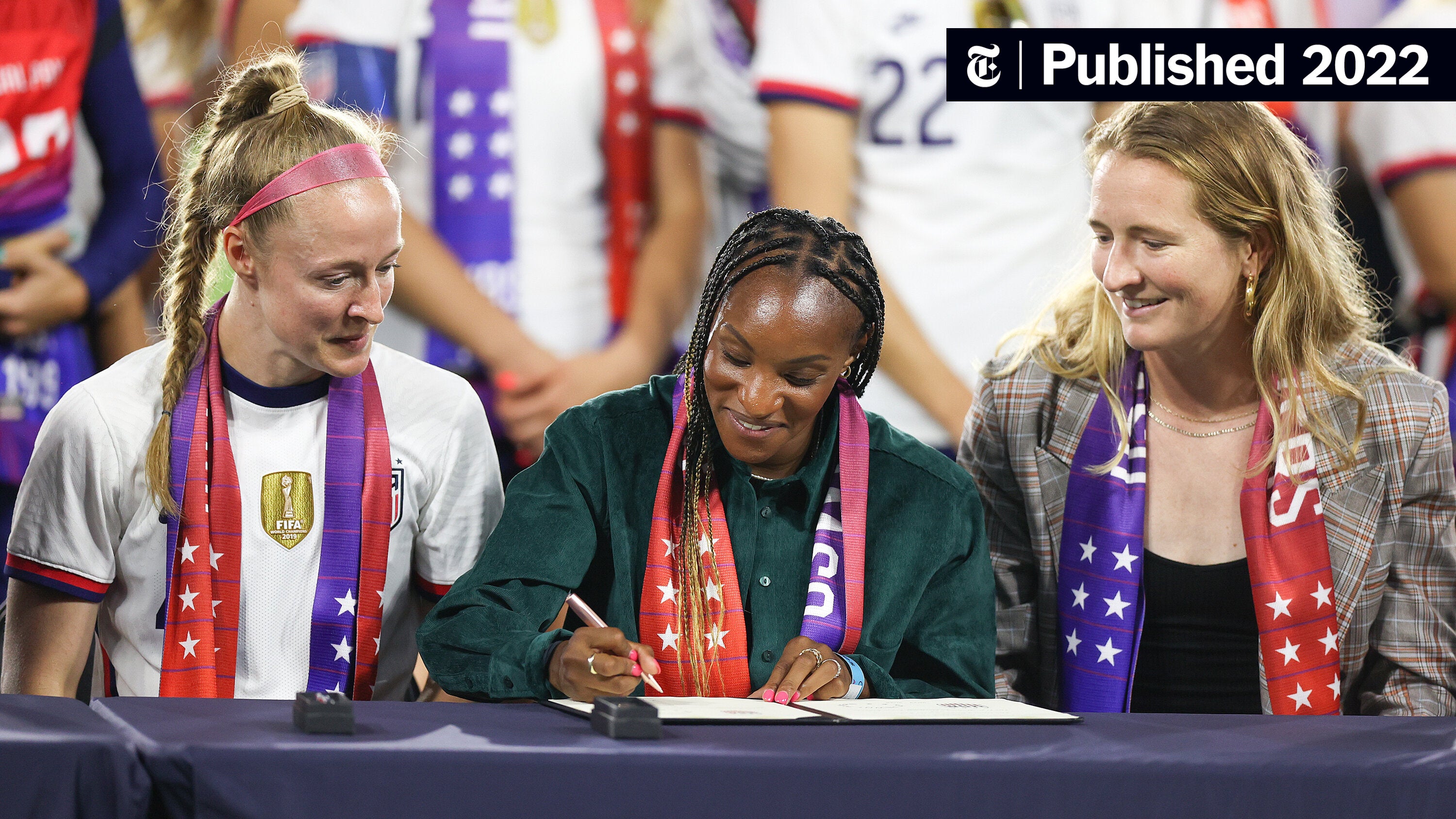
Women's national team players from 45 countries, including the USWNT, are actively preparing potential legal action against FIFA if the governing body does not guarantee proportional prize money equality at the 2027 World Cup.
The escalating standoff marks the latest major battle between soccer's governing body and the world's best athletes.
A formal letter sent to FIFA in September outlined the demands from players across six continents.
Global union FIFPRO jointly drafted the document alongside national team representatives from 45 different associations.
The coalition represents the most formidable player front ever assembled in international soccer.
Signatories include players from reigning world champions Spain and European champions England.
Members of the United States Women's National Team signed the document alongside athletes from every single nation in the current top 10 of the women's world rankings.
The players are seeking proportional equal prize money for the upcoming tournament in Brazil compared to the men's tournament.
Sources with knowledge of ongoing negotiations revealed that player unions have sought formal legal advice regarding their rights.
If FIFA fails to satisfy the proposals outlined in the letter, those unions are prepared to mount a legal challenge against world soccer's governing body.
A BOLD ULTIMATUM TO ZURICH
The dispute centers on the distribution of revenues generated by the game's flagship international events.

The players' letter put forward three concrete proposals designed to reshape international women's soccer permanently.
First, the players demand proportional equal prize money for the Men's and Women's FIFA World Cups.
That proposal includes maintaining a minimum 30 percent payout guaranteed directly to individual players competing in the Women's World Cup.
Second, the letter calls for the co-development with FIFPRO of a global minimum standards framework for all national team assemblies.
Third, the players demand a binding, global collective agreement between FIFA and FIFPRO to legally enshrine these protections.
The letter makes the fundamental ambition of the players abundantly clear.
"When adopted, these proposals will ensure: equal pay for equal work for both women and men."
The signatories framed their stand as an investment in the long-term future of women's sports.
"As national team players, we want to leave women’s football in better shape than we found it; we want the next generation to enjoy better conditions and competitive opportunities than we did. … This can only be done if opportunities are available and resourced."
THE LEGAL THREAT UNDER ARTICLE 23
Those preparing potential court action have anchored their legal case in FIFA's own governance documents.
Specifically, the players point to Article 23 of FIFA's Code of Ethics, which explicitly prohibits gender discrimination.
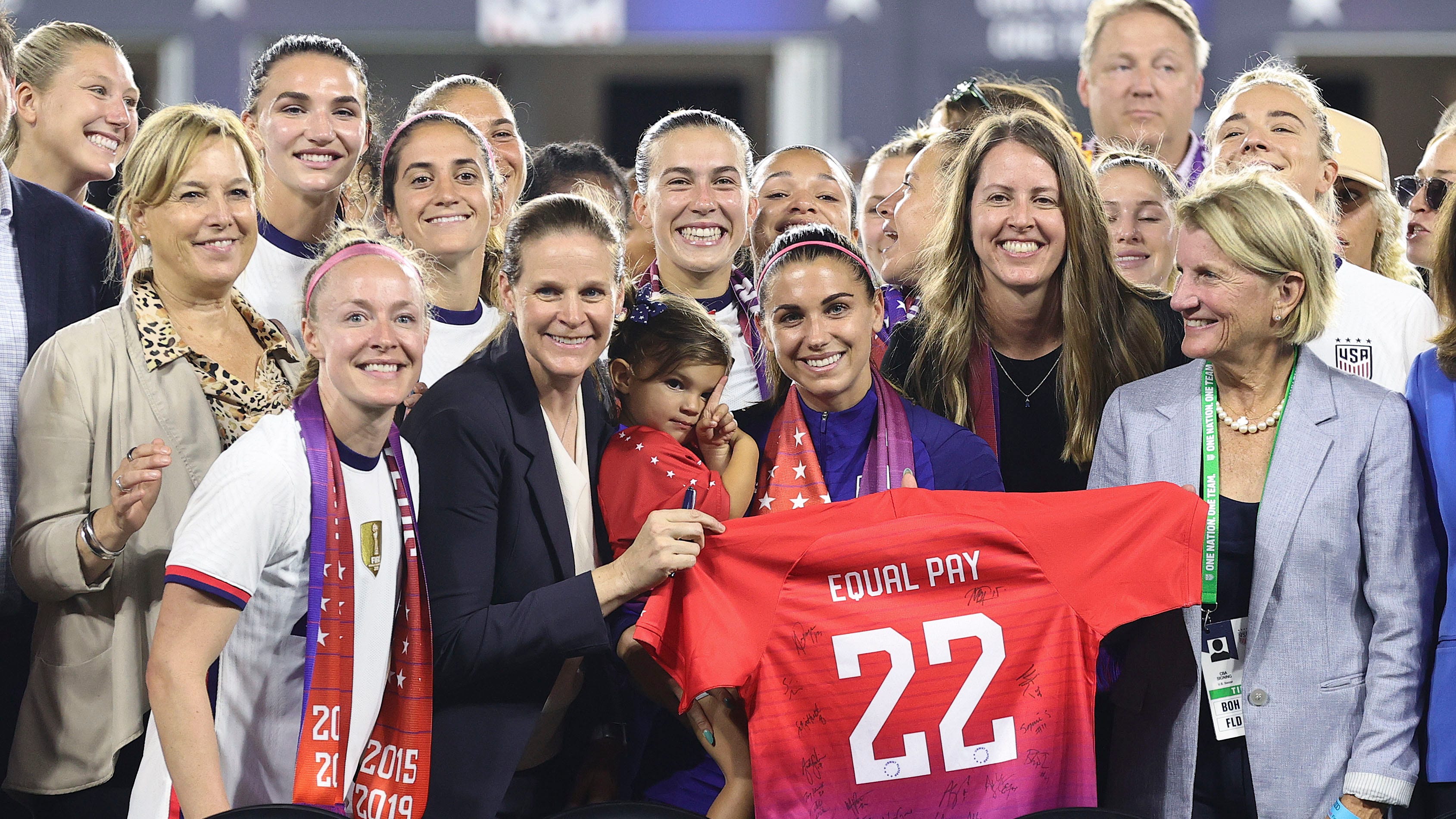
Lawyers advising the players argue that FIFA applies an objective revenue cap to the women's tournament while sparing the men's event from similar restrictions.
Union representatives from one nation stated they are prepared to take FIFA to court if payment discussions lack what they termed a "clear commitment to gender equality."
Those officials insist that prize money totals must be settled through open and transparent negotiations rather than being unilaterally dictated by FIFA.
Active discussions are already taking place between several national player unions regarding the exact mechanics of a legal filing.
Player representatives have also circulated detailed economic research among agents representing top athletes.
That research argues that FIFA's vast financial resources make equal prize payouts completely viable right now.
FIFA is projected to hold cash reserves totaling roughly $6 billion.
With that balance sheet, the players contend that withholding proportional parity is a matter of choice rather than financial limitation.
THE GULF IN WORLD CUP PAYOUTS
The financial disparity between the men's and women's competitions remains stark despite recent gains.
At the 2023 Women's World Cup in Australia and New Zealand, FIFA awarded a record $110 million in prize money.
FIFA also allocated an additional $40 million to cover team preparation costs and club compensation benefits.

That total payout is expected to more than double for the 2027 Women's World Cup in Brazil.
Yet even with that projected doubling, total compensation is still expected to fall far short of equal payments.
By comparison, FIFA distributed a record-breaking $871 million for the men's World Cup in North America.
That figure included an enormous $655 million in performance-based prize money shared across the 48 competing teams.
Sources familiar with current talks noted that the 2027 package will include a significant uplift in payments for nations that fail to qualify.
However, players argue that redistributing funds does not replace the requirement for proportional equality on the biggest stage.
WHO WOULD ACTUALLY TAKE FIFA TO COURT
Any formal litigation against FIFA would not feature FIFPRO's name directly on the court documents.
Instead, any lawsuit would be filed by individual players working directly alongside their national player unions.
FIFPRO signed a formal memorandum of understanding with FIFA in June that resolved previous tensions.
As part of that agreement, the global union agreed to withdraw all active legal proceedings against the governing body.
Despite that settlement, FIFPRO conducted subsequent legal inquiries regarding this pay dispute as an act of due diligence.

The individual athletes and domestic associations remain unbound by that litigation freeze.
National unions can independently initiate proceedings in domestic courts or international legal tribunals.
This structure allows the athletes to mount significant legal pressure while collective discussions continue at the global level.
THE VIEW FROM FIFA AND FIFPRO
When asked about the dispute, FIFA and FIFPRO released a joint statement that sought to present a united and optimistic front.
Both organizations maintained that formal correspondence is a standard element of ongoing labor discussions.
"FIFPRO and FIFA have been working collaboratively for several years to improve financial compensation and conditions for players to ensure the FIFA Women’s World Cup remains a global benchmark,"
"Women’s national team players have been an integral part of this ongoing process and continue to help shape the discussions."
The statement pointed back to the months leading into the 2023 tournament as proof that structured dialogue yields progress.
"Formal correspondence like the letter sent by national team players to FIFA is a normal part of dialogue between player unions and governing bodies."
"A similar approach was taken ahead of the FIFA Women’s World Cup 2023, ahead of significant improvements in conditions for players, including a guaranteed 30 per cent of prize money and travel and accommodation standards equivalent to those at the FIFA Men’s World Cup."
The two bodies emphasized that they are already negotiating terms for the 2027 tournament in South America.

"Alongside the approved principles that were recently announced by FIFA to increase financial distribution from the FIFA Women’s World Cup 2027 across the women’s game, the ongoing discussions about prize money are a continuation of this constructive process."
"FIFPRO and FIFA are working towards a new set of terms for the FIFA Women’s World Cup 2027, covering prize money and also, for the first time, enhanced financial distribution that rewards member associations and players who participated in the qualifying phase."
The joint communication reaffirmed a shared commitment that extends beyond the prize purse alone.
"FIFPRO and FIFA remain committed to working together to secure the best possible support for players while contributing to the sustainable growth and professionalisation of women’s football."
"Our ambition includes equalising prize money but also goes far beyond it."
"Both organisations are positive about progress made in discussions so far."
A PROMISE STILL UNFULFILLED
The current dispute tests a public pledge made by FIFA leadership several years ago.
In 2023, FIFA president Gianni Infantino publicly declared an ambition to achieve prize money equality by the 2027 tournament.
However, FIFA has still not entered into a legally binding agreement to deliver on that goal.
The players from 45 nations are no longer willing to rely on informal ambitions or voluntary targets.
They want written, enforceable guarantees enshrined in a binding collective bargaining framework before squads arrive in Brazil.
Without those structural guarantees, the players are warning that the battle for equality will move into the courtroom.
Do you think taking FIFA to court is the only way women players will finally achieve equal prize money?
Advertisement
You may also like

NBA champion Steve Kerr trolls Donald Trump with a savage jab
Golden State Warriors head coach Steve Kerr took a sharp, humorous jab at President Donald Trump during his Wednesday media availability, referencing a campaign…

John Cena’s subtle salute to Gunther after his return
John Cena made a surprise appearance on the Oct. 30, 2026 edition of WWE NXT. As he walked to the ring, he stopped in…

Braden Smith Makes NBA Debut With the Pacers
Purdue basketball alum Braden Smith makes NBA debut with the Pacers. Braden Smith, the former Purdue Boilermakers guard, stepped onto an NBA floor for…

Red Wings vs. Golden Knights Live Score and Game Updates
NHL.LIVE: Detroit Red Wings vs Vegas Golden Knights LIVE STREA.MS NHL Game On TV Coverage 6 Nov 2026. Puck drop is set for 7…

Business leaders face a tough choice with workplace monitoring.
Big Brother 2026 has officially crowned a winner. Rochelle took the title on the live final, hosted by AJ Odudu and Will Best on…

WWE Plans Huge 30th Anniversary Celebration for The Rock
WWE is planning to celebrate 30 years of The Rock this month. Plans include a commemorative championship belt. Special merchandise releases are also in…