Warriors Suspend Porzingis’ $20M Salary Payments Amid Trade Drama
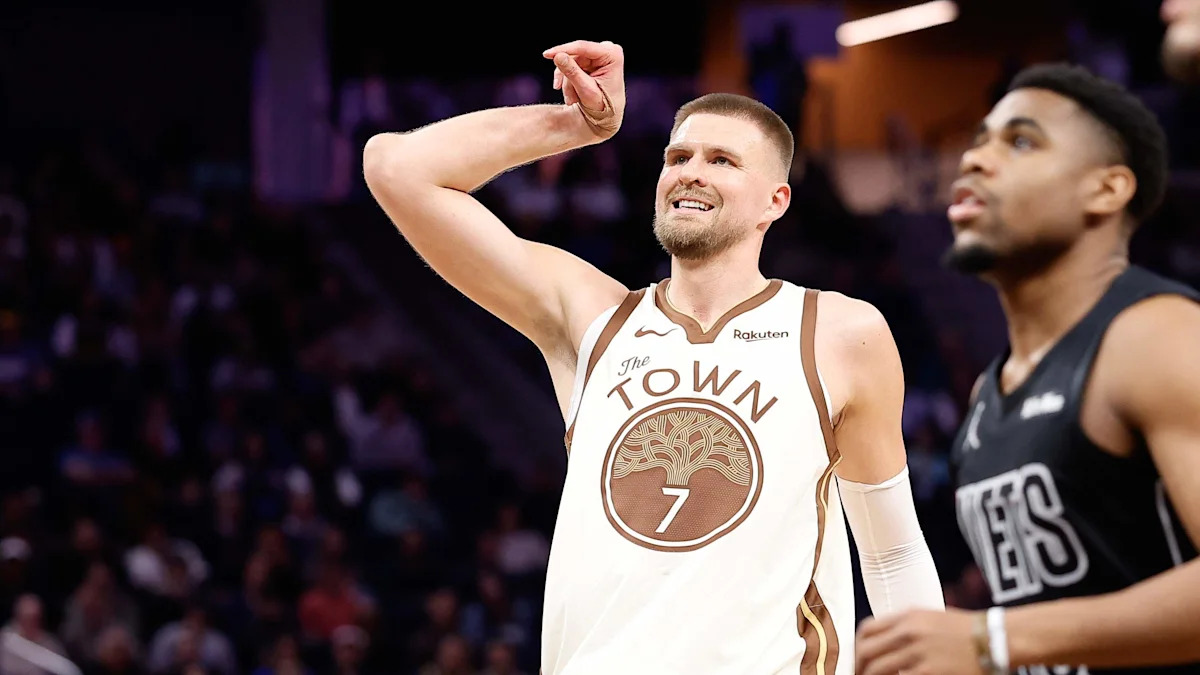
NBA controversy: Warriors refuse to pay Porzingis his salary.
The Golden State Warriors have stopped paying Kristaps Porzingis the $20 million salary he is owed for this season, according to ESPN's Shams Charania and Anthony Slater.
The team's justification is straightforward: Porzingis is no longer providing services to the franchise.
The 31-year-old Latvian center has been ruled out for the remainder of the season due to a health condition that has sidelined him indefinitely.
That condition has reportedly even prompted him to consider retirement from professional basketball.
Porzingis has been dealing for the past year and a half with a condition known as Postural Orthostatic Tachycardia Syndrome, or POTS.
POTS is a chronic disorder of the autonomic nervous system.
Its symptoms include a sudden increase in heart rate, dizziness, and extreme fatigue.
However, neither the Warriors nor Porzingis himself has confirmed that POTS is the specific health issue currently keeping him off the court.
Under normal NBA rules, players continue receiving their salaries while injured or ill, even when their absences extend over a significant period.

But the Warriors believe they have a specific justification for withholding Porzingis' compensation.
Before training camp began, the Warriors released a statement indicating that the Latvian star would remain with the organization while recovering.
Porzingis subsequently stopped reporting to the team's facilities and has not returned.
As a result, his official designation was changed from "general illness" to "not with team."
The Warriors deliberately made that adjustment, effectively removing the justification for his continued absence.
ESPN also reports that neither the player nor the National Basketball Players Association (NBPA) intends to challenge the withheld payments.
This is a significant detail, because it suggests Porzingis is not fighting the decision.
Despite the salary dispute, the Warriors have no intention of terminating Porzingis' contract.
Instead, the franchise wants to preserve the flexibility to trade him before the February 11 deadline.
Golden State hopes to receive something in return for the big man.

Voiding the contract would mean losing the ability to trade it entirely.
If there is any Porzingis value left for the Warriors in this situation, it is as a tradeable salary slot for a team looking to get out of a deal that is on their books.
The Warriors, at the same time, have been exploring the trade market in recent days to see what is out there, according to The Stein Line Substack writer Jake Fischer.
It is conceivable that, if Porziņģis ultimately proves willing to go ahead with a buyout, his team-friendly contract might have even more appeal to a potential trade partner facing a financial crunch in a buyout scenario.
Porzingis appeared in just 15 games for the Warriors after they acquired him from the Atlanta Hawks in February.
That trade sent Jonathan Kuminga and Buddy Hield to Atlanta.
Porzingis then signed a two-year, $40 million extension in June.
Only $3 million of that contract is guaranteed for next season, making it essentially a one-year, $23 million deal.
His availability has remained uncertain amid ongoing health concerns.
Porzingis took an indefinite leave of absence shortly before training camp and has not returned to the team.

The center has previously discussed health complications following an illness during his time with the Boston Celtics.
That illness included a reported diagnosis of postural orthostatic tachycardia syndrome, or POTS.
While Porzingis has not officially announced his retirement, the possibility of him ending his NBA career is real.
Charania reported that Porzingis "leans toward ending his NBA career."
Golden State is permitted to move his contract at any point before the Feb. 11 deadline even without paying him currently.
The team will continue exhausting trade avenues as the 31-year-old considers his future.
What we do not yet know is what the balance will be between trading out Porzingis, who is not going to play for whomever takes him on, and the sweeteners required to get a team to send the Warriors something useful in return.
Either taking back bad money or giving up a first-round draft pick are the most likely scenarios.
The better the player the Warriors get back, the more willing they would be to absorb money and send out picks.
Common sense would dictate that a trade could not be shaken out too early in the season.

Not many teams are already in the wave-the-white-flag business these days.
It will take more time for teams to realize the season is not going anywhere and they would be better off dumping money.
Fischer added that this is likely going to have to wait, maybe another month or so for the Warriors.
They want a usable center as soon as they can get one, but they are not necessarily dictating the timeline.
The longer they wait, the bigger the chance they get a player who can help them.
Deep down, though, Golden State knows that trade interest is unlikely to materialize quickly.
The Warriors are also limited by their proximity to the NBA's second luxury-tax apron, which restricts how much salary they can take back in a trade.
This entire situation marks another unexpected chapter in Porzingis' tenure with Golden State.
He was a former All-Star with the New York Knicks before being traded to the Dallas Mavericks, then to the Washington Wizards, then to the Boston Celtics, and finally to the Atlanta Hawks before landing with the Warriors.
The saga is far from over.
With the Feb. 11 trade deadline approaching, and Porzingis' health and retirement status still unclear, the next few weeks will determine whether the Warriors get anything back for their sidelined $20 million man.
Advertisement
You may also like

NBA champion Steve Kerr trolls Donald Trump with a savage jab
Golden State Warriors head coach Steve Kerr took a sharp, humorous jab at President Donald Trump during his Wednesday media availability, referencing a campaign…

John Cena’s subtle salute to Gunther after his return
John Cena made a surprise appearance on the Oct. 30, 2026 edition of WWE NXT. As he walked to the ring, he stopped in…

Braden Smith Makes NBA Debut With the Pacers
Purdue basketball alum Braden Smith makes NBA debut with the Pacers. Braden Smith, the former Purdue Boilermakers guard, stepped onto an NBA floor for…

Red Wings vs. Golden Knights Live Score and Game Updates
NHL.LIVE: Detroit Red Wings vs Vegas Golden Knights LIVE STREA.MS NHL Game On TV Coverage 6 Nov 2026. Puck drop is set for 7…

Business leaders face a tough choice with workplace monitoring.
Big Brother 2026 has officially crowned a winner. Rochelle took the title on the live final, hosted by AJ Odudu and Will Best on…

WWE Plans Huge 30th Anniversary Celebration for The Rock
WWE is planning to celebrate 30 years of The Rock this month. Plans include a commemorative championship belt. Special merchandise releases are also in…