Washington governor meets NBA commissioner to revive Sonics deal
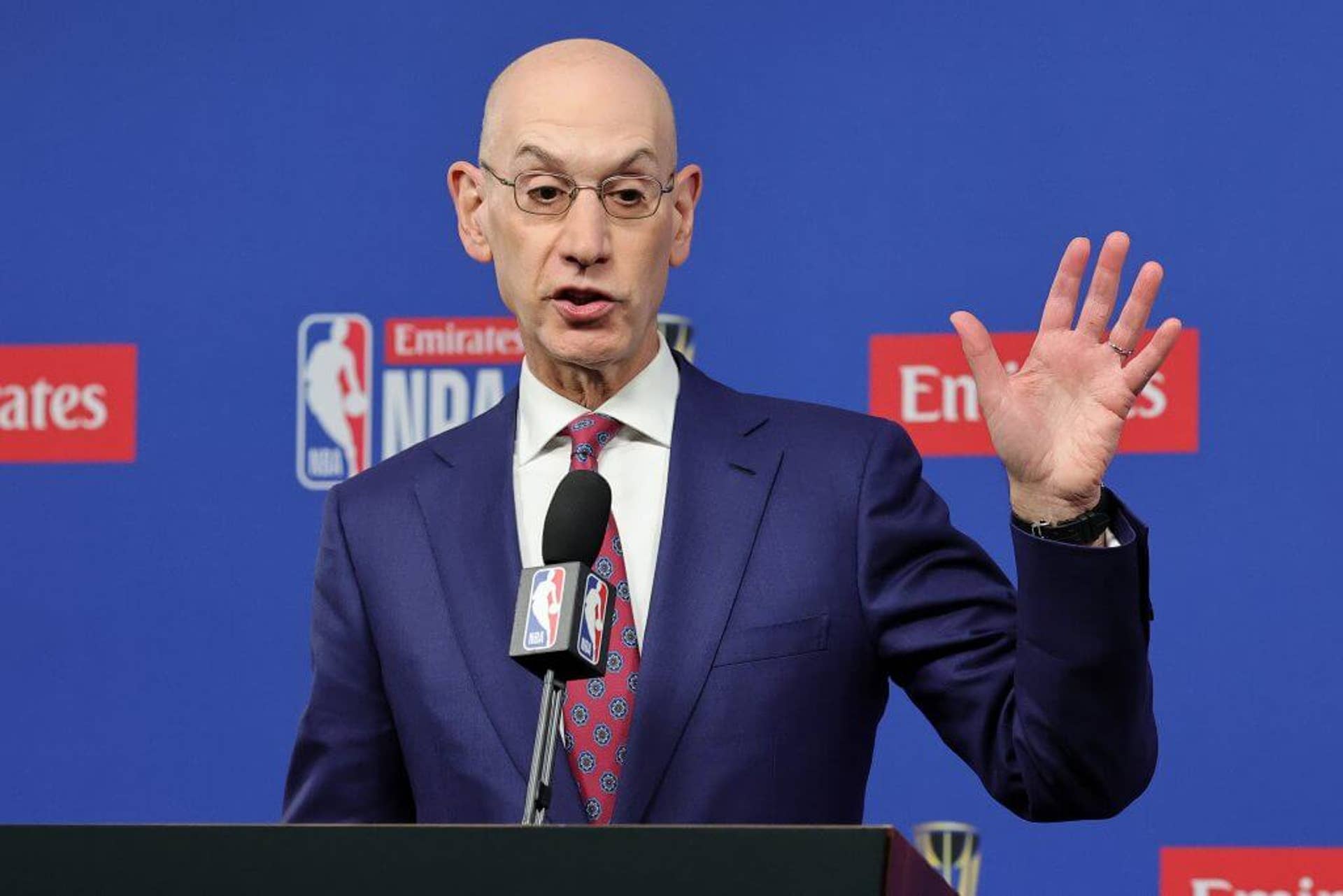
Washington state Gov. Bob Ferguson will meet with NBA Commissioner Adam Silver on Thursday as a possible decision on NBA expansion draws closer.
Ferguson was asked about the meeting at the conclusion of his postelection media availability on Wednesday.
It will be a virtual meeting, and Ferguson’s office reached out to set it up.
Ferguson previously had conversations with Silver in February during the week of the Super Bowl and again in March to show his support for the idea of bringing the NBA back to Seattle.
That was before the NBA said it was focused solely on Las Vegas and Seattle as expansion possibilities and before the expected price tag for the potential franchises started to make significant climbs.
Ferguson said his role is to “maintain communication with the commissioner,” and trying to be helpful in the process.
“I think what I would say is I still remain optimistic,” Ferguson said.
“I read all the same news that you do about what is going on with Las Vegas and Seattle. I don’t pretend to have a crystal ball on that and those conversations going on with NBA owners,” Ferguson added.
“That said, what I do know is Seattle has a deep history here with Sonic basketball. I lived it as a kid, living close to the old Coliseum,” he said.
“Look, I think fans and NBA players across the country understand that NBA basketball needs to return to Seattle. Our bid is strong, we have the right arena. I mean, we check each and every box that the NBA could possibly hope to have for someone bidding for a new team,” Ferguson said.
The bid from One Roof Sports and Entertainment has been viewed as the only viable bid from the outset for trying to bring the league back to Seattle, while a bidding war between three groups developed in Las Vegas.
A decision on the winning group in Las Vegas is expected soon, and the league has said it still intends to make a final decision on expansion before the end of the calendar year.

Seattle has been without an NBA team since the SuperSonics relocated to Oklahoma City in 2008 and became the Thunder.
The move followed years of failed efforts by local ownership groups to secure public funding for a new arena, culminating in the sale of the team to a group led by Clay Bennett, who moved the franchise.
The departure left a lasting wound in the Seattle sports community, and efforts to bring basketball back have simmered for nearly two decades.
Key Arena was renovated and renamed Climate Pledge Arena in 2021, and the venue now meets NBA standards.
The arena currently hosts the WNBA’s Seattle Storm and the NHL’s Seattle Kraken, and has been cited by league officials and local leaders as a ready-made home for an NBA team.
Expansion has been a recurring topic in NBA boardrooms for years, but the league has not added a new franchise since the Charlotte Hornets (then the Bobcats) joined in 2004.
Commissioner Adam Silver has publicly acknowledged that expansion is inevitable, though he has consistently declined to give a firm timeline.
In recent months, the league has signaled that the process is accelerating, with Silver telling reporters that ownership groups in both Seattle and Las Vegas have presented compelling cases.
The expected price for each expansion franchise has been reported in the range of $4 billion to $6 billion, a figure that would far exceed the $2.5 billion that the Atlanta Hawks were valued at in Forbes’ most recent NBA franchise valuations.
That price tag reflects the league’s growing media rights deals and the overall rise in franchise values across North American professional sports.
The Las Vegas market has drawn interest from at least three separate ownership groups, including one led by billionaire businessman and former professional soccer player David Beckham, according to multiple reports.
Seattle’s bid, by contrast, has been consolidated under One Roof Sports and Entertainment, giving the city a unified front in negotiations.

Ferguson, a Democrat who was elected governor in 2024, has made the Sonics’ return a stated priority of his administration.
His involvement at this level — directly engaging the commissioner — signals that the state is treating the bid as an economic development issue as much as a sports issue.
The governor’s office has not disclosed specific incentives or public funding proposals that might be part of the pitch.
Thursday’s meeting is expected to cover the status of the Seattle bid, the timeline for a league decision, and any remaining hurdles the local group must clear.
Ferguson declined to speculate on exactly when a final decision might come, but noted that the league’s stated goal of a decision by the end of 2026 is still on the table.
For Seattle fans, the meeting represents the most concrete sign of progress in years — a sitting governor speaking directly with the league’s top executive, with a deadline visible on the calendar.
But the outcome remains uncertain, with Las Vegas widely seen as the front-runner for one of the two expansion slots, and competition for the second slot potentially involving other markets if the league decides to expand beyond two teams.
Silver has not ruled out the possibility of adding more than two franchises, though most league insiders expect a two-team expansion as the most likely scenario.
If the Sonics do return, they would become the second NBA team in the Pacific Northwest, joining the Portland Trail Blazers.
The region has a strong basketball tradition, with Seattle producing numerous NBA players and the University of Washington serving as a pipeline for talent.
For now, Ferguson is focused on one thing: keeping the communication lines open.
“I don’t pretend to have a crystal ball,” he said.
“But I know we’ve done everything we can.”
Advertisement
You may also like
Kim Kardashian’s co-stars call her the greediest woman on set.
Kim Kardashian's All's Fair co-stars brand her the 'greediest woman' they have ever met. Niecy Nash-Betts said it on Good Morning America. Kim eats…
Kyle Larson's Secret Marathon Plan for NASCAR Title Revealed
“More Thought Behind This Than the Chase”—Kyle Larson Reveals Unorthodox Marathon Regimen Fueling Championship Bid Kyle Larson is training for his first marathon. He…
WTA Finals Drama: Group Photo Canceled Over Svitolina-Andreeva Feud
Road to the WTA Finals: The eight doubles teams heading to Indian Wells. The 2026 WTA Finals Indian Wells doubles field is a mix…
WWE Blocked Chad Gable’s GCW Debut at the Last Minute
GCW promoter Brett Lauderdale revealed on November 5, 2026 that WWE superstar Chad Gable was booked for Josh Barnett's Bloodsport X in April 2024.…
Sophie Cunningham shuts down 'dumb' internet fury over Team USA no-shows
Sophie Cunningham, a shooting guard for the Indiana Fever, has publicly questioned why WNBA players miss so many wide-open layups. She did not hold…
Shedeur Sanders Sparks Backlash Before Even Taking the Field
BEREA — Quarterback Deshaun Watson missed his second straight practice Thursday due to a concussion. That makes it increasingly likely Shedeur Sanders will start…