Willie Nelson Compares Looming Federal Hemp Ban To Prohibition, Urging Congress To Protect Farmers
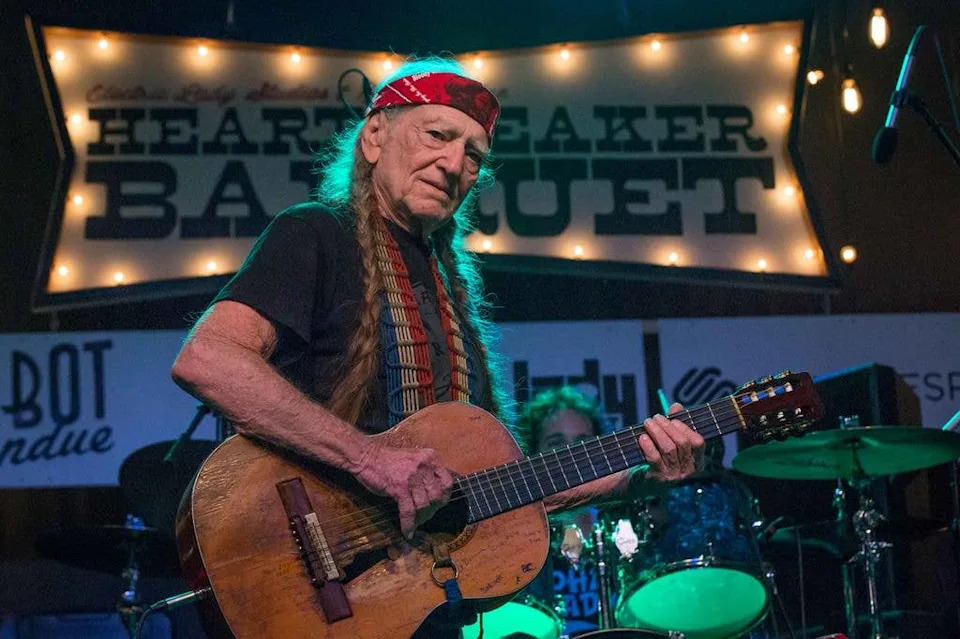
Country icon Willie Nelson is speaking out against upcoming federal legislation that would outlaw all hemp-derived THC products in the United States starting December 11.
The 93-year-old music legend has long stood as one of the country's foremost advocates for cannabis reform.
Now, he is taking aim at lawmakers over a looming policy shift that could dismantle a booming legal sector.
At the center of the dispute is Willie's Remedy+, a brand of hemp-derived THC-infused drinks co-founded by the country star.
Nelson launched the venture alongside Forrest Dein, the co-founder of the beverage company JuneShine.
According to reporting from Inc., the brand currently operates at an estimated $240 million run rate.
That rapid commercial growth now faces total disruption under the proposed federal rules.
If the measure takes effect on December 11, it would effectively criminalize all hemp-derived THC goods across the nation.
Nelson decided to confront the regulatory threat directly in a public statement.
He called on federal representatives "to stop the foolishness and pass sensible law."
To make his case, the songwriter drew a direct parallel to one of the most famous policy failures in American history.
Nelson likened the impending federal prohibition to the national alcohol ban that spanned from 1920 to 1933.

That era of constitutional prohibition concluded the very same year the musician was born.
"Prohibition won't stop people from wanting it," Nelson explained in his statement to Inc.
"It just hands the market to the black market," he warned.
"I was born the year prohibition ended in 1933, and we know that approach does not work."
A BLOW TO FARMERS AND PATIENTS
Beyond economic theory, Nelson emphasized the human toll that sudden federal bans impose on ordinary Americans.
"This ban punishes the wrong people," Nelson stated plainly.
He pointed out that agricultural producers would bear the immediate brunt of the legislative reversal.
"It hurts the family farmers growing a legal crop," Nelson said.
He also stressed the widespread consumer base that relies on hemp formulations for therapeutic support.
Nelson noted that the ban "hurts the millions of seniors, veterans, and patients who rely on hemp products for pain relief, sleep, and wellness."
Advocates have frequently noted that regulated hemp offers accessible alternatives for individuals seeking non-pharmaceutical options.

For family farms, hemp cultivation emerged as an essential lifeline after years of market uncertainty in traditional agriculture.
A federal ban would strip away those revenue streams overnight.
It would also strand investments made in planting, processing, and distribution infrastructure.
Nelson's defense of growers aligns seamlessly with his decades-long dedication to American family farmers.
Through his annual Farm Aid concert series, the musician has championed independent agricultural communities since the mid-1980s.
He views Willie's Remedy+ as an extension of that core social mission.
Hemp sourcing allows the brand to direct economic support back into working farm communities.
"I think we all have a reason to be here," Nelson shared when discussing the brand's broader purpose.
"We're all missionaries of one kind or another," he reflected.
"We were all sent here to do something, and we know what it is, what it was."
"And we try to do it, we try to show people the way that we think it should be done and I'm a big believer in treating others the way you want to be treated."
A PERSONAL HEALTH VENTURE

For the country icon, Willie's Remedy+ is not just an investment portfolio asset.
It represents a personal adjustment to his own lifestyle and physical wellness in his tenth decade of life.
Known for decades as an unapologetic advocate for smoking marijuana, Nelson has had to adapt his habits.
In a 2025 interview with Forbes, Nelson candidly discussed how his routine has shifted with age.
"Well, I can't smoke anything anymore," Nelson told Forbes.
"My lungs have already said, 'Don't do that,'" he explained with characteristic honesty.
"So, I don't really do anything now much except a few edibles."
That shift made smokeless alternatives, including infused beverages, central to his everyday routine.
Nelson expressed genuine enthusiasm for the drink format that his company brought to the market.
"I think it's good, the people like it from what I've seen and heard," he noted regarding the product.
"It's getting to be pretty popular out there."
That rising popularity helped propel the joint venture toward its remarkable $240 million run rate valuation.

Yet that consumer demand makes the threat of a blanket federal prohibition even more urgent for the company.
PREPARING FOR A REGULATORY STORM
Corporate leaders behind Willie's Remedy+ have been forced to prepare for severe turbulence.
Speaking with Inc., co-founder Forrest Dein outlined how the company structured its operations amid the legal uncertainty.
The leadership team initially mapped out an aggressive 12-month schedule to introduce new product lines across the country.
However, the imminent December 11 enforcement date required immediate financial precautions.
Dein explained that management established a dedicated "rainy day" cash reserve to safeguard the business.
"We were lucky to raise money with our partner Left Lane earlier this year," Dein revealed to Inc.
That capital injection gave the beverage venture a degree of insulation against sudden political disruptions.
"So we're in a position where we could weather a 30- or 60-day storm if we needed to," Dein stated.
Despite the defensive preparations, Dein remains hopeful about a legislative solution.
The leadership group hopes that federal lawmakers will reach an agreement to nullify or modify the ban before it takes full effect.

Businesses throughout the hemp sector are watching Washington closely as the deadline approaches.
Industry analysts emphasize that blanket bans rarely eliminate product consumption.
Instead, criminalizing regulated goods typically drives commerce underground into uncontrolled, untaxed channels.
That reality formed the cornerstone of Nelson's warning to Congress.
When legitimate operators are forced out of business, quality control standards vanish with them.
Consumers lose access to lab-tested goods, while illicit operations capture the existing demand.
For Nelson, history has already delivered an unmistakable verdict on that strategy.
National alcohol prohibition in the 1920s failed to curb drinking and fueled an unprecedented rise in organized crime syndicates.
Only complete repeal in 1933 restored order, safety regulations, and public tax revenues.
Nelson believes modern legislators are walking into the exact same historical trap with hemp-derived cannabinoids.
Rather than punishing agricultural producers and wellness consumers, advocates want clear, sensible guidelines.
Such rules would establish age gates, standard testing protocols, and responsible manufacturing standards.
With December 11 quickly approaching, the window for congressional intervention is rapidly narrowing.
Nelson and his partners remain steadfast in defending their enterprise, their growers, and their consumer community.
The coming weeks will reveal whether lawmakers heed the country icon's warning or proceed with the shutdown.
Do you agree with Willie Nelson that outlawing these hemp products will only hand business over to the black market?
Advertisement
You may also like

Sean Payton confirms J.K. Dobbins is still key to Broncos' plans
Sean Payton says J.K. Dobbins remains "a huge part of what we're doing" in Denver. That statement came Wednesday when reporters asked the Broncos…

Kris Jenner Breaks Silence on Kim's Scary Health Diagnosis
Kim Kardashian's ultra-plunging latex dress is so rare it will send fans wild. But behind the glamorous photo shoots and vintage Paco Rabanne looks,…

UNC Athletics Unveils Golfing Rameses Logo, Finley Collection Of Merch
The University of North Carolina Department of Athletics has introduced a new golfing Rameses logo, Carolina and deputy athletic director/chief revenue officer Rick Barakat…

Jessica Pegula Slammed as "Outrageous" After Shading Coco Gauff and Mirra Andreeva
“Jessica Pegula Should Be Banned.” “Outrageous.” That is the reaction flooding social media after a courtside microphone picked up the World No. 5 criticizing…
Perkins: Draymond Green is now more liability than asset
Kendrick Perkins has delivered a blunt verdict on Draymond Green. "Draymond Green has been more of a liability than an asset," Perkins said. The…

Adrian Meronk reveals 4 reasons LIV Golf players are leaving
LIV Golf star Adrian Meronk has revealed the four major reasons why players are leaving the embattled league. Meronk, a one-time winner on the…