WWE Faces February 2027 Deadline In Ongoing Legal Fight Over Randy Orton's RKO
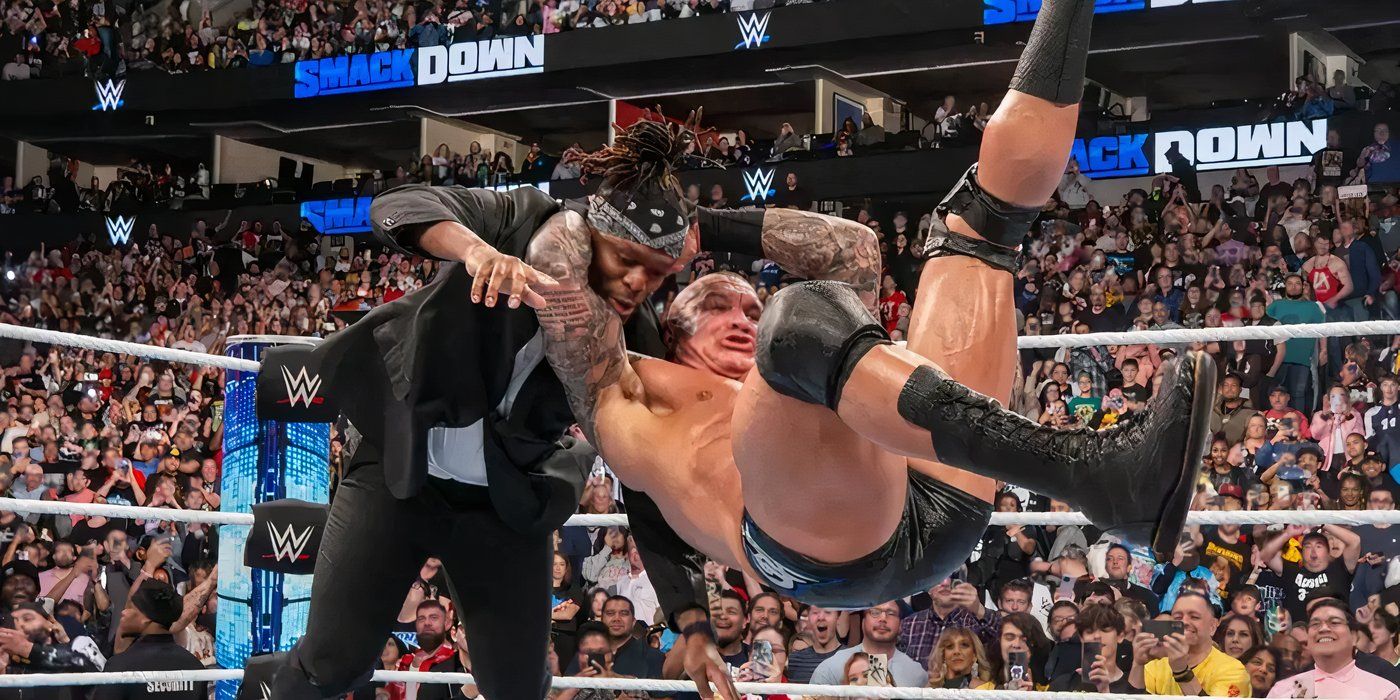
While WWE already owns trademark registrations covering RKO merchandise, its repeated attempts since 2024 to lock down trademark protection for wrestling exhibitions and broadcasts have faced another setback.
The United States Patent and Trademark Office has issued a nonfinal refusal against the wrestling giant.
At the center of the dispute sits the name of Randy Orton’s legendary finishing move.
The federal agency has now given WWE until February 3, 2027, to respond to the formal objections.
Failure to reply by that date could derail the company's long-running effort to broaden its legal ownership.
THE NOVEMBER RULING
The USPTO issued its nonfinal office action on Tuesday, November 3, 2026.
The decision halts WWE's most recent attempt to secure full broadcast rights for the letters.
Examining attorneys cited significant conflicts with pre-existing registrations owned by RKO Pictures.
The ruling does not represent a permanent rejection of WWE's commercial ambitions.
Instead, it serves as a formal pause in an ongoing legal process.
WWE now has roughly three months from the notice date to build and submit its legal defense.
The trademark office has confirmed that WWE also retains the option to pay for an additional three-month extension.
That flexibility gives WWE's corporate legal team multiple strategic avenues heading into early 2027.
THE CLASH WITH HOLLYWOOD HISTORY
The stumbling block for WWE is not the popularity of Randy Orton inside the ring.
The core issue lies entirely with the intellectual property portfolio of RKO Pictures.
RKO Pictures is an established Hollywood institution with nearly a century of prominence.
The legendary studio is famous for producing and distributing cinematic masterpieces such as Citizen Kane.
It is also widely recognized for holiday classics like It's A Wonderful Life.
Because of that storied history, the studio holds extensive federal protections for its brand identity.
The USPTO noted that RKO Pictures currently holds six active trademark registrations.
The examining attorney determined that those registrations directly conflict with WWE's current filing.
In trademark law, prior registrations in related entertainment fields hold significant legal weight.
THE LIKELIHOOD OF CONFUSION
The formal rejection hinges on the core legal doctrine known as likelihood of confusion.
Under federal guidelines, marks cannot be registered if they risk confusing ordinary consumers about their commercial source.
The USPTO laid out its reasoning clearly in the official refusal document.
“Applicant's and registrant's marks all share the sole or dominant literal element ‘RKO,'” the examining attorney stated.
The filing also emphasized that “one of registrant's marks is in typed form and is identical to applicant's mark.”
Because both companies operate in commercial entertainment, federal regulators raised immediate red flags.
The trademark office determined that consumers might mistakenly assume a business connection between the wrestling promotion and the film studio.
To bridge that gap, the USPTO has demanded additional clarification from WWE.
Specifically, the agency asked WWE to explain whether the term RKO carries any particular meaning within professional wrestling.
WHAT WWE IS FIGHTING TO SECURE
WWE filed its latest trademark application on July 6, 2026.
That filing was specifically designed to cover wrestling exhibitions and related entertainment services.
The application sought legal ownership over wrestling performances broadcast through television.
It also aimed to protect broadcasts delivered over commercial radio networks.
Furthermore, the application requested comprehensive protection across online platforms and streaming services.
WWE additionally sought to register the term for wrestling news and informational content distributed over the internet.
Securing this class of trademark would grant WWE sweeping commercial exclusivity over the letters in media broadcasts.
Without it, the company’s legal control over the three-letter brand remains fragmented.
A MULTI-YEAR LEGAL ODYSSEY
This latest office action is only the newest chapter in a multi-year campaign.
WWE originally launched its push to claim the broadcast rights in November 2024.
That initial 2024 application was met with immediate resistance from federal regulators.
Just as in the current case, the USPTO raised serious concerns regarding the portfolio of RKO Pictures.
WWE attempted to argue its position throughout 2025 without securing full federal approval.
That opening effort officially hit a wall in January 2026 when the USPTO issued a final refusal.
Rather than abandoning the trademark entirely, WWE regrouped its legal strategy.
The company waited six months before submitting its revamped application on July 6, 2026.
By issuing a new nonfinal refusal in November 2026, the USPTO has signaled that the underlying legal conflicts remain unresolved.
MERCHANDISE VERSUS BROADCAST RIGHTS
The ongoing dispute highlights an important distinction within United States trademark law.
Trademark registrations are divided into separate international classes based on specific goods and services.
WWE already possesses valid, legally recognized RKO trademark registrations covering physical merchandise.
That existing portfolio allows WWE to print the famous letters on t-shirts, caps, and promotional items.
The company has generated substantial revenue from RKO-branded apparel for many years.
Those merchandising protections remain intact and active despite the recent ruling.
WWE is permitted to continue selling its extensive catalog of RKO-branded merchandise throughout the ongoing legal process.
The current dispute centers strictly on the service category covering live wrestling shows and media distribution.
Expanding from consumer apparel into performance broadcasting has proven to be a much steeper legal hurdle.
THE SIGNIFICANCE OF ORTON'S FINISHER
For wrestling fans around the globe, the letters RKO represent one of the most famous moves in history.
Randy Orton introduced the jumping cutter maneuver early in his decorated career.
The name cleverly plays on his full personal birth name, Randy Keith Orton.
It also serves as a catchy, marketable acronym that caught fire with global audiences.
Over the course of more than two decades, the finisher became an internet phenomenon.
Viral memes showcasing the move hitting people “out of nowhere” flooded popular culture for years.
Orton has used the maneuver to capture numerous world championships on global television broadcasts.
Yet under federal trademark standards, viral popularity does not automatically override established corporate rights.
The law prioritizes established registry priority over pop culture recognition.
IMPACT ON IN-RING ACTION
Despite the ominous legal deadlines, the ruling will have zero immediate impact on wrestling programming.
Randy Orton is not facing any legal ban from executing his signature move on television.
There is no requirement forcing WWE or Orton to rename the maneuver during weekly shows.
Commentators can continue to call the move by its world-famous name during live broadcasts.
Orton remains prominently featured at the top of WWE’s active competitive roster.
He is currently preparing to battle Cody Rhodes in a high-stakes Last Man Standing grudge match at Crown Jewel.
Audiences tuning into that event can fully expect to witness the famous finisher in action.
The fight between WWE and the USPTO exists entirely in corporate boardrooms and legal registries.
WHAT WWE MUST PROVE NEXT
The road ahead demands that WWE provide comprehensive evidence to the examining attorney.
Company lawyers must formulate a persuasive response before February 3, 2027.
They must formally explain why wrestling broadcasts are entirely distinct from the cinematic productions of RKO Pictures.
WWE must argue that television viewers will never confuse a professional wrestling event with a Hollywood classic.
The company must also directly answer the USPTO's question regarding the meaning of the letters.
WWE will likely emphasize Orton's real initials to demonstrate the personal origins of the wrestling phrase.
They may also argue that the term has acquired secondary meaning exclusively associated with wrestling since the early 2000s.
If the USPTO remains unconvinced, WWE can choose to pay for a three-month extension to prolong discussions.
Alternatively, WWE could eventually explore formal coexistence agreements with the leadership of RKO Pictures.
Such corporate agreements frequently establish clear operational boundaries so both brands can safely share similar marks.
THE ROAD TO FEBRUARY 2027
The clock is officially running toward the February 2027 deadline.
Intellectual property attorneys across the sports and entertainment industries will be watching the case closely.
The final outcome will determine how much legal control WWE holds over one of its greatest assets.
For now, the promotion must carefully build its legal case while keeping the merchandise flowing.
After more than two decades of Randy Orton using the move, should WWE be granted full trademark ownership over RKO in wrestling broadcasts?
Advertisement
You may also like

NBA champion Steve Kerr trolls Donald Trump with a savage jab
Golden State Warriors head coach Steve Kerr took a sharp, humorous jab at President Donald Trump during his Wednesday media availability, referencing a campaign…

John Cena’s subtle salute to Gunther after his return
John Cena made a surprise appearance on the Oct. 30, 2026 edition of WWE NXT. As he walked to the ring, he stopped in…

Braden Smith Makes NBA Debut With the Pacers
Purdue basketball alum Braden Smith makes NBA debut with the Pacers. Braden Smith, the former Purdue Boilermakers guard, stepped onto an NBA floor for…

Red Wings vs. Golden Knights Live Score and Game Updates
NHL.LIVE: Detroit Red Wings vs Vegas Golden Knights LIVE STREA.MS NHL Game On TV Coverage 6 Nov 2026. Puck drop is set for 7…

Business leaders face a tough choice with workplace monitoring.
Big Brother 2026 has officially crowned a winner. Rochelle took the title on the live final, hosted by AJ Odudu and Will Best on…

WWE Plans Huge 30th Anniversary Celebration for The Rock
WWE is planning to celebrate 30 years of The Rock this month. Plans include a commemorative championship belt. Special merchandise releases are also in…