WWE Faces February 2027 Deadline To Prove The Wrestling Significance Of Randy Orton's RKO
Because the USPTO's rejection is non-final, WWE has until February 3, 2027, to present formal arguments and evidence explaining what specific meaning 'RKO' carries in pro wrestling.
The United States Patent and Trademark Office issued the ruling after reviewing WWE's latest trademark submission.
Federal regulators formally rejected the sports entertainment giant's attempt to protect the phrase for its primary broadcasting operations.
The dispute centers on the name of Randy Orton's iconic finishing move.
Orton has used the maneuver as his signature attack throughout a legendary multi-decade career.
To millions of sports entertainment fans, the three letters represent one of the most famous maneuvers in wrestling history.
To trademark examiners, however, those same three letters create significant potential for commercial confusion.
A CONFLICT OVER THREE LETTERS
WWE's latest legal hurdle stems from an ongoing trademark dispute with RKO Pictures.
The conflict between the wrestling promotion and the film company has been active since 2024.
WWE filed a brand-new trademark application for the term for wrestling-related purposes on July 6.
The application covered extensive entertainment services, including wrestling shows distributed across television, radio, and the internet.
The USPTO reviewed the filing over a 120-day examination window.
On Tuesday, the federal agency issued a non-final action turning down WWE's request.
The examining attorney determined that WWE's proposed mark was far too similar to established trademarks owned by RKO Pictures.
In the official refusal, the examiner underscored the fundamental overlap between the competing applications.
"Applicant's and registrant's marks all share the sole or dominant literal element 'RKO,' one of registrant's marks is in typed form and is identical to applicant's mark."
Because the letters are identical, the regulatory office found an unavoidable likelihood of confusion.
HOLLYWOOD ROOTS AND TRADEMARK LAW
RKO Pictures is one of the most famous and historic production houses in American cinema.
The studio earned global acclaim during the golden age of Hollywood.
RKO Pictures produced and distributed legendary motion pictures such as "Citizen Kane" and "It's a Wonderful Life."
Decades later, the legacy studio still actively maintains a powerful portfolio of federal intellectual property.
The USPTO examiner cited six distinct trademarks currently held by RKO Pictures.
One of those registered marks consists entirely of the standalone letters R, K, and O.
Federal trademark law evaluates whether everyday consumers might mistakenly believe two distinct services originate from the same enterprise.
Under standard regulatory practices, examiners assess the similarity of the marks alongside the relatedness of the underlying goods.
The USPTO concluded that WWE's requested entertainment categories overlap directly with the historical protections granted to RKO Pictures.
Both entities produce scripted, visual entertainment intended for widespread broadcast audiences.
Because wrestling programming airs on television and digital streaming platforms, regulators determined that consumers could link the content to RKO Pictures.
THE QUESTION OF WRESTLING SIGNIFICANCE
To overcome this hurdle, federal authorities have placed a specific evidentiary burden on WWE.
The USPTO asked WWE to explain whether "RKO" carries a specific, recognized meaning within professional wrestling.
In trademark law, an acronym can sometimes overcome broader confusion if it holds unique, established industry significance.
WWE must now assemble legal arguments showing how the term operates in a wrestling ring.
Fans know the maneuver as a jumping cutter executed without warning.
The acronym famously incorporates Randy Orton's real-life initials, Randal Keith Orton.
Over the past two decades, the maneuver evolved into a massive cultural phenomenon across mainstream social media.
Yet legal examiners do not evaluate internet memes without formal documentation on the administrative record.
WWE must submit verifiable evidence showing that fans exclusively associate the term with in-ring performance rather than film production.
A LONG PROCEDURAL HISTORY
This week's refusal is not the first time WWE has stumbled while trying to lock down broadcast rights for the mark.
WWE has now been attempting to register the term for its episodic television shows for nearly two years.
The company submitted an initial application for these broadcast services in November 2024.
That first application ran into immediate resistance and received a final refusal in January.
Rather than abandoning the effort, WWE recalibrated its legal strategy and submitted a fresh application on July 6.
The agency's latest rejection confirms that refiling the paperwork did not resolve the core concern.
This marks the second time the USPTO has formally denied WWE's television registration for the phrase.
The roadblock mirrors a previous multi-year battle the company faced over physical merchandise.
WWE currently owns valid federal trademark registrations for "RKO" covering apparel and retail merchandise.
Securing those retail rights, however, required an extraordinary legal effort.
WWE initially filed for the clothing and merchandise trademark back in March 2019.
Federal authorities did not grant final registration for that retail mark until May 2024.
That previous merchandise application took more than five years of continuous legal maneuvering before winning approval.
TRADEMARK CLASSES AND BROADCAST RIGHTS
Securing apparel rights is often far simpler than locking down television and entertainment rights.
Trademark applications are separated into internationally recognized classes of goods and services.
Clothing and commemorative t-shirts rarely conflict with the operations of a classic film studio.
Broadcasting live combat entertainment, however, sits directly inside the entertainment services class.
That operational space is precisely where RKO Pictures established its foundational intellectual property footprint.
When two entertainment brands utilize identical lettering inside media production, trademark regulators maintain extremely strict standards.
WWE must prove that sports entertainment is distinct enough from cinema that no reasonable viewer could be confused.
THE EXTENSION WINDOW AND LEGAL PROCESS
The battle for Randy Orton's signature phrase is far from over.
A non-final office action is a standard preliminary finding rather than an absolute legal termination.
The administrative system is intentionally designed to allow applicants an opportunity to respond to examiner concerns.
The USPTO established an official response deadline of February 3, 2027, for WWE.
Under federal guidelines, WWE can submit formal legal briefs, industry declarations, and consumer recognition evidence.
If the legal team requires more time to compile its case, procedural mechanisms provide extra breathing room.
WWE retains the legal option to pay a statutory fee to receive an additional three-month extension.
That extension would push the final submission deadline well into May 2027.
During this window, WWE attorneys must decide how aggressively to litigate the move's wrestling context.
The company could present decades of broadcast footage documenting the term's exclusive wrestling usage.
It could submit television ratings, commentary transcripts, and promotional records demonstrating complete consumer awareness.
WWE could also explore negotiating a formal coexistence agreement with RKO Pictures.
Coexistence agreements are standard commercial contracts where two companies define strict boundaries for using similar brand names.
Without an agreement or a successful legal rebuttal, the federal application will face abandonment.
WHAT HAPPENS NEXT
The coming months will test WWE's corporate legal division.
Randy Orton remains an active, prominent fixture on WWE television.
Every week, commentary teams shout the name of his finishing maneuver to millions of domestic and international viewers.
The move remains central to Orton's persona, legacy, and ongoing brand value.
Yet establishing ownership of those three letters in the eyes of the federal government remains a complex challenge.
WWE now has until February 3, 2027, to demonstrate why a wrestling cutter cannot be mistaken for a historic Hollywood studio.
How should WWE present the cultural significance of the RKO to convince trademark examiners?
Advertisement
You may also like
NBA champion Steve Kerr trolls Donald Trump with a savage jab
Golden State Warriors head coach Steve Kerr took a sharp, humorous jab at President Donald Trump during his Wednesday media availability, referencing a campaign…
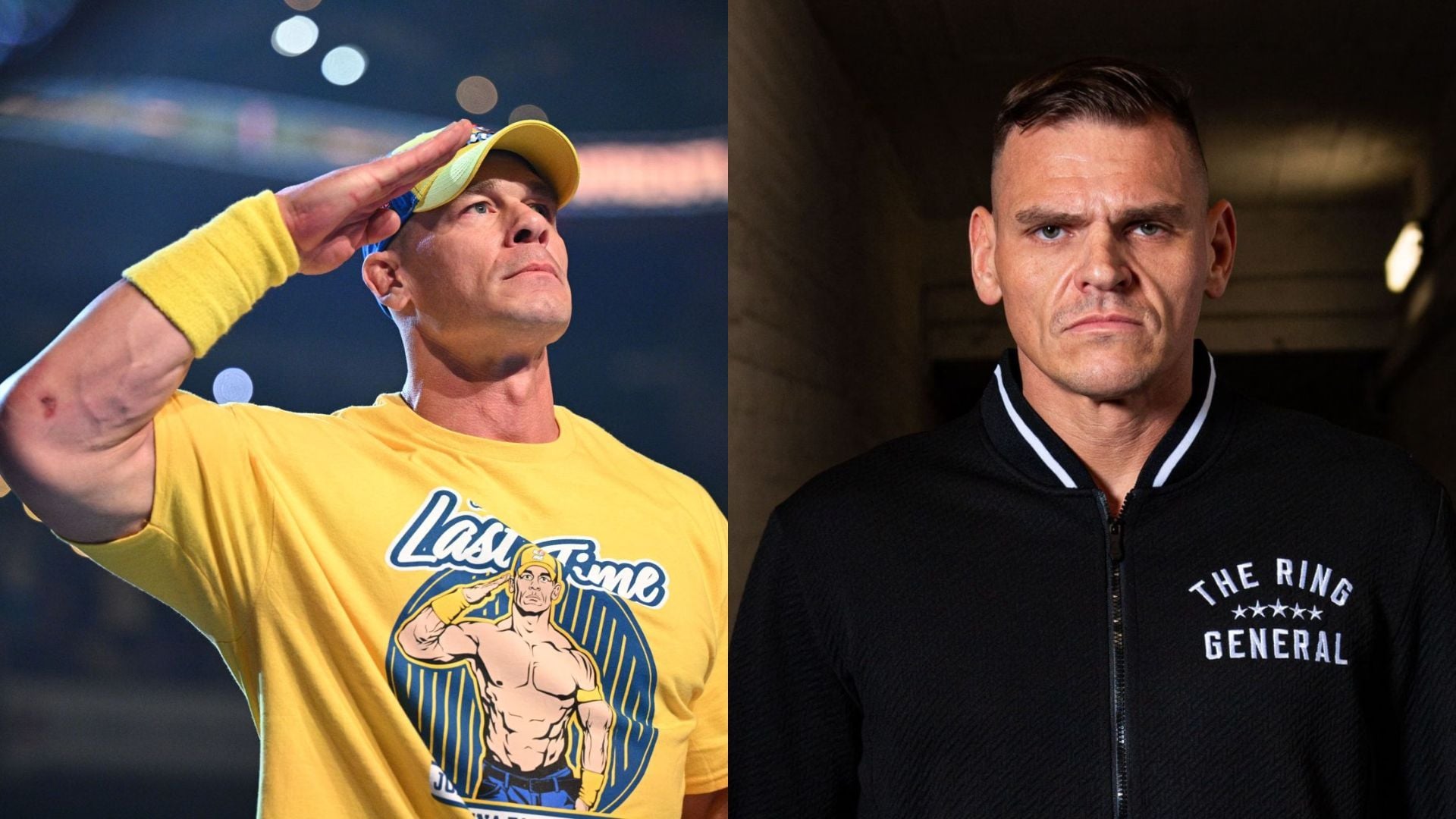
John Cena’s subtle salute to Gunther after his return
John Cena made a surprise appearance on the Oct. 30, 2026 edition of WWE NXT. As he walked to the ring, he stopped in…
Braden Smith Makes NBA Debut With the Pacers
Purdue basketball alum Braden Smith makes NBA debut with the Pacers. Braden Smith, the former Purdue Boilermakers guard, stepped onto an NBA floor for…
Red Wings vs. Golden Knights Live Score and Game Updates
NHL.LIVE: Detroit Red Wings vs Vegas Golden Knights LIVE STREA.MS NHL Game On TV Coverage 6 Nov 2026. Puck drop is set for 7…
Business leaders face a tough choice with workplace monitoring.
Big Brother 2026 has officially crowned a winner. Rochelle took the title on the live final, hosted by AJ Odudu and Will Best on…
WWE Plans Huge 30th Anniversary Celebration for The Rock
WWE is planning to celebrate 30 years of The Rock this month. Plans include a commemorative championship belt. Special merchandise releases are also in…