WWE’s RKO Trademark Battle Just Got a Brutal Legal Blow
While WWE already holds active trademark registrations for RKO merchandise, its push to expand legal protection to wrestling broadcasts and performances has stalled until early 2027.
The United States Patent and Trademark Office issued a fresh nonfinal refusal on November 3, 2026.
This ruling marks another major hurdle in the sports entertainment giant’s quest to lock down full rights to the three-letter phrase.
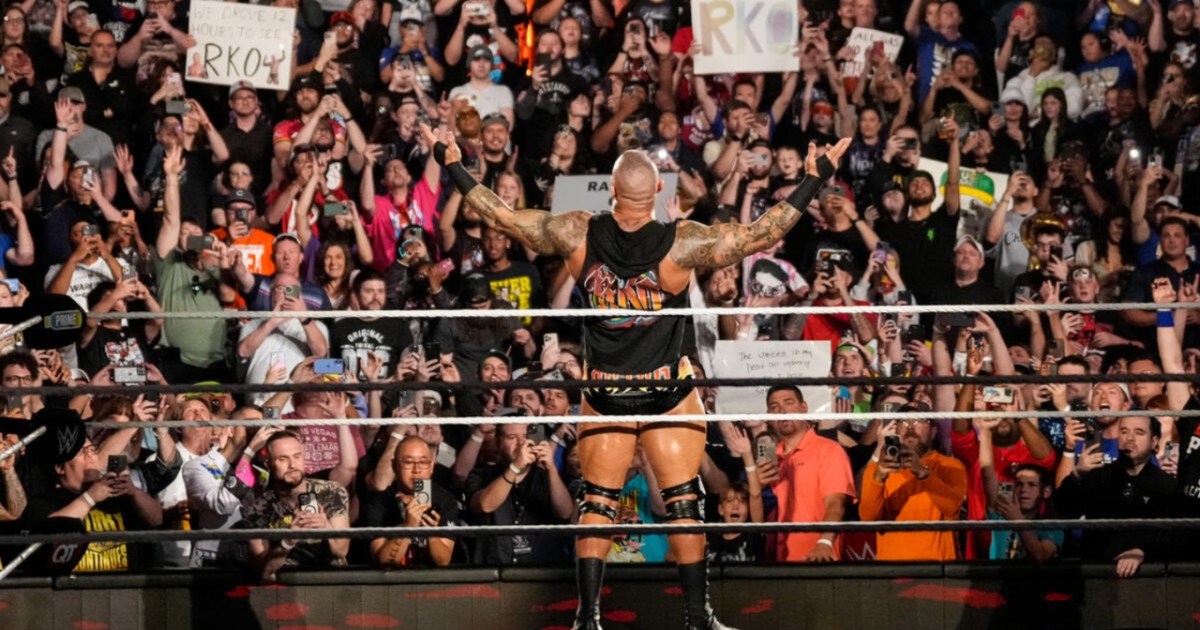
The dispute centers directly on Randy Orton's signature finishing move, known globally to wrestling fans as the RKO.
Yet trademark examiners determined that the move's moniker clashes with existing entertainment properties.
Specifically, federal regulators cited a potential likelihood of confusion with registrations owned by RKO Pictures.
WWE now faces a ticking legal clock to salvage the broad application.
A FAMILIAR WALL AT THE TRADEMARK OFFICE
WWE submitted its latest application for the term on July 6, 2026.
The company sought formal trademark protection covering wrestling exhibitions and performances broadcast through television, radio, and online platforms.
The filing also sought to lock down rights for wrestling news and information distributed over the internet.
However, the USPTO examining attorney found that the proposed mark encroached on territory already claimed by RKO Pictures.
RKO Pictures stands as one of Hollywood's most storied institutions, having distributed legendary motion pictures such as Citizen Kane and It's A Wonderful Life.
The studio holds six active trademark registrations that the trademark office determined could conflict with WWE's filing.
According to official documents, the examining attorney noted that WWE’s filing shares the dominant wording across those six existing studio marks.
Furthermore, one of the movie studio’s registrations features the exact letters RKO in standard, typed characters.
The examining attorney explicitly detailed this concern within the formal ruling.
“Applicant's and registrant's marks all share the sole or dominant literal element ‘RKO,' one of registrant's marks is in typed form and is identical to applicant's mark,” the USPTO stated.
Because both entities operate within the broader entertainment umbrella, federal officials concluded consumers could confuse the two brands.
MERCHANDISE IS SAFE BUT BROADCAST RIGHTS REMAIN IN LIMBO
The ongoing battle highlights an important distinction in federal trademark law between commercial goods and entertainment services.
WWE already possesses active trademark registrations covering RKO merchandise.
That existing ownership allows the promotion to continue selling shirts, hats, and novelty items bearing the famous initials without immediate disruption.
Fans browsing WWE’s shop will continue to find plenty of gear dedicated to Orton's signature strike.
The present dispute instead focuses strictly on performance and broadcast rights.
Securing a mark for television broadcasts and live exhibitions provides a company with total proprietary control over the name in media presentations.
Without an approved service mark, WWE faces ongoing obstacles in fully securing the three-letter brand for digital and television platforms.
Nonetheless, the trademark office's decision does not mean Randy Orton must abandon or rename his devastating finishing maneuver.
The third-generation superstar can continue dropping opponents inside the ring just as he has done for over two decades.
Even so, WWE executives remain determined to obtain the official performance registration that has eluded them for years.

A YEARS-LONG LEGAL TUSSLE
This latest rejection is not an isolated incident for WWE’s legal team.
The promotion has spent years trying to push the RKO performance mark past federal trademark examiners.
WWE originally submitted a performance application for the phrase back in November 2024.
That initial effort encountered identical pushback regarding the classic Hollywood film studio.
Federal examiners held firm against the sports entertainment giant throughout that process.
Those objections culminated in an official final refusal issued in January 2026.
Undeterred by the defeat, WWE refiled its paperwork just six months later on July 6, 2026.
That filing was an attempt to restart the process and address prior government concerns.
The quick issuance of another refusal on November 3 indicates that federal regulators remain unconvinced.
PROVING THE WRESTLING SIGNIFICANCE
To move past the roadblock, WWE must provide substantive evidence directly to federal examiners.
The USPTO explicitly asked WWE to clarify whether the term RKO holds any specific meaning within professional wrestling.
Regulators have questioned whether the phrase qualifies as an established industry term of art.
WWE now must formulate legal arguments showing that wrestling audiences view the letters through an entirely separate lens from cinema history.
Orton’s finishing maneuver stands among the most famous and viral moves in modern wrestling history.
Its pop-culture footprint has spawned endless memes and highlights under the banner of striking from out of nowhere.
Proving that cultural reality in a formal legal brief, however, requires precise documentation and industry evidence.
WWE has roughly three months to build its formal defense against the nonfinal refusal.
The official deadline for WWE to file its response is set for February 3, 2027.
If the company requires additional preparation time, it is permitted to request a three-month extension by paying an applicable administrative fee.
ACTION INSIDE THE RING CONTINUES
While corporate attorneys pore over federal filings, action inside the ring proceeds without pause.
Randy Orton remains a featured headliner on major WWE programming.
The veteran superstar is slated to battle undisputed star Cody Rhodes in a high-stakes Last Man Standing grudge match at Crown Jewel.
Thousands of fans in attendance and millions watching around the world will inevitably look for Orton to strike with his signature move.
The outcome of that bout will delight or crush wrestling spectators worldwide.
Yet back in corporate boardrooms, WWE’s legal department faces an entirely different kind of opponent.
The promotion has until early 2027 to demonstrate that the RKO belongs as firmly in sports entertainment history as Citizen Kane does in cinema.
How should WWE argue the significance of the RKO to convince trademark examiners before the February deadline?
Advertisement
You may also like

NBA champion Steve Kerr trolls Donald Trump with a savage jab
Golden State Warriors head coach Steve Kerr took a sharp, humorous jab at President Donald Trump during his Wednesday media availability, referencing a campaign…

John Cena’s subtle salute to Gunther after his return
John Cena made a surprise appearance on the Oct. 30, 2026 edition of WWE NXT. As he walked to the ring, he stopped in…

Braden Smith Makes NBA Debut With the Pacers
Purdue basketball alum Braden Smith makes NBA debut with the Pacers. Braden Smith, the former Purdue Boilermakers guard, stepped onto an NBA floor for…

Red Wings vs. Golden Knights Live Score and Game Updates
NHL.LIVE: Detroit Red Wings vs Vegas Golden Knights LIVE STREA.MS NHL Game On TV Coverage 6 Nov 2026. Puck drop is set for 7…

Business leaders face a tough choice with workplace monitoring.
Big Brother 2026 has officially crowned a winner. Rochelle took the title on the live final, hosted by AJ Odudu and Will Best on…

WWE Plans Huge 30th Anniversary Celebration for The Rock
WWE is planning to celebrate 30 years of The Rock this month. Plans include a commemorative championship belt. Special merchandise releases are also in…