Father Guilty for Giving Gun Used in School Shooting
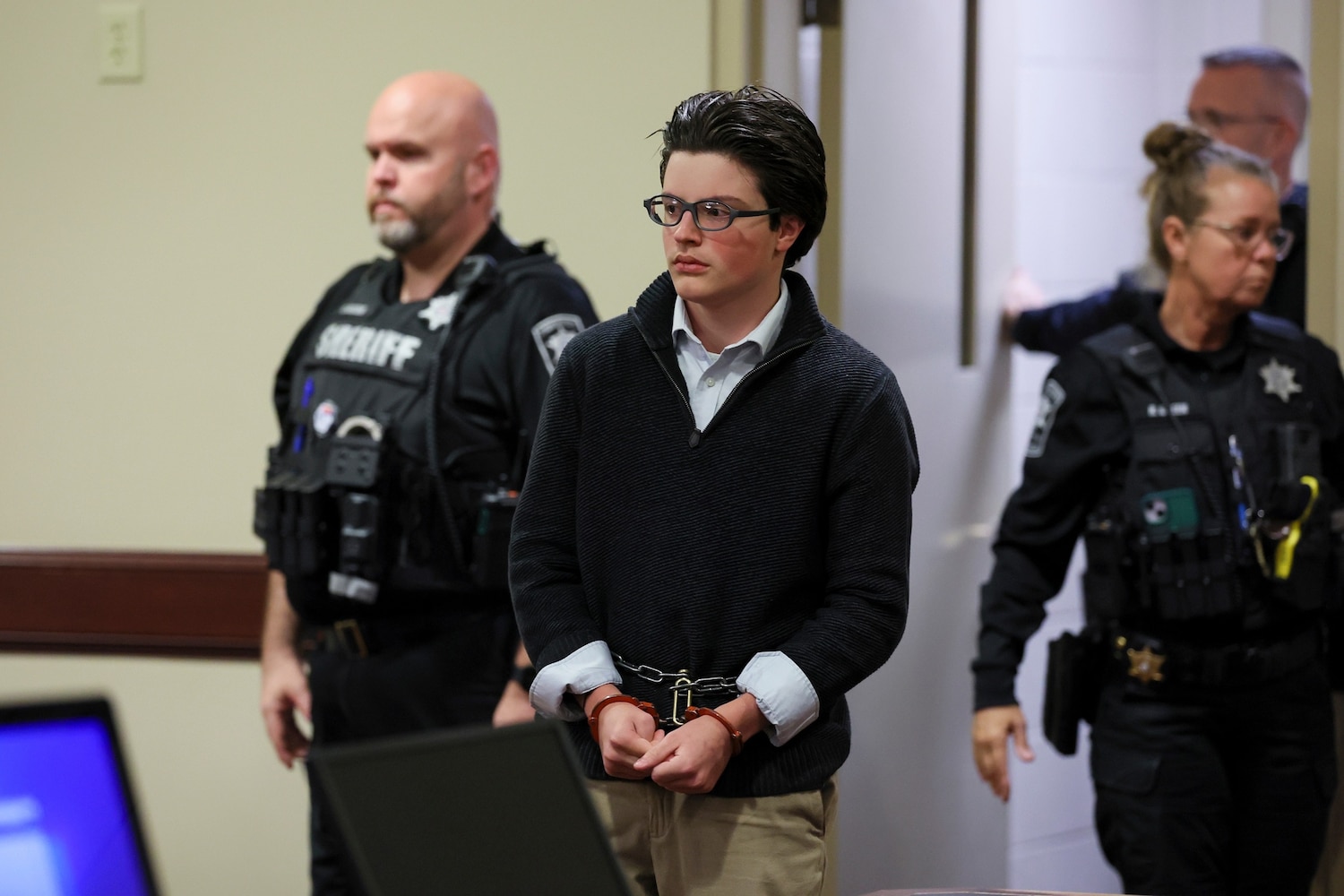
Colin Gray, who gave his son Colt the rifle used in the September 2024 Apalachee High School shooting that killed four, was sentenced in late July.
He was found guilty on all charges, including second-degree murder, involuntary manslaughter and cruelty to children.
The verdict came down in a Georgia courtroom after a trial that drew national attention.
Prosecutors argued that Gray's decision to buy the rifle for his 14-year-old son was a direct cause of the tragedy.
The defense maintained that Gray could not have predicted what his son would do with the weapon.
The jury disagreed.
The sentence represents one of the most significant legal consequences ever imposed on a parent for a school shooting carried out by their child.
Legal experts say the case could set a precedent for how prosecutors handle parental responsibility in gun-related deaths.
Colt Gray opened fire at Apalachee High School in Winder, Georgia, on September 4, 2024.
Four people were killed in the attack: two students and two teachers.
Nine others were injured.
The shooter was apprehended by school resource officers and later charged as an adult.
But the case against the father took a different legal track.
Colin Gray was arrested months after the shooting, as investigators pieced together how his son obtained the weapon.
Records showed the father had purchased the AR-15-style rifle for Colt as a gift.
Prosecutors presented evidence that Gray had been warned by school officials about his son's troubling behavior months before the shooting.
They argued that giving a child with known behavioral issues access to a military-style rifle amounted to criminal negligence.
The jury convicted Gray on all counts after less than a day of deliberation.

The second-degree murder charge was the most serious, carrying a potential sentence of decades in prison.
Involuntary manslaughter charges applied to each of the four victims.
The cruelty to children charges stemmed from the endangerment of minors beyond the shooter himself.
The judge handed down the sentence in late July, making Gray one of the few parents in American history to receive a murder conviction for a crime committed by their child.
The case has reignited debate about gun access and parental accountability.
Some legal scholars argue that holding parents criminally liable for their children's actions could deter future tragedies.
Others warn that the precedent could criminalize ordinary parenting decisions.
Georgia law allows parents to be charged when they knowingly provide a firearm to a minor who then uses it to commit a violent crime.
But the application of second-degree murder in this case goes beyond what state statutes explicitly cover.
Prosecutors used a legal theory known as "felony murder," arguing that the underlying felony of providing a gun to a minor led directly to the deaths.
The defense plans to appeal, citing what they call an unprecedented expansion of parental liability.
Colt Gray's case remains separate from his father's.
The teenage shooter has pleaded guilty and is serving a life sentence without the possibility of parole.
But the father's conviction adds a second layer of legal accountability to the tragedy.
Families of the victims expressed relief at the verdict.
Some said they hoped the sentence would send a message to other parents who might consider giving firearms to troubled children.
The case has been closely watched by gun rights advocates, who worry it could erode Second Amendment protections.
They argue that responsible gun owners should not be held criminally liable for the independent actions of their children.

But prosecutors countered that this case was not about responsible gun ownership.
They said it was about a father who ignored clear warning signs and handed a weapon to a child who should never have had one.
The trial included testimony from school counselors who said they had contacted Gray about his son's drawings of violent scenes and threats against classmates.
Gray reportedly dismissed those concerns, according to testimony.
Weeks later, the shooting occurred.
The rifle used in the attack was the same one Gray had purchased and given to his son.
The case has prompted some state legislatures to consider new laws making it easier to prosecute parents who provide firearms to minors.
Federal law already prohibits selling handguns to anyone under 21, but rifles and shotguns can be legally transferred to minors in many states with parental permission.
Georgia law allows minors to possess long guns with parental consent.
But the criminal charges against Gray relied on the argument that consent does not shield a parent from liability when the child uses the weapon to commit murder.
The appeals process is expected to take months, if not years.
Legal analysts say the Georgia Supreme Court may ultimately decide whether the conviction stands.
If it does, the case could become a landmark in American criminal law.
It would establish that parents can be held accountable not just for negligence, but for murder, when their child uses a firearm they provided.
That possibility has both supporters and critics watching the appeal closely.
For now, Colin Gray remains in custody, serving a sentence that will keep him behind bars for decades.
The question that lingers after the verdict is one that families, lawmakers and legal experts are still grappling with.
Should parents who give firearms to minors face murder-level charges when those weapons are used in a school shooting?
Advertisement
You may also like
Tense Elena Rybakina Hot-Mic Moment Sparks Fan Outrage
"Just sue WTA." "So messy." That is the reaction spreading across social media after a second hot-mic incident in three days at the WTA…
Olivia Miles reveals the one thing that makes Caitlin Clark 'annoying' to face
Olivia Miles, the 2026 Kia WNBA Rookie of the Year, did not hold back when asked what it is like to guard Caitlin Clark.…

Kyle Larson’s title could slip away at Homestead—here’s how
Kyle Larson enters Homestead-Miami Speedway with a 67-point lead over Christopher Bell and a 70-point lead over Denny Hamlin. A third NASCAR Cup Series…
Rory McIlroy fires back at rare penalty that cost him 2 shots
Rory McIlroy entered the scorer's tent after his opening round at the 2026 Abu Dhabi Aldar Championship thinking he would sign for a four-under…
Belichick's ex attends UNC game despite split
Bill Belichick’s ex-girlfriend Jordon Hudson reportedly attended the UNC-Miami game on Saturday, Oct. 31, according to People magazine — just one day after news…
Stephen A. Smith and Skip Bayless clash over Lakers thriving without LeBron
Stephen A. Smith and Skip Bayless reignited their long-dormant rivalry Thursday morning on “First Take,” this time over whether the Los Angeles Lakers are…