Sophie Cunningham Calls Out Lenient Modern Coaches And Demands Return To Tough Love
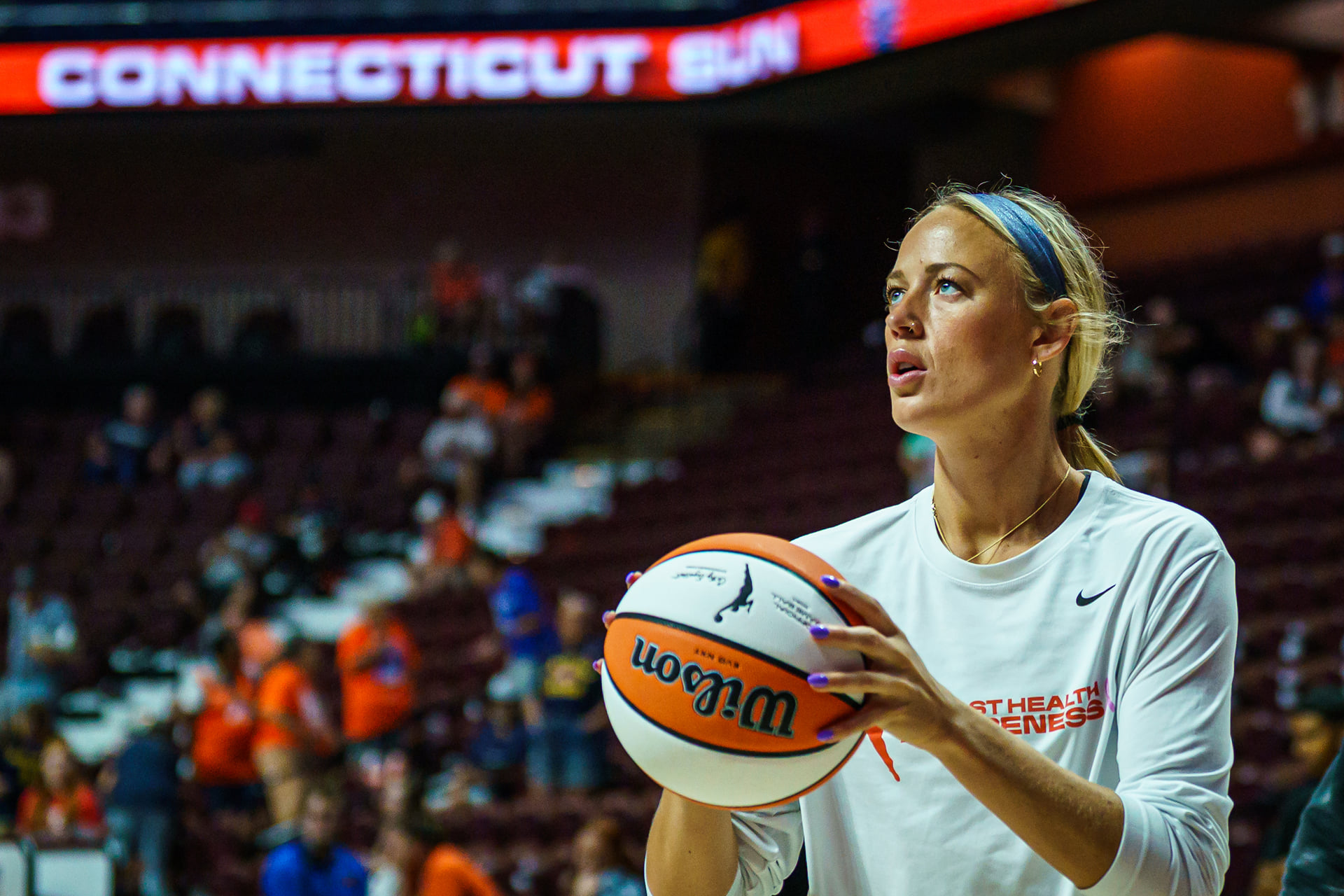
Sophie Cunningham advocated for a return to demanding coaching standards, arguing modern coaches have become too lenient on athletes.
The nine-year WNBA veteran addressed the issue during an episode of her podcast, the No Hesitation Show.
She was joined on the program by renowned basketball trainer Drew Hanlen.
Together, the pair examined how instructional dynamics have shifted across both youth basketball and elite competition.
Cunningham expressed frustration with what she perceives as a lack of discipline and rigor in today's game.
She believes that mentors have become overly cautious when communicating with their players.
In her view, uncompromising accountability is essential for athletic growth.
She warned that shielding competitors from tough feedback only weakens their long-term development.
A DEMAND FOR OLD-SCHOOL STANDARDS
Cunningham made her stance clear with an explicit call to action for the sport.
“Bring back hard coaching,” Sophie said.
She credited that intense coaching style with paving her own path to the professional ranks.
“That is why all of us pros are where we are, because we had coaches who truly cared about us and loved us and saw our full potential,” she explained.
She noted that authentic care from a coach does not mean avoiding confrontational instruction.
“But with that, they didn’t let us slip… If we weren’t going hard enough, or we weren’t doing that, they were on our a**,” Cunningham stated.
She stressed that modern players must learn how to separate emotion from instructional critique.
“You can’t always listen to their tone,” Cunningham said.
“You have to listen to the message… I do think that coaches are too soft on athletes nowadays… Maybe it’s the parents, maybe it’s the athletes who can’t take it, but then y’all shouldn’t be in the sport because if your coach is on you, that means they see something in you.”
Her comments challenge a prevailing shift toward softer communication in athletic development.

COACHING YOUNG ATHLETES ACROSS GENDERS
The conversation also turned to how coaching philosophies differ across gender lines.
Cunningham agreed with Hanlen that instructors often treat female players with excessive lenience.
She noted that coaches tend to be far harder on male athletes than on young girls.
Cunningham argued that basketball mentorship should not depend on whether a player is male or female.
In her view, lowering standards for young girls does them a disservice as they advance in the sport.
Athletes who aspire to reach the highest levels need intense preparation from early childhood.
External factors, including overprotective parents, have made coaches hesitant to raise their voices or push boundaries.
Cunningham believes athletes must build resilience rather than expecting mentors to soften their expectations.
Those unable to endure rigorous instruction, she argued, may not belong in competitive sports.
THE PERSPECTIVE OF DREW HANLEN
Hanlen brought extensive high-level experience to the podcast discussion.
As a prominent skills development coach, he operates at the highest levels of the game.
Hanlen works directly with several of the NBA's most recognizable superstar talents.
His client list includes Boston Celtics forward Jayson Tatum.
He also directs offseason skill work for Indiana Pacers guard Tyrese Haliburton.
Former league Most Valuable Player Joel Embiid trains closely under Hanlen's guidance as well.
Hanlen has spent countless hours observing the preparation habits of world-class athletes.
His firsthand experience with elite performers reinforces the value of demanding preparation.
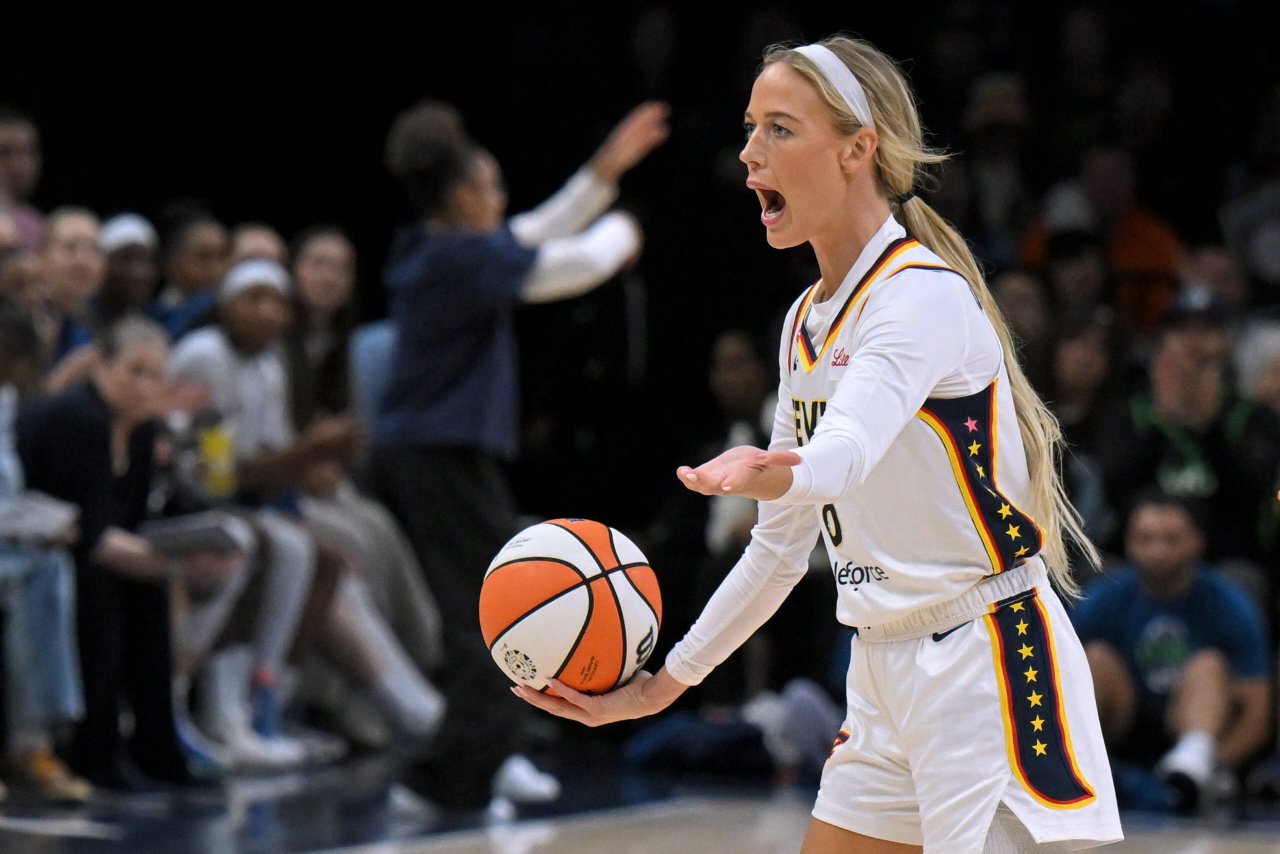
Both Hanlen and Cunningham agreed that great players crave honest evaluation rather than flattery.
QUESTIONING UNCONTESTED MISSED LAYUPS
Cunningham’s critique of modern fundamentals extended directly onto the court.
She put Hanlen on the spot by raising an uncomfortable reality regarding professional execution.
“Why do women basketball players, why do we miss so many wide-open layups?”
Cunningham asked Hanlen during the episode.
She voiced genuine bewilderment over how often professional players fail to convert clean chances.
“It’s a joke because it actually happens,” Cunningham said.
“Like, what the f*** is that?” she added during the podcast.
Hanlen chuckled before offering his perspective on physical differences between men and women.
“I think the biggest thing is athleticism,” Hanlen replied.
“You’re not as close to the basket and stuff like that,” he explained.
Hanlen also noted that physical strength affects how players absorb contact around the rim.
“I think another thing is strength isn’t the same as the men’s, where they can take the bumps and the hits of physicality when you’re finishing over…” Hanlen continued.
However, he conceded that physical traits cannot justify misses when no defender is nearby.
“The open ones, I have no answer for you,” Hanlen admitted.
EXAMINING THE NUMBERS AT THE RIM
League statistics provide helpful context for Cunningham's pointed questions.
According to Basketball Reference, WNBA players converted 67.4% of attempts within zero to three feet of the basket over the last full season.

During that same period, NBA players completed 70.3% of their attempts inside that same three-foot zone.
While that shooting percentage gap remains relatively small, volume magnifies every single miss.
Tracking data reveals that layups account for nearly 36% of all field goal attempts in the WNBA.
By contrast, layups make up only 26.4% of overall shot attempts across the NBA.
Because the women's game relies heavily on close-range finishing, missed layups carry a heavier impact.
Every failed attempt under the rim alters momentum and stands out noticeably to viewers.
PHYSICAL DISPARITIES AND RIM HEIGHT
Physical dimensions between the two leagues also shape play around the rim.
The rim is set at the identical height of ten feet in both the WNBA and the NBA.
However, the athletes competing on those floors possess very different physical profiles.
The average NBA player stands at 6 feet 6 inches tall.
In the WNBA, the average player height sits at approximately 6 feet tall.
That six-inch height difference significantly alters proximity and vertical leverage near the rim.
Roster compositions highlight this stark physical contrast.
According to CraftedNBA, the NBA currently lists just five active players under 6 feet tall.
In contrast, the WNBA rostered 89 players under 6 feet tall over the course of last season.
Taller athletes reach closer to the 10-foot cylinder, simplifying finishes against defensive pressure.
Yet uncontested misses remain difficult to justify through physical measurements alone.
CUNNINGHAM'S EXPANDING MEDIA PLATFORM

Cunningham has emerged as a prominent and fearless voice across the basketball landscape.
Known on the court as a lights-out shooter, she has spent nine seasons in the WNBA.
Her contract with the Indiana Fever expired, placing her ahead of an intriguing free agency period.
Her expanding media profile has broadened her audience well beyond traditional sports fans.
Cunningham's appearances frequently spark widespread online discussion.
Just days before her conversation with Hanlen, she appeared on Theo Von’s This Past Weekend podcast.
She has never hesitated to address polarizing subjects, including earlier comments that ignited debates surrounding transgender athletes.
Her candid approach has made her one of the league's most talked-about personalities.
SCRUTINY AMID HISTORIC LEAGUE EXPANSION
Cunningham’s unfiltered critique arrives during a period of rapid growth for women's basketball.
The WNBA has seen dramatic increases in viewership, fan engagement, and cultural footprint.
In several business metrics, the league's year-over-year growth has outpaced the NFL and the NBA.
However, heightened popularity brings unprecedented scrutiny to every aspect of the game.
Some observers worry that openly questioning missed layups fuels negative stereotypes among anti-WNBA critics.
Yet Cunningham chose to address the topic as an objective reality based on her professional experience.
Rather than ignoring flaws, she believes confronting fundamental weaknesses is necessary for genuine improvement.
THE ROLE OF ACCOUNTABILITY IN ATHLETIC GROWTH
Cunningham remains steadfast in her belief that toughness builds champions.
She views rigorous coaching not as hostility, but as a genuine investment in an athlete's ceiling.
Throughout basketball history, demanding leaders have driven players to reach levels they could not achieve alone.
Cunningham fears that avoiding uncomfortable conversations will ultimately hinder the next generation.
Her call for a return to hard coaching challenges coaches, athletes, and parents to reconsider modern instructional methods.
Do you agree with Sophie Cunningham that modern basketball coaches are being too soft on athletes?
Advertisement
You may also like
The Chicks Spark Outrage After Postponing Hollywood Show Ninety Minutes Before Curtain Call
The Chicks called off their November 2 concert at Hollywood's Dolby Theatre just ninety minutes before showtime due to illness, leaving arriving fans stranded…
Daniil Medvedev Threatens To Retire In Paris After Seven Consecutive Weeks On Tour
During his heated changeover at the Paris Masters, Daniil Medvedev claimed he had torn his adductor and questioned whether he should retire from the…
Melissa Rycroft's Texas Legal Timeline: Back-to-Back DWI Arrests Just Over a Year Apart
Melissa Rycroft's recent arrest marks her second DWI charge in Texas, coming just months after she pleaded guilty to an initial September 2025 incident…
Lee Westwood Reveals He Is Now Unemployed After LIV Golf Rescue Deal Falls Apart
Former world number one Lee Westwood revealed he is currently unemployed after refusing terms for a revamped tour while LIV Golf faces being wound…
LIV Golf Faces Potential Closure After $300M Rescue Deal Collapses as Stars Walk Away
LIV Golf is facing potential closure after a proposed $300 million rescue deal from BC Partners Credit collapsed due to a failure to secure…
USPTO Tasks WWE To Explain What Randy Orton's Iconic RKO Actually Means In Wrestling
The United States Patent and Trademark Office has officially tasked WWE with explaining whether the letters 'RKO' carry any specific meaning within professional wrestling.…