Former Foster Youth Wins School Board Seat in Prince George’s
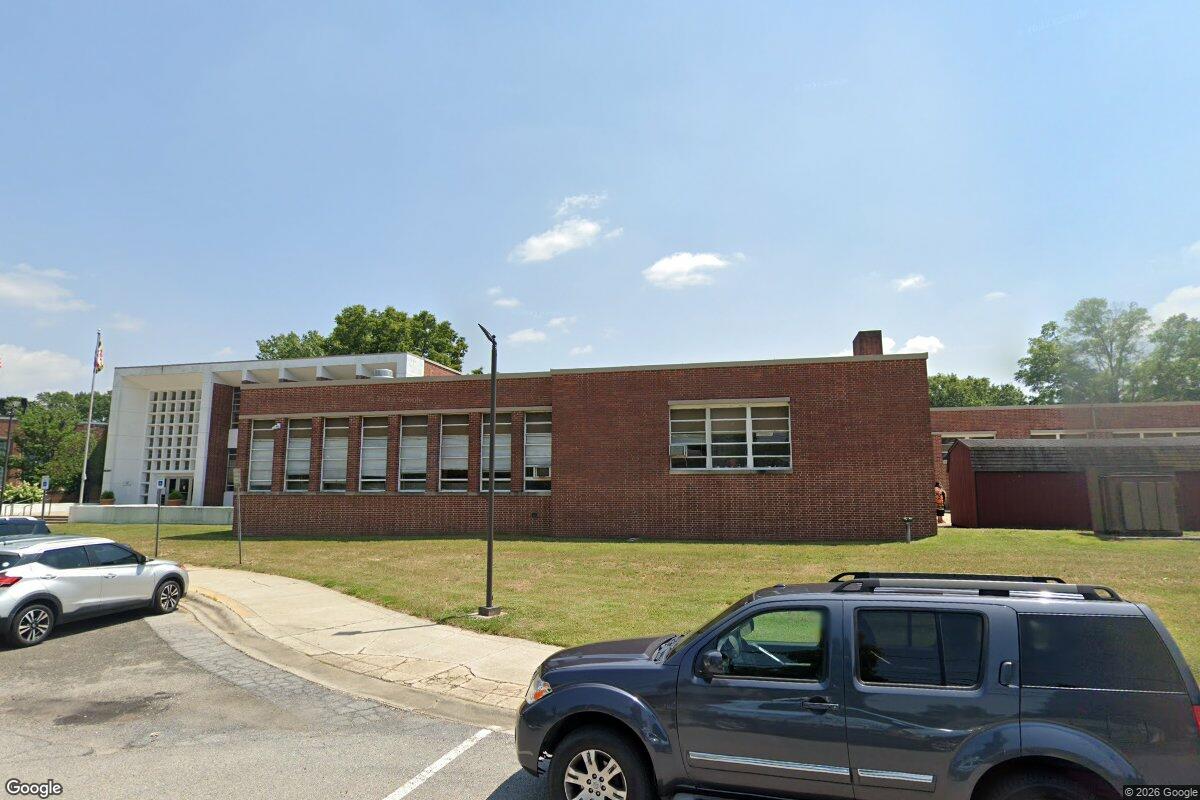
Juan Arango-Millan, a 27-year-old Brentwood Town Council member who once lived in foster care, has won the District 3 seat on the Prince George's County school board.
Unofficial results reported as of 2:30 p.m. Wednesday showed Arango-Millan leading Jamie McGonnigal by a wide margin.
All 28 Election Day precincts had reported, though provisional ballots had not yet been tallied.
Arango-Millan pulled in 8,368 votes, or 58.4%.
McGonnigal received 5,892 votes, or 41.1%, according to The Baltimore Banner.
The winner is a former educator who now works in workforce development.
He is set to succeed Pamela Boozer-Strother, whose term expires at the end of this year.
District 3 covers Hyattsville, University Park, Brentwood, North Brentwood, Mount Rainier and Edmonston.
Arango-Millan built his campaign around protecting classroom resources amid district budget cuts.
He also focused on improving school facilities and strengthening communication with families, according to the same report.
He emphasized directing Blueprint for Maryland's Future funding toward classrooms.
He called for improving academic performance and expanding outreach to Spanish-speaking families.

Speaking with The Diamondback before the election, Arango-Millan said he wanted to represent the county's Spanish-speaking community.
He said he wanted to improve communication with vulnerable parents, as The Diamondback reported.
He told the outlet he hoped to close equity gaps and improve school facilities and amenities.
He also said the school board needed better solutions for students who miss instruction because of fears tied to immigration enforcement.
Arango-Millan grew up in foster care and experienced housing instability.
He wrote that public schools were his lifeline, and those experiences shaped his commitment to public education.
McGonnigal, a 51-year-old Hyattsville Elementary School PTA leader and parent of a district student, conceded defeat.
He wrote that he was deeply disappointed, per the same account.
He said he planned to step back from his advocacy work to spend time with his family.
McGonnigal had campaigned on improving transportation reliability, strengthening accountability and giving families a greater voice in school decisions, the report noted.
McGonnigal previously told Patch he had served as president of the PTA and was active in the school community for years.
The school board race drew attention because of the stark contrast between the two candidates.

Arango-Millan's background in foster care set him apart from typical school board candidates in the county.
Prince George's County Public Schools is one of the largest school systems in Maryland, serving more than 130,000 students.
The district has faced ongoing challenges with budget shortfalls, aging facilities and achievement gaps between student groups.
Blueprint for Maryland's Future is a state law passed in 2021 that pumps billions of additional dollars into public education.
The law requires increased funding for early childhood education, teacher salaries, college and career readiness programs and special education.
School boards in Maryland have significant authority over local education policy, including budget approval, curriculum decisions and superintendent hiring.
District 3 includes several communities just northeast of Washington, D.C., with a diverse population that includes many immigrant families.
Spanish-speaking families make up a significant portion of the district's population.
Arango-Millan's focus on outreach to those families was a central theme of his campaign.
He argued that many parents do not engage with the school system because of language barriers and fear of government agencies.
His own experience in foster care gave him a personal stake in how public schools serve vulnerable children.
In Maryland, foster youth often face higher rates of homelessness, lower graduation rates and less access to mental health services than their peers.

Arango-Millan has said that public schools provided him stability and opportunity when he had little else.
His win marks a shift in representation on the board, which has historically been dominated by longer-term residents and education professionals.
The election results are unofficial until all provisional ballots are counted and certified by the county board of elections.
Provisional ballots are cast by voters whose eligibility could not be confirmed at the polling place, and they are reviewed after Election Day.
In close races, provisional ballots can change the outcome, but Arango-Millan's lead appeared substantial enough to hold.
McGonnigal's concession indicated that he did not expect the provisional count to close the gap.
The new board member will take office when Boozer-Strother's term expires at the end of the year.
Arango-Millan will then join a board grappling with how to implement the Blueprint for Maryland's Future while facing a tight county budget.
County leaders have warned that the state's increased education funding requirements may force local tax increases or cuts to other services.
School board members in Prince George's County are elected to four-year terms and serve without pay, though they are eligible for a small stipend.
The board sets policy for the school system but does not manage day-to-day operations, which are handled by the superintendent.
Arango-Millan's victory was one of several notable local election results in Prince George's County this cycle.

Other races included county council seats, sheriff and state's attorney contests.
The school board race drew less attention than countywide offices but may have more direct impact on families with children in public schools.
Arango-Millan has not yet announced specific priorities for his first months on the board.
His campaign platform, however, gives a clear indication of what he intends to push for.
He wants to ensure that budget cuts do not fall hardest on classrooms serving low-income students.
He wants to improve school buildings that have fallen into disrepair.
He wants to create more accessible communication channels for parents who do not speak English fluently.
And he wants to address the issue of students avoiding school because of immigration enforcement fears.
That last issue is particularly sensitive in Prince George's County, which has a large immigrant population.
School officials have reported that some students miss weeks of school at a time after immigration raids in their neighborhoods.
Arango-Millan has said the school board needs to develop clear policies to support those students and their families.
His background gives him credibility on that issue that few other candidates could claim.

He knows what it is like to be a child without stable housing or a reliable support system.
He knows that for many children, school is the only safe place they have.
He has said he will bring that perspective to every decision the board makes.
The election results were met with cautious optimism by some education advocates in the county.
Others expressed disappointment that McGonnigal, a well-known PTA leader, did not prevail.
McGonnigal's supporters noted his years of volunteer work and his deep knowledge of school operations.
But Arango-Millan's message of change and representation resonated with a majority of voters in District 3.
The question now is whether he can deliver on the promises that got him elected.
School board seats come with limited power and even more limited resources.
Arango-Millan will have to work with four other elected board members and a superintendent who may have different priorities.
He will also have to navigate county politics, including the county executive and county council, who control school funding.
His experience on the Brentwood Town Council gives him some grounding in local government.
But a town council is a very different arena from a school board that oversees a billion-dollar budget and tens of thousands of students.
He will have to learn quickly.
The provisional ballot count is expected to be completed within the next two weeks.
After that, the election will be certified, and Arango-Millan's victory will be official.
Then the real work begins.
Advertisement
You may also like

Florida Gators name starting QB for Oklahoma showdown
Florida Gators showcase roster depth in season-opening win over Canes But the bigger story this week is on the other side of the ball.…

Lee eldest son sues lawmaker over 'emperor golf' defamation claims
Lee Dong-ho, the eldest son of South Korean President Lee Jae-myung, has filed a criminal defamation complaint against Rep. Joo Jin-woo of the People…
Ryan Day reveals promising Julian Sayin recovery update
Ohio State head coach Ryan Day says the Buckeyes have received positive news on the injury to starting quarterback Julian Sayin. Day made the…

King Charles' estate sues UK's oldest Indian restaurant.
King Charles’s estate in court battle to evict UK’s oldest Indian restaurant. The Crown Estate, the property portfolio owned by the monarch, wants the…

Paige Bueckers Wins 2026 WNBA Community Leadership Award
The WNBA announced Thursday that Dallas Wings guard Paige Bueckers has been named the recipient of the 2026 Dawn Staley Community Leadership Award. It…

The Rock’s NFL Failure Was the Secret to His WWE Success
Did You Know The Rock Once Wrestled in Bangor, Maine? One of the most recognizable people on the planet has performed in our Queen…