King Charles Condemns Slavery As "Monstrous Injustice" While Refusing Apology And Reparations
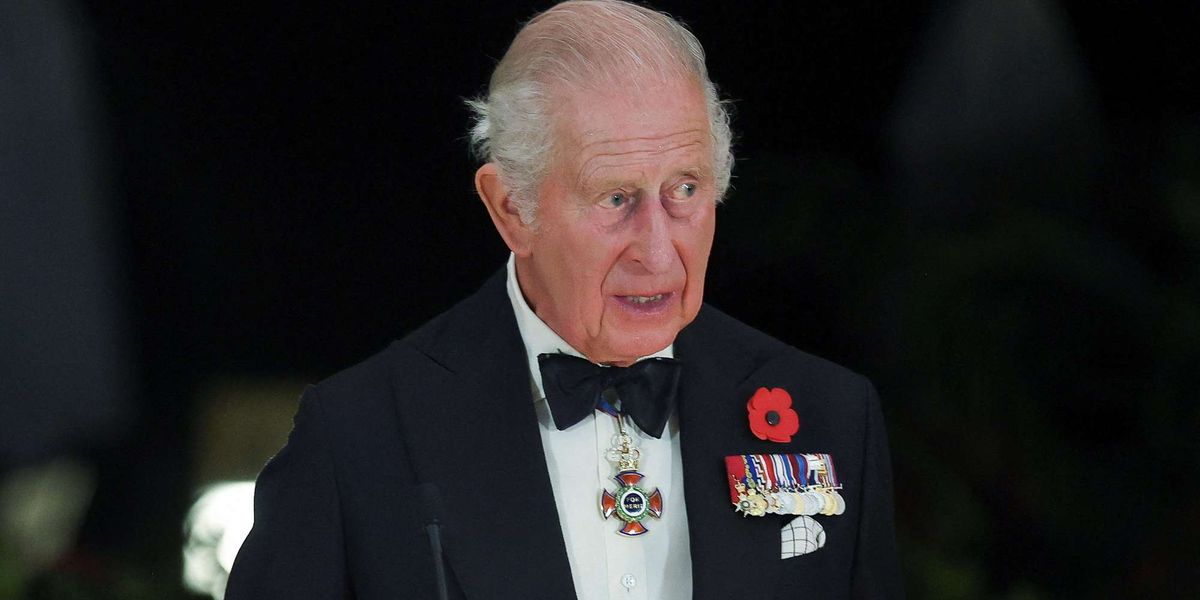
Addressing leaders from 56 member states at the Commonwealth summit in Antigua, King Charles described the transatlantic slave trade as a monstrous injustice that fills his heart with horror, yet firmly stopped short of issuing a formal royal apology or agreeing to financial restitution.
The British monarch delivered his address before heads of government gathered for the biennial summit in the Eastern Caribbean.
His remarks arrived amid intense diplomatic pressure from regional leaders demanding formal accountability and financial compensation.
Charles acknowledged the deep and enduring pain caused by the historical atrocities committed under the British Empire.
He explained to delegates that the transatlantic trade in enslaved persons continues to cast a long shadow across member nations.
The King revealed that he had sought to deepen his own personal understanding of the issue by listening, learning, and looking.
He then delivered a heartfelt assessment of Britain's past involvement in human bondage.
"As I have said before, that shameful chapter of history is one that fills my heart with horror and my soul with the most profound personal sorrow," the King told the assembled leaders.
He insisted that modern societies must find a way to move beyond historic trauma toward joint cooperation.
"And yet history also teaches us that evil need not have the last word; that character and courage can combine to overcome the most monstrous injustice," Charles declared.
A CAREFUL LINE ON MONARCHICAL NEUTRALITY
Despite the powerful emotional language, the King did not offer a formal state apology on behalf of the Crown.
He also declined to open discussions regarding direct financial restitution for affected nations.
Palace officials clarified that King Charles remains politically neutral as a constitutional monarch.
The royal household indicated that it would not be appropriate for the sovereign to unilaterally announce changes to British government policy.
Historically, the United Kingdom has only been prepared to express sincere sorrow for the great suffering endured by enslaved Africans on regional plantations.
The King instead urged Commonwealth delegates to direct their energies toward future partnerships.
He stressed that current generations cannot alter the tragic events carried out by those who came before them.
Charles argued that nations must learn from historic suffering to construct stronger institutional and economic ties across the 56-nation bloc.
CARIBBEAN LEADERS DEMAND REPAIR
Caribbean Community leaders quickly voiced their dissatisfaction with expressions of regret that avoid financial repair.
Leaders across the Afro Commonwealth have intensified their calls for both a formal apology and monetary reparations.
St. Lucian Prime Minister Phillip Pierre, who serves as the chair of the Caricom bloc, forcefully countered the British stance.
Pierre made it clear that regional heads of government do not accept assertions that reparations are the wrong solution.
He emphasized that historical documentation demonstrates total British state responsibility for the trade.
"The British state did not simply tolerate slavery," Pierre asserted.
"It legislated for it, protected it, and profited from it," the St. Lucian prime minister added.
Pierre warned British officials that verbal sentiments alone cannot heal centuries of structural disadvantage.

"An apology without repair is incomplete," Pierre stated.
He insisted that any modern initiative aimed at rectifying history must measure real vulnerability rather than income alone.
Pierre also reminded London of the unequal precedents established during the colonial era.
British authorities historically provided massive financial compensation to slave owners and plantation operators following abolition.
By contrast, the millions of enslaved human beings who suffered on those plantations received nothing.
Pierre maintained that Caribbean governments are prepared to negotiate, but will not allow London to dictate terms.
"A dialogue that begins by placing reparations outside the room cannot be a complete dialogue," Pierre warned.
POLITICAL DIVISIONS IN LONDON
The Commonwealth summit was marked by noticeable friction between the approaches of the King and the British government.
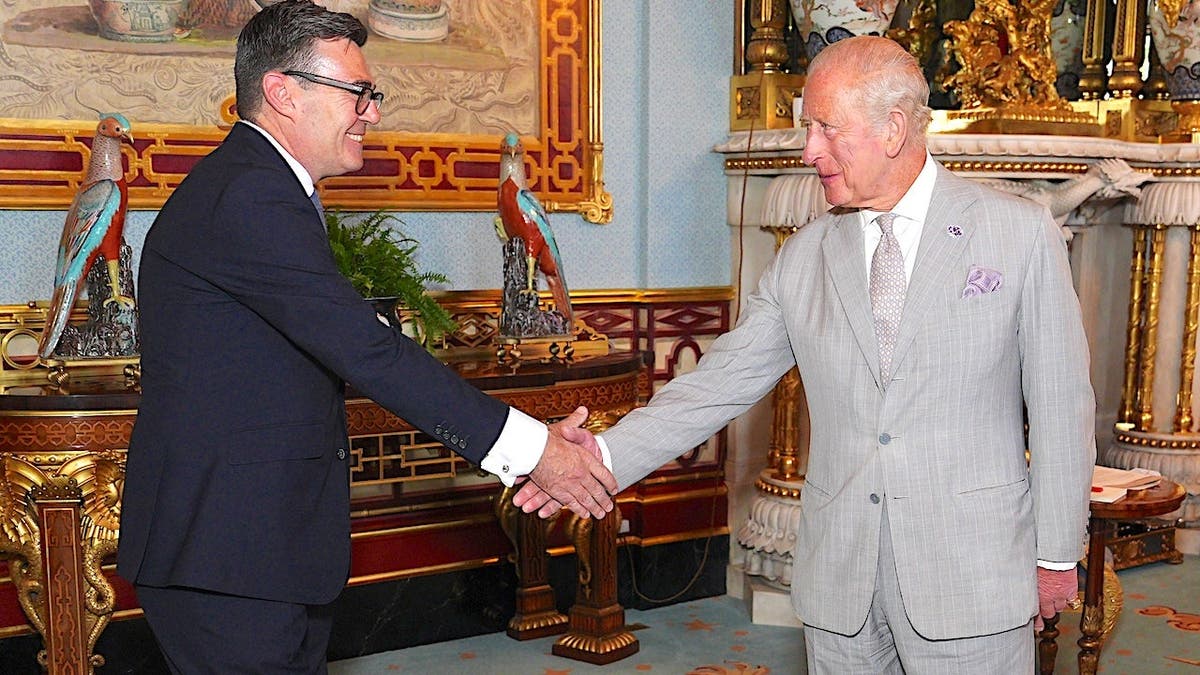
British Prime Minister Andy Burnham accompanied King Charles on the tour to Antigua.
Burnham sparked regional attention over the weekend by publishing an opinion piece in the Guardian newspaper.
In that article, Burnham wrote that affected nations had spent decades asking for an honest conversation about the slave trade.
The prime minister characterized the transatlantic trade as a brutal and barbaric violation.
Burnham asserted that the modern British state must finally face up to its past.

Caribbean leaders seized on Burnham's published remarks as the clearest signal yet from London regarding accountability.
The prime minister subsequently held direct bilateral talks in Antigua with Barbados Prime Minister Mia Mottley.
A statement from Downing Street noted that Burnham and Mottley discussed establishing a structured dialogue for communities impacted by slavery.
Reports from the BBC indicated that the British government may be preparing a formal state apology during its G20 presidency next year.
A PROPOSAL FOR AID INSTEAD OF PAYOUTS
While Burnham appeared open to a future apology, he drew a firm line against direct cash payouts.
The prime minister explicitly ruled out reparations during conversations with reporters at the summit.
"I’ve been very clear that we do not support reparations," Burnham told the press corps.
He argued that London prefers to focus on contemporary economic development and debt management.
"It’s not the case that we don’t support countries in the Commonwealth around development helping them with debt issues that they’ve got," Burnham added.
Rather than paying reparations, Burnham announced an infrastructure package for the Caribbean region.
The United Kingdom will provide 48.2 million euros, equal to 40 million pounds, over the next three years.
Those funds will target critical regional infrastructure, including renewable energy initiatives.
The British government is also advancing a broader debt reset plan for struggling Commonwealth countries.

Former British prime minister Gordon Brown has been tasked with leading that debt reset initiative.
THE WEIGHT OF HISTORY
The contentious debate in Antigua unfolds against a devastating historical record.
Historians estimate that between 10 million and 15 million enslaved Africans were forcibly transported to the Americas over four centuries.
Britain's maritime empire played an immense role in driving that transatlantic trade between the 17th and 19th centuries.
Historical records indicate that British vessels forcibly transported more than 3.2 million African people.
British industries and institutions profited enormously from plantation wealth throughout that era.
London frequently emphasizes that it led the global campaign to dismantle human bondage by passing the Abolition of Slavery Act in 1833.
Yet Caribbean leaders argue that abolition did not erase the systemic impoverishment inflicted upon their islands.
Today, the Commonwealth encompasses 56 sovereign member nations spread across the globe.
The combined economies of those 56 states account for roughly 15 percent of total global gross domestic product.
THE SUMMIT DRAWS TO A CLOSE
The ongoing biennial summit in Antigua and Barbuda is scheduled to conclude its four-day program on November 4.
Prior to arriving in Antigua late Friday, King Charles made official stops in the Bahamas and Guyana.
At every destination, the monarch encountered renewed demands to settle the unpaid historical accounts of empire.
For now, the British crown remains anchored strictly to its posture of personal sorrow and constitutional neutrality.
Caribbean nations, however, have made it clear that the demand for true repair will remain at the top of the agenda.
Do you agree with King Charles's stance of expressing deep personal sorrow while keeping the monarchy focused on forward-looking partnerships instead of financial reparations?
Advertisement
You may also like
Wood Brothers Breaks Silence After Josh Berry Wrecked Alliance Partner Ryan Blaney At Martinsville
Team Penske shares a direct technical alliance with Wood Brothers Racing, making Josh Berry's race-ending collision with Penske driver Ryan Blaney an especially awkward…
How Saudi Arabia's PIF Strategy Shift After Iran War Triggered LIV Golf's Collapse
Months after the start of the Iran war, Saudi Arabia's Public Investment Fund changed its investment strategy in April and decided it would stop…
RFK Racing Replaces Brad Keselowski With Ryan Preece in the Iconic No. 6 Ford for 2027
RFK Racing announced that 36-year-old Ryan Preece will replace departing co-owner Brad Keselowski behind the wheel of the No. 6 Ford Mustang starting in…

The Chicks Spark Outrage After Postponing Hollywood Show Ninety Minutes Before Curtain Call
The Chicks called off their November 2 concert at Hollywood's Dolby Theatre just ninety minutes before showtime due to illness, leaving arriving fans stranded…

Daniil Medvedev Threatens To Retire In Paris After Seven Consecutive Weeks On Tour
During his heated changeover at the Paris Masters, Daniil Medvedev claimed he had torn his adductor and questioned whether he should retire from the…

Melissa Rycroft's Texas Legal Timeline: Back-to-Back DWI Arrests Just Over a Year Apart
Melissa Rycroft's recent arrest marks her second DWI charge in Texas, coming just months after she pleaded guilty to an initial September 2025 incident…