USC Settles Lawsuit After NIL Collective Used Morals Clause To Cut Chad Baker-Mazara’s Pay
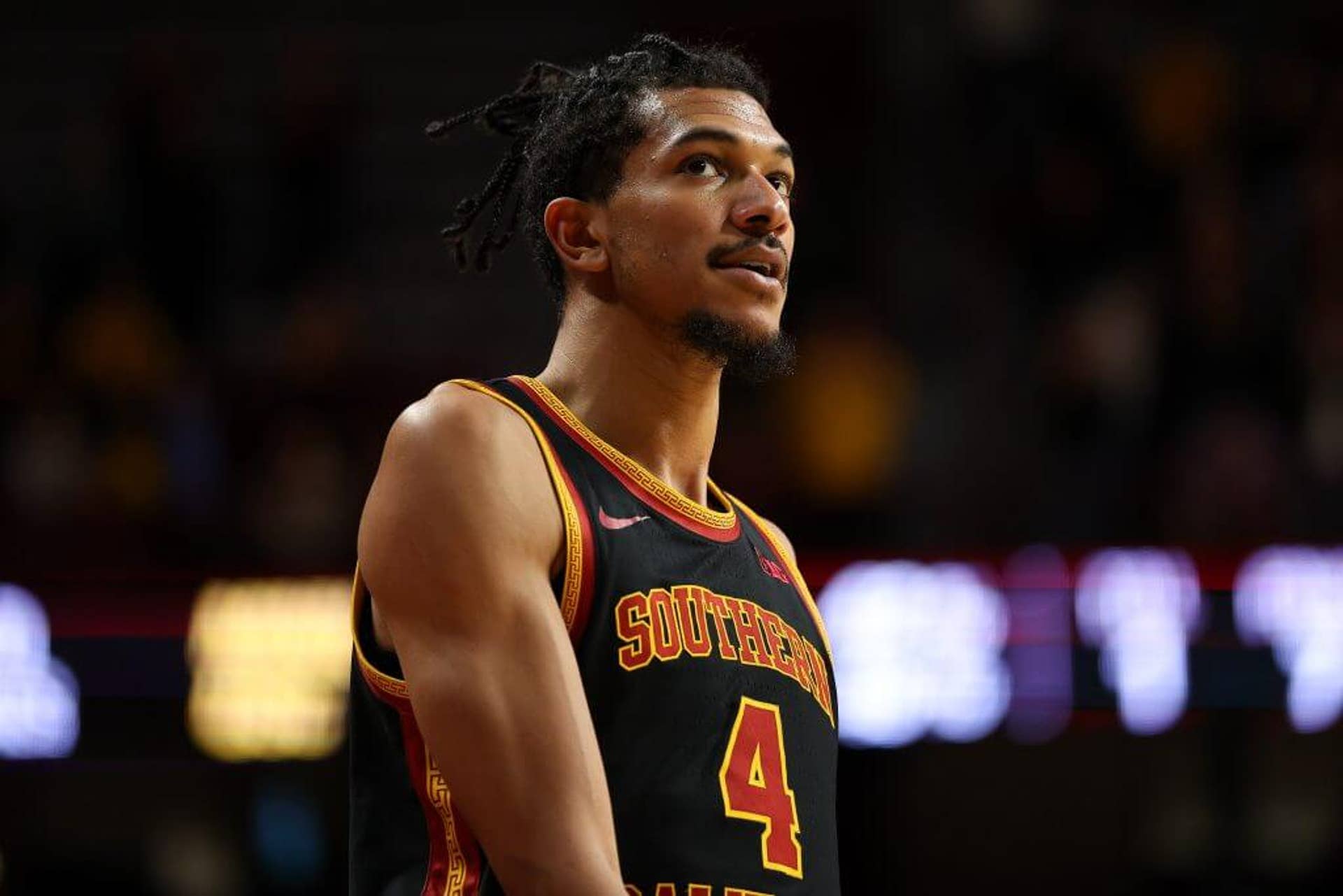
USC's NIL collective cited a morals clause to terminate Chad Baker-Mazara's contract without providing an explanation before ultimately reaching a legal settlement.
The resolution brings an end to a high-profile legal dispute between the university and its former men's basketball player.
The case directly challenged how modern college athletic programs and affiliated collectives manage name, image, and likeness contracts.
On Friday, USC and Baker-Mazara formally agreed to settle the lawsuit in full.
The news of the settlement was first reported by Los Angeles Times reporter Ryan Kartje on X.
Following the agreement, the university moved quickly to conclude the matter publicly.
“USC is pleased to resolve this matter and will have no further comment,” the university said in an official statement.
The settlement halts what had become an increasingly contentious public battle over athlete compensation and roster removals.
THE DISPUTED MORALS CLAUSE
The central issue of the lawsuit focused on how Baker-Mazara's financial compensation was terminated.
According to the legal filing, the decisive action took place on March 13.
On that date, USC’s NIL collective “purported to terminate the Agreements pursuant to the purported morals clause contained in the respective Agreements.”
That contractual provision contained sweeping and subjective language regarding player behavior.
Specifically, the clause allowed termination if an athlete committed acts deemed “immoral, deceptive, scandalous or obscene.”
The contract language extended even further beyond personal conduct.
It permitted cancellation if an athlete engaged in acts that “could adversely affect USC, HOV, the USC athletic department, the USC men’s basketball program, or any related parties or entities.”
Yet the lawsuit alleged that Baker-Mazara never received any formal justification for the sudden move.
According to the complaint, the player was never given an explanation as to how he allegedly violated the morals clause.
His contract was revoked without any specific misconduct ever being detailed by the collective.
THE ROLE OF MORALS CLAUSES IN NIL
Morals clauses have been standard boilerplate in professional entertainment and sports endorsement contracts for decades.
Traditionally, corporate sponsors use these terms to protect their brands against catastrophic public scandals.
If a paid endorser faces serious legal trouble, companies rely on the clause to sever ties immediately.
In the era of collegiate name, image, and likeness rights, these corporate provisions were quickly adopted by college collectives.
Third-party collectives rely on donor funding to assemble lucrative compensation packages for top college recruits and transfers.
To safeguard these investments, collectives frequently insert protective provisions into their written agreements.
However, the legal boundaries of these clauses remain largely untested in college sports.
Unlike traditional employees, college athletes sign NIL deals structured around marketing and brand promotion.
Under typical contract law, terminating an agreement for cause requires tangible evidence of a breach.
A party invoking a morals clause is generally expected to identify specific conduct that harmed the brand.
Baker-Mazara’s lawsuit challenged the idea that a collective could trigger such a clause without identifying a clear violation.

The legal filing argued that the collective used the clause as a pretext to cancel payments.
A LATE-SEASON BREAKING POINT
The contractual dispute was directly linked to a turbulent stretch on the basketball court.
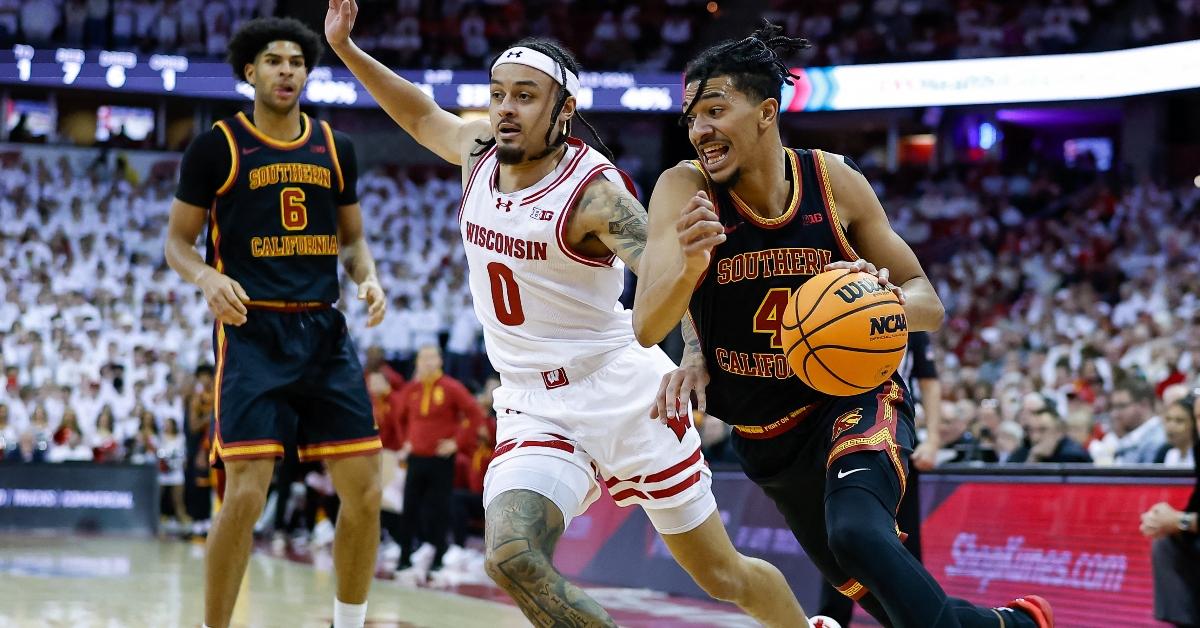
The crisis peaked following a regular-season loss to Nebraska on February 28.
At that point in the schedule, the Trojans were struggling through a disastrous collapse.
USC entered the Nebraska matchup on a steep downward spiral and left with an 18-11 record.
The defeat marked the program's fifth consecutive loss.
With each consecutive loss, the Trojans were trending toward the wrong side of the NCAA Tournament bubble.
In collegiate basketball, falling off the bubble means missing out on the lucrative national tournament.
The lawsuit alleged that USC dismissed Baker-Mazara when it “became likely that the Trojans would not make the NCAA Tournament.”
The complaint asserted that team leadership looked to make roster changes as postseason ambitions faded.
THE LOCKER ROOM CONFRONTATION
Baker-Mazara claimed his departure was triggered by an aggressive confrontation with team leadership.
According to the lawsuit, head coach Eric Musselman directed a profanity-laced, racially charged tirade at the player.
The legal filing stated that Musselman told Baker-Mazara: “Go back to the f—ing Dominican Republic! Nobody wants you here!! F— you.”
Baker-Mazara is originally from the Dominican Republic.
The court documents detailed the significant emotional and personal impact of those words on the athlete.
The lawsuit stated that Baker-Mazara took those words to be racist and discriminatory.
According to the complaint, Baker-Mazara viewed the statement as akin to telling an African American “to go back to Africa.”
The intense locker room incident immediately preceded his formal removal from the program.
AN IMMEDIATE LOCKOUT
The consequences of that postgame confrontation materialized the very next morning.
Baker-Mazara’s representatives were officially informed that the player had been dismissed from the team.
In addition to his dismissal, he was immediately barred from accessing the team facility.
He was cut off from the locker room, workout areas, and team resources without warning.
The sudden lockout left the Trojans to finish their schedule without him.
At the time of the dismissal, USC had two regular-season games remaining on its schedule.
The Trojans went on to lose both of those final regular-season matchups.
Their postseason hopes then depended entirely on making a championship run in the conference tournament.
Those hopes ended immediately when USC lost its first game in the Big Ten tournament.
The opening-round exit finalized their resume and left the Trojans outside the NCAA Tournament field.
THE DEMAND FOR REMAINING COMPENSATION
With his collegiate career at USC abruptly halted, Baker-Mazara turned to the legal system for relief.
The lawsuit sought the recovery of all NIL payments still owed to him under his signed agreements.
Baker-Mazara asserted that he had fulfilled his obligations and remained entitled to his compensation.
In addition to the unpaid contract money, the lawsuit sought substantial damages for professional harm.
Baker-Mazara claimed that the abrupt dismissal caused direct harm to his NBA Draft stock.
For an aspiring professional player, a sudden dismissal from a power-conference program creates significant reputational risk.
Scouts and front-office executives often view sudden dismissals as potential character concerns.
The cloud of a morals clause termination created further uncertainty regarding his professional prospects.
By filing suit, Baker-Mazara fought to recover lost earnings and challenge the narrative surrounding his departure.
THE IMPLICATIONS FOR NIL COLLECTIVES
The settlement between USC and Baker-Mazara closes this specific legal case before trial.
However, it leaves critical questions regarding the structure of NIL deals completely unresolved.
Across college athletics, NIL collectives operate in a legally complex grey area.
Collectives are organized as independent entities that support athletic departments through athlete contracts.
Yet these deals are intimately linked to a player's active roster status on campus.
When a coaching staff decides to dismiss a player, collectives often look for ways to end ongoing payments.
Morals clauses provide collectives with an attractive legal tool to attempt contract cancellations.
Yet a basketball dismissal does not inherently mean an athlete engaged in scandalous or obscene acts.
Without clear standards, athletes risk losing negotiated income based solely on subjective administrative decisions.
Because USC settled out of court, no judicial precedent was established to govern these situations.
Collegiate collectives will likely continue to insert broad morals clauses into upcoming athlete agreements.
MOVING FORWARD IN LOS ANGELES
While the legal dispute reached its quiet conclusion, basketball operations have moved forward.
USC opened its current basketball season on Monday night.
The Trojans secured a convincing 95-63 victory over Milwaukee to start the year.
Musselman is now in his third season leading the USC men's basketball program.
The program is eager to put the turbulence of last season firmly in the past.
Yet the Baker-Mazara lawsuit serves as a warning sign for the future of collegiate sports contracts.
Athletes, agents, and collectives will inevitably examine termination provisions with far greater scrutiny.
The dispute demonstrated how quickly financial arrangements can collapse when roster relationships deteriorate.
As the college sports industry continues to modernize, contract enforcement remains an ongoing battleground.
Should NIL collectives have the authority to cancel player contracts through morals clauses when a player is dismissed from a team?
Advertisement
You may also like
Willie Nelson Compares Looming Federal Hemp Ban To Prohibition, Urging Congress To Protect Farmers
Country icon Willie Nelson is speaking out against upcoming federal legislation that would outlaw all hemp-derived THC products in the United States starting December…
Harry and Meghan Pay Tribute as Key Docuseries Producer Chanel Pysnik Exits Archewell Productions
Chanel Pysnik, who served as executive producer on the docuseries Harry & Meghan and was one of the company's first hires, has officially left…
WWE Shakeup: AJ Styles Slated For Scouting Power As Bobby Roode Eyed For Major Role
Amid pushback over creative changes, reports indicate that AJ Styles is expected to receive more influence over WWE's scouting department while Bobby Roode is…
Wood Brothers Breaks Silence After Josh Berry Wrecked Alliance Partner Ryan Blaney At Martinsville
Team Penske shares a direct technical alliance with Wood Brothers Racing, making Josh Berry's race-ending collision with Penske driver Ryan Blaney an especially awkward…

How Saudi Arabia's PIF Strategy Shift After Iran War Triggered LIV Golf's Collapse
Months after the start of the Iran war, Saudi Arabia's Public Investment Fund changed its investment strategy in April and decided it would stop…
RFK Racing Replaces Brad Keselowski With Ryan Preece in the Iconic No. 6 Ford for 2027
RFK Racing announced that 36-year-old Ryan Preece will replace departing co-owner Brad Keselowski behind the wheel of the No. 6 Ford Mustang starting in…